
Security
EU EN 62471-2:2026 Annex A Enforces UV/Blue Light Testing for LED Industrial Lamps
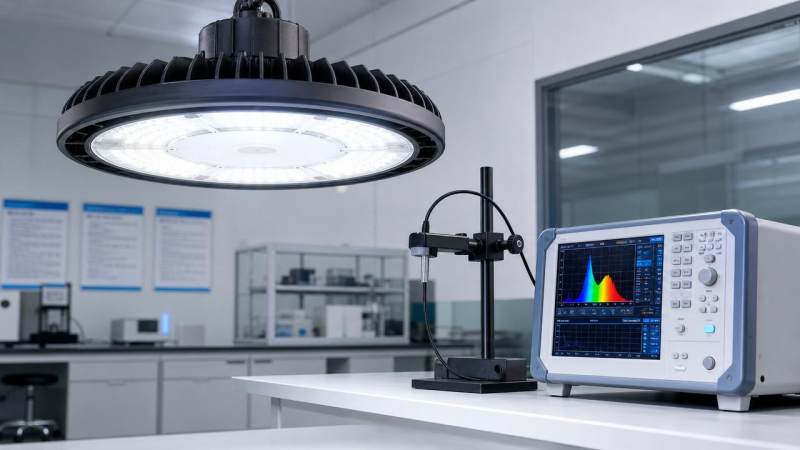
The European Committee for Electrotechnical Standardization (CENELEC) officially published Annex A to EN 62471-2:2026 on 10 May 2026, introducing mandatory photobiological safety assessments for UV-A (315–400 nm) and blue light (435–440 nm) radiation in LED industrial lighting products exported to the EU. This update directly impacts manufacturers, exporters, and supply chain actors involved in the design, testing, certification, and distribution of such equipment across the 27 EU member states.
Event Overview
CENELEC issued EN 62471-2:2026 Annex A on 10 May 2026. The annex mandates additional weighted radiometric measurements for UV-A and narrowband blue light emissions in LED industrial luminaires—including high-bay lights, industrial workshop lamps, and cleanroom lighting fixtures. Compliance with risk group RG1 limits specified in IEC/TR 62778 is now required for CE conformity declaration. The amendment entered into force immediately upon publication; products lacking updated test reports meeting these requirements are excluded from CE documentation workflows and cannot be legally placed on the EU market.
Industries Affected
Direct trading enterprises — Exporters and brand owners placing LED industrial lamps on the EU market must now submit revised technical documentation and updated test reports to notified bodies. Failure to do so halts CE marking, delaying customs clearance and shelf placement across EU distributors and e-commerce platforms. Contractual obligations with EU importers may also trigger renegotiation of liability clauses tied to compliance timelines.
Raw material procurement enterprises — Suppliers of LED chips, phosphor coatings, optical lenses, and driver components face increased demand for traceable spectral emission data. Chip vendors, for instance, may need to provide extended spectral power distribution (SPD) datasets covering 315–440 nm—beyond typical photometric reporting—to support downstream risk-group classification. Procurement teams must now assess supplier capability to deliver compliant subcomponents—not just electrical or thermal specs.
Manufacturing enterprises — OEMs and ODMs producing industrial LED luminaires must revise optical designs (e.g., lens diffusion profiles, phosphor blends, or UV-filtering glass) and revalidate thermal management strategies, as elevated junction temperatures can shift blue-light peak intensity and broaden UV leakage. Internal quality control protocols must integrate new measurement steps prior to final assembly, increasing time-to-certification by an estimated 2–4 weeks per model family.
Supply chain service enterprises — Third-party testing labs, certification consultants, and logistics providers offering CE conformity support must upgrade measurement capabilities (e.g., calibrated spectroradiometers with UV-enhanced detectors and cosine-corrected optics) and staff competency in IEC/TR 62778-based risk-group assignment. Labs without ISO/IEC 17025 accreditation covering the full 315–440 nm range may lose eligibility for EU market-facing test reports.
Key Focus Areas and Recommended Actions
Review existing product portfolios against Annex A’s spectral scope
Identify all models emitting within 315–400 nm (UV-A) or peaking between 435–440 nm (high-risk blue band), especially those using near-UV-pumped phosphors or unfiltered high-CCT (>5000 K) LEDs. Prioritize retesting based on shipment volume to the EU and current CE validity dates.
Engage accredited laboratories early to secure testing capacity
Lead times for photobiological safety testing have lengthened due to newly required calibration and measurement uncertainty validation. Firms should confirm lab accreditation scope explicitly includes EN 62471-2:2026 Annex A and IEC/TR 62778 Edition 2.0 (2024) before initiating test programs.
Update technical documentation and internal compliance checklists
Revise Declaration of Conformity templates, EU-type examination reports, and technical files to reflect the expanded photobiological assessment. Include annotated SPD plots, weighted irradiance calculations, and justification of RG1 classification—not just pass/fail statements.
Assess design flexibility for future regulatory tightening
Given that Annex A targets a narrow blue band (435–440 nm), rather than the broader 400–500 nm range used in earlier guidance, engineering teams should evaluate whether current optical solutions allow rapid adaptation—e.g., via tunable phosphor ratios or secondary optical filters—without full redesign.
Editorial Perspective / Industry Observation
Analysis shows this amendment reflects a strategic pivot in EU photobiological safety policy: away from broad-spectrum hazard categorisation and toward targeted mitigation of biologically potent narrowband emissions. Observably, the focus on 435–440 nm—rather than the more common 440–450 nm blue peak—suggests emerging clinical evidence linking this specific band to non-visual retinal responses. From an industry perspective, this is less a technical adjustment and more a signal of regulatory anticipation: regulators are acting ahead of consensus science, favouring precaution over post-market surveillance. Current more critical concern is not test feasibility—but harmonisation. Not all notified bodies interpret IEC/TR 62778’s weighting functions identically, particularly regarding angular dependency and spatial averaging. That divergence could lead to inconsistent RG classifications across labs—a challenge better addressed through inter-laboratory comparison studies than unilateral compliance efforts.
Conclusion
This update underscores how evolving human health frameworks increasingly shape international trade requirements—even in mature sectors like industrial lighting. It signals a broader trend: photobiological safety is transitioning from an optional design consideration to a foundational compliance pillar. For exporters, responsiveness hinges not only on testing capacity but on integrated understanding across optical engineering, regulatory affairs, and supply chain transparency. Rational observation suggests that firms treating Annex A as an isolated update risk underestimating its ripple effects across product lifecycle management, R&D roadmaps, and global market access strategy.
Source Attribution
Official publication: CENELEC document EN 62471-2:2026 Annex A (May 2026); referenced guidance: IEC/TR 62778:2024 Edition 2.0. Status of national transposition into EU member state law remains under monitoring; updates expected by Q3 2026. Harmonised standard status under EU Regulation (EU) 2019/1020 pending confirmation from the European Commission’s NANDO database.
The VitalSync Intelligence Brief
Receive daily deep-dives into MedTech innovations and regulatory shifts.