
Security
EU Tightens LED Efficiency Label Rules
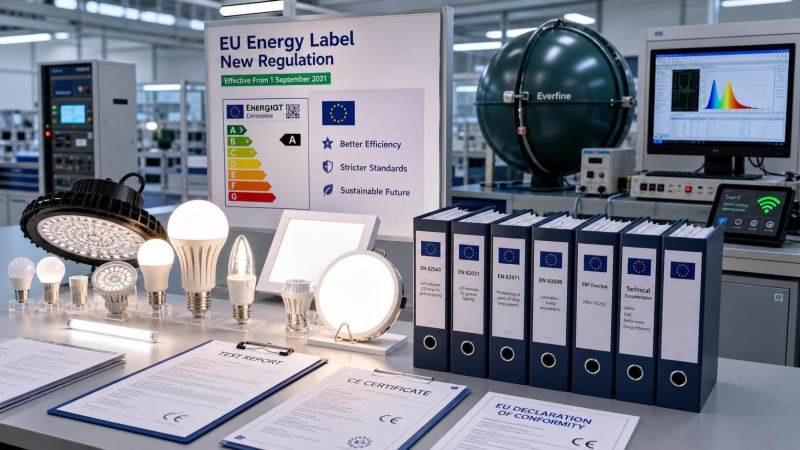
On 11 August 2026, the European Commission issued Regulation (EU) 2026/1342, introducing a revised mandatory energy labeling framework for LED lighting products and smart lighting systems, with the new requirements set to take effect on 1 September 2026. The change is relevant for exporters, manufacturers, importers, distributors, and project buyers because it goes beyond traditional efficiency labeling and adds product-quality, standby-power, upgradeability, and baseline cybersecurity checks.
What the new EU framework requires
The regulation amends Energy Labeling Regulation (EU) 2017/1369 and applies to LED light sources, luminaires, and connected smart lighting products entering the EU market. According to the released information, the updated label and compliance framework adds requirements related to light quality, including TM-30 Rf/Rg, network standby power consumption, firmware upgradeability, and basic cybersecurity.
Exporting companies will need to complete an EU Declaration of Conformity, and type examination must be carried out by an authorized body. Non-compliant products may be refused customs clearance or removed from the market.
Where the impact is most likely to show up
Exporters and brand owners face a documentation reset
For companies selling LED products into the EU, the main pressure point is not only product performance but also conformity documentation. Product specification files, declaration workflows, and approval timing may all need to be aligned with the revised label requirements. What matters most here is whether current products can be mapped cleanly to the new technical and documentary checks without delaying shipments.
Manufacturing and testing teams will need tighter product control
Manufacturers will likely need closer coordination between design, compliance, and quality teams, especially for smart lighting products with network functions. The added focus on firmware upgradeability and baseline cybersecurity suggests that product validation may involve more than light output and efficiency data. From an operational perspective, this can affect test planning, release gates, and the timing of product launches for the EU market.
Distributors and channel partners will need stronger intake checks
For importers, distributors, and downstream channel partners, the practical issue is whether incoming products already carry the required conformity evidence. If clearance is blocked or goods are later delisted, the commercial risk shifts downstream quickly. That makes compliance verification at procurement and receiving stages more important than a simple label check at the end of the process.
What companies should prepare now
Review product scope against the new label trigger
Companies should first confirm which SKUs fall into the covered scope: LED light sources, luminaires, and connected smart lighting products. The compliance work should not be limited to one flagship model, because the regulation applies to products entering the EU market broadly within that category.
Check whether existing files support an EU Declaration of Conformity
The declaration process will depend on how complete the current technical documentation is. If the product file does not already support the updated labeling and examination requirements, exporters may need to rebuild part of the compliance package before shipping. That is especially relevant where multiple factories, suppliers, or firmware versions are involved.
Coordinate early with authorized bodies and customers
Because type examination must be carried out by an authorized body, lead times and document exchange should be planned ahead of the effective date. Customer communication also matters: EU buyers may start asking for updated declarations, test evidence, and confirmation that smart functions meet the new baseline requirements.
Separate policy signal from immediate business execution
The rule change is already published, but the commercial impact will depend on how quickly companies convert it into product, document, and shipping readiness. For firms with long production cycles, the key question is whether current inventory, pending orders, and upcoming tenders can still meet the new entry conditions after 1 September 2026.
What this update signals for the lighting sector
Analysis shows this is more than a narrow labeling revision. It indicates that the EU is treating lighting products as both energy-related and digitally managed goods, with attention extending from efficiency to light quality, standby behavior, software handling, and basic security expectations. It is more appropriate to understand this as a regulatory signal that compliance scope is widening, especially for connected products.
At the same time, the update should not be read as a forecast of market disruption by itself. The immediate fact is that a new mandatory framework has been published and will apply from the stated date. What deserves closer attention is how quickly industry participants can align technical files, test evidence, and supply-chain checks before market access becomes an operational issue.
What to take away from this change
The core significance of this development is that EU access for LED and smart lighting products now depends on a broader compliance package than before. Companies dealing with exports, product certification, and EU channel access should treat the announcement as a concrete regulatory requirement with a clear start date, while continuing to monitor how implementation is handled in practice.
Source basis and verification note
This article was generated from the user-provided headline, event date, and event summary. The content is based on the stated publication of Regulation (EU) 2026/1342 by the European Commission on 11 August 2026 and the compliance details included in the briefing. Typical sources for further verification would include official EU announcements, regulatory text, conformity assessment documentation, industry association notices, and authoritative trade reporting. No specific official source link was provided in the input, so the original publication and any related implementation details should be continuously verified against official materials.
The VitalSync Intelligence Brief
Receive daily deep-dives into MedTech innovations and regulatory shifts.