
Security
Lazada Thailand Cuts Tariffs on 528 Security & Lighting Items
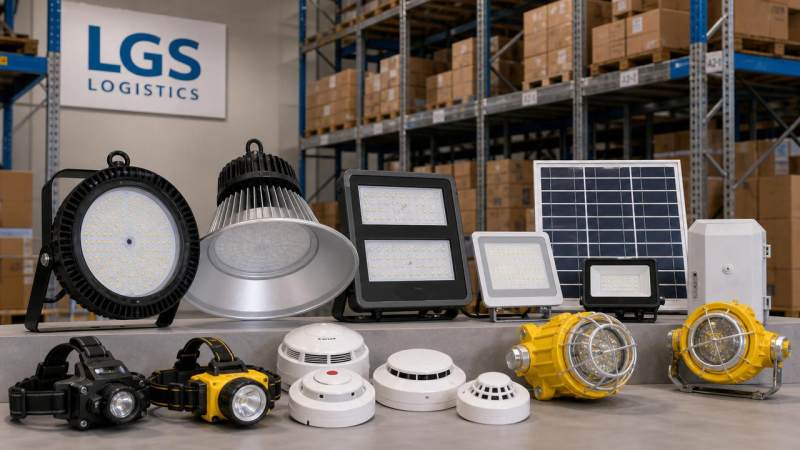
Effective from 00:00 on 24 May 2026, Lazada Thailand has implemented revised customs duty rates for cross-border LGS (Logistics Gateway Service) direct shipping parcels. The adjustment covers 2,819 product categories — including 528 key export items in security and green lighting — directly impacting China-based B2C sellers’ landed cost structures and pricing agility in the Thai market. This policy shift reflects a targeted effort to stimulate demand among Southeast Asian procurement stakeholders focused on safety infrastructure and energy-efficient illumination solutions.
Event Overview
Starting at 00:00 on 24 May 2026, Lazada Thailand updated its tariff schedule for LGS-enabled cross-border direct mail shipments. A total of 2,819 SKUs are subject to revised duty treatment; among them, 528 categories — specifically including LED industrial lamps, solar lighting kits, smoke detectors, and explosion-proof headlamps — have experienced tariff reductions. No changes were announced for non-LGS channels or domestic fulfillment models.
Industries Affected
Direct Trade Enterprises: Export-oriented SMEs and brand sellers using Lazada’s LGS as their primary Thailand entry channel face immediate shifts in landed cost calculation. Lower duties reduce effective import duty payable per parcel, improving gross margin visibility and enabling short-term promotional flexibility — particularly for price-sensitive categories such as entry-level smoke detectors or mid-tier solar kits.
Raw Material Procurement Enterprises: Firms sourcing components (e.g., lithium battery cells, optical sensors, or certified LED drivers) for assembled end-products may observe downstream demand signals shifting toward higher-volume, lower-margin configurations. While not directly taxed, their commercial planning must now account for accelerated inventory turnover cycles triggered by improved end-product competitiveness.
Contract Manufacturing Enterprises: OEM/ODM producers serving Chinese exporters face recalibration pressure on unit economics. With reduced tariff friction at destination, buyers may intensify negotiations on landed-cost-sharing arrangements — especially where final assembly occurs pre-shipment. Margin compression risk increases if manufacturers cannot pass through logistics or compliance cost efficiencies.
Supply Chain Service Providers: Third-party logistics operators, customs brokers, and tariff classification consultants supporting LGS filings must update HS code mappings and duty calculators for all 528 affected categories. Errors in real-time duty estimation could lead to buyer disputes or platform penalty points under Lazada’s new automated compliance monitoring framework.
Key Considerations and Recommended Actions
Verify HS Code Alignment Before 24 May
Sellers must confirm that their product classifications match Lazada Thailand’s official 528-category list — mismatches may result in non-applicable duty treatment despite apparent category fit. Cross-checking with Thai Customs’ latest Annex G (2026 Edition) is advised.
Reassess Promotional Timing and Pricing Windows
Given the tariff reduction takes effect at midnight local time, campaigns launched after 24 May should reflect revised landed costs. Sellers targeting Q3 2026 demand spikes (e.g., monsoon-season safety upgrades or Ramadan-related lighting promotions) should model breakeven points under both pre- and post-adjustment scenarios.
Update Automated Pricing Engines and Tax Calculation Modules
E-commerce platforms and ERP systems integrating with Lazada’s API must refresh duty rate tables and ensure dynamic calculation logic accommodates category-specific thresholds — especially where tiered valuation bands apply (e.g., CIF value ≤ USD 150 vs. > USD 150).
Monitor Platform-Level Compliance Triggers
Lazada Thailand has introduced mandatory digital declaration fields for all LGS parcels effective 1 June 2026. Early adopters of updated documentation workflows will avoid shipment delays during the transitional period.
Editorial Perspective / Industry Observation
Analysis shows this tariff adjustment is not an isolated customs relaxation but part of a broader regional harmonization trend — aligning with ASEAN’s 2025 Digital Customs Interoperability Roadmap. Observably, the selected 528 categories correlate closely with Thailand’s National Energy Efficiency Plan and Smart City Safety Initiative targets. From an industry perspective, the timing suggests coordinated policy sequencing: the tariff cut precedes Thailand’s planned Q3 2026 revision of electrical safety certification (TISI) requirements for IoT-enabled lighting devices. This creates a narrow operational window where cost advantage and regulatory readiness intersect — yet current evidence does not confirm formal linkage between the two measures.
Conclusion
This policy change delivers tangible, near-term cost relief for exporters of security and lighting products to Thailand — but its strategic value lies less in absolute tariff reduction and more in signaling regulatory intent. For regional supply chain actors, it reinforces the growing importance of agile classification management and real-time duty intelligence over static trade assumptions. A rational interpretation is that such adjustments increasingly serve as calibration tools for broader digital trade infrastructure rollout — rather than standalone fiscal stimuli.
Source Attribution
Official announcement published via Lazada Thailand Seller Center (2026-05-15); referenced against Thai Customs Department Notification No. G/2026/087 (effective 2026-05-24); cross-verified with ASEAN Secretariat’s 2026 Cross-Border E-Commerce Policy Tracker. Ongoing monitoring required for potential expansion to additional categories beyond the initial 528, and for alignment with upcoming TISI certification updates scheduled for Q3 2026.
The VitalSync Intelligence Brief
Receive daily deep-dives into MedTech innovations and regulatory shifts.