
Security
Ningbo Lighting Fair Signals Compliance-Led Buying Shift
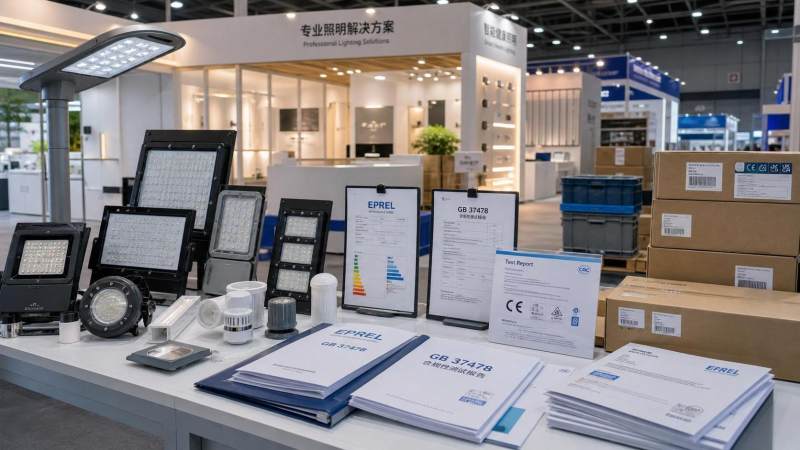
On May 13, 2026, the opening of the 2026 Ningbo Lighting Fair highlighted a practical shift in how lighting trade is being organized: compliance requirements are moving closer to the front end of sourcing decisions. With an EPREL/GB37478 dual-standard advisory desk and a new forum focused on smart health and outdoor lighting, the event matters not only to exhibitors and buyers, but also to exporters, certification-related service providers, and supply-chain teams that must align product access, documentation, and delivery planning with changing market entry requirements.
What the event confirms on the ground
The 2026 Ningbo Lighting Fair was held from May 13 to 15 and attracted nearly 2,000 exhibitors. During this edition, the event introduced for the first time a forum centered on healthy smart and outdoor lighting, alongside an EPREL/GB37478 dual-standard compliance consultation desk. According to the provided event summary, the fair also offered one-to-one market access guidance to 237 overseas buyer groups from emerging markets in West Africa, East Africa, and the Middle East. The event is described as having effectively become a platform for cross-border compliance-oriented procurement matching.
Why sourcing and trade workflows may now shift earlier
Export-facing manufacturers may need to treat compliance as a pre-sales issue
Analysis shows that the combination of product-focused discussion and dual-standard consulting turns compliance from a back-end certification step into an earlier commercial requirement. For manufacturing and export-oriented suppliers, the immediate impact is likely to fall on product selection, technical file preparation, specification matching, and communication with overseas buyers before orders move into final negotiation or delivery scheduling.
Overseas buyers are likely to screen suppliers through access readiness
From an industry perspective, the one-to-one access guidance for overseas buyer groups suggests that procurement conversations are becoming more documentation-led and rule-sensitive. Buyers working across emerging markets may pay closer attention to whether suppliers can respond clearly on applicable standards, supporting materials, and market-entry readiness, rather than evaluating mainly on price, lead time, or catalog breadth.
Certification and testing-related participants may be drawn closer to the transaction stage
Observably, a fair that includes a dual-standard compliance desk creates a more direct link between commercial matching and conformity support. For certification-related firms and testing service participants, the relevant change is not a confirmed new rule, but a stronger execution signal that technical interpretation, document review, and access planning may increasingly be expected during sourcing discussions rather than after contracts are largely settled.
Supply-chain and delivery teams may face tighter document coordination
Where procurement becomes more compliance-led, supply-chain service providers and delivery coordinators may need to pay closer attention to the consistency of product information, supporting records, and shipment-related preparation. Analysis shows that even when the event itself does not define a new binding procedure, it signals that cross-border transactions may increasingly depend on whether upstream and downstream parties can organize compliant product data in time for procurement decisions.
What companies should watch next in practical terms
Track how dual-standard discussions affect product documentation
What deserves closer attention is whether buyers begin asking for more structured technical and compliance materials during early-stage engagement. Companies involved in lighting exports should watch for changes in the depth of document requests tied to EPREL and GB37478-related discussions, especially where product comparison, tender alignment, or supplier onboarding is involved.
Review whether target-market access checks move ahead of order confirmation
Analysis shows that the fair's one-to-one access consultation format may encourage earlier review of market-entry requirements. Businesses should therefore pay attention to whether compliance review starts influencing quotation timing, procurement planning, supplier qualification, or model selection before orders are finalized. At this stage, that should be treated as a developing execution pattern rather than a universally established outcome.
Prepare for closer coordination between sales, technical, and delivery teams
For exporters and procurement-facing suppliers, one practical issue is internal coordination. If buyers increasingly expect access-readiness answers during sourcing talks, sales teams may need faster support from technical, compliance, and operations staff on product specifications, test-related materials, and delivery-linked documentation. The event summary does not provide a fixed execution framework, so companies should focus on readiness rather than assume a single standard process already applies across all deals.
Monitor tender language and buyer qualification requests
Observably, the fair's role as a compliance-oriented procurement platform makes subsequent buyer behavior worth tracking. Companies should watch for changes in bid documents, supplier questionnaires, after-sales commitments, traceability requests, or qualification wording tied to smart, healthy, or outdoor lighting categories. The current information does not confirm such changes have already become widespread, but it does indicate a direction that warrants close monitoring.
How this development is best interpreted for now
From an industry perspective, this development is more appropriately understood as an execution signal than as a standalone regulatory announcement. The event does not itself establish a new law or publish a new mandatory rule in the information provided, but it does show that compliance consultation, standard alignment, and market access support are moving into the center of cross-border lighting procurement. That matters because industry practice often shifts before formal rule interpretation becomes fully standardized across markets.
Analysis also shows that the presence of overseas buyer groups from multiple emerging-market regions adds weight to the fair's function as a practical market-entry interface. Even so, the available facts do not confirm how uniformly these compliance expectations will be adopted across contracts, channels, or product categories. For that reason, the more cautious reading is that the market is signaling stronger front-end compliance screening, while the detailed execution path still requires observation.
What this means for the market at this stage
The main industry significance of the 2026 Ningbo Lighting Fair lies in the way it links exhibition activity with compliance-oriented procurement. Rather than treating standards and access requirements as a separate post-selection task, the event suggests they are becoming part of supplier evaluation and buyer matching earlier in the trade process. It is more appropriate to understand this as a visible shift in market practice and procurement behavior, with further confirmation still needed through later execution, buyer feedback, and document-level changes.
Basis of this article and what still needs verification
This article is based on the user-provided news title, event date, and event summary. For developments of this kind, commonly relevant source categories may include official event releases, regulator publications, trade or customs authority information, industry association updates, standards documents, and reporting by established industry media. A specific official source link was not provided in the input, so subsequent verification is still needed. What remains worth monitoring includes detailed policy interpretation, certification enforcement approaches, procurement document changes, market feedback, and how companies implement compliance requirements in actual transactions.
The VitalSync Intelligence Brief
Receive daily deep-dives into MedTech innovations and regulatory shifts.