
Security
Ningbo Lighting Show Opens with AI Health Focus
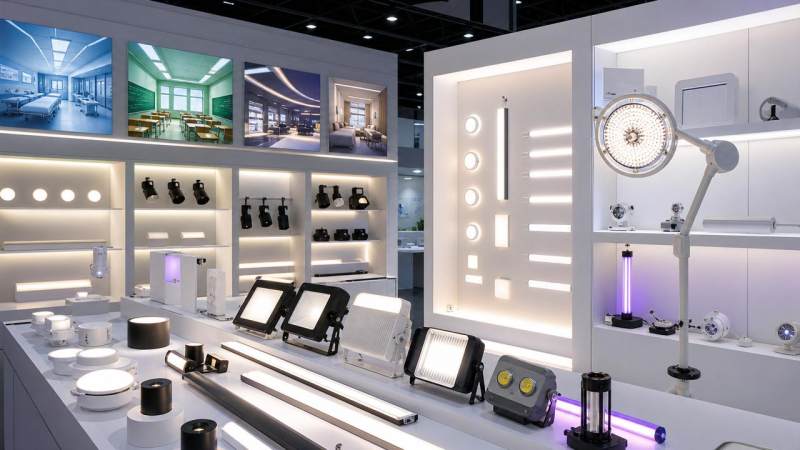
At the June 5 opening of the 2026 Ningbo International Lighting Exhibition, the strongest signal was not only product innovation but also a shift in procurement rules and specification priorities tied to public-sector purchasing. The concentration of interest around human-centric health lighting, DALI-2 plus Bluetooth Mesh dual-protocol solutions, and UV-C coordinated control suggests that manufacturers, exporters, certification-related service providers, and project suppliers may need to pay closer attention to how technical documentation, compliance positioning, and delivery readiness align with evolving buyer requirements in medical, education, and elderly-care procurement channels.
What the exhibition data clearly shows
The 2026 Ningbo International Lighting Exhibition opened on June 5 and attracted more than 320 Chinese lighting manufacturers. According to the event information provided, 76% of exhibitors presented new LED Technology products equipped with AI light-sensing algorithms and circadian adjustment functions. On the buyer side, 68% of inquiries from European and American purchasers focused on the keywords human-centric health lighting, DALI-2 plus Bluetooth Mesh dual protocol, and UV-C disinfection coordinated control. The same event summary indicates that these buyers are accelerating the inclusion of smart lighting in government procurement white lists for medical, education, and elderly-care applications.
Why procurement and compliance teams may feel the change first
Technical alignment is becoming a front-end trade issue
For export-oriented lighting suppliers and direct trading companies, the shift matters because buyer attention is moving from general product availability toward specification alignment. Where inquiries increasingly reference health-lighting functions and dual-protocol interoperability, the affected business stages are likely to include pre-sales communication, tender response preparation, technical file readiness, and model selection. What deserves closer attention is whether product descriptions, control architecture explanations, and function claims are presented in a way that matches procurement language rather than only manufacturing language.
Manufacturing and integration links may face tighter proof requirements
For manufacturers and solution integrators, the exhibition signal points to a possible rise in scrutiny around how AI sensing, circadian adjustment, connectivity, and UV-C coordinated control are documented and delivered. The impact is likely to appear in product definition, module selection, firmware-control coordination, and quality traceability. From an industry perspective, companies should pay attention to whether future buyer requests increasingly require clearer testing records, protocol compatibility materials, and more structured technical documents for project review.
Certification and testing services may need earlier involvement
For certification-related companies and testing service institutions, the relevance lies in the growing overlap between functional claims and procurement acceptance. If smart lighting products are being positioned for medical, education, and elderly-care purchasing lists, the business impact may extend to document review, test planning, conformity communication, and after-sales evidence retention. Analysis shows that the key issue is not the existence of a newly confirmed rule in the input, but the likelihood that buyers will ask for more complete proof packages before supplier approval or shipment release.
Project buyers and supply-chain service providers may adjust delivery expectations
For procurement parties, distributors, and supply-chain service providers, the changing emphasis may affect supplier qualification review, bid file completeness, delivery scheduling, and post-delivery support arrangements. Products involving dual-protocol control or coordinated UV-C functions may require closer checking of configuration consistency and technical documentation before order confirmation. Observably, this can turn compliance preparation into a delivery issue rather than a purely regulatory issue.
What companies should monitor next
Watch how functional claims are expressed in procurement documents
Because the provided event summary links buyer inquiries to government procurement white-list acceleration, companies should closely monitor whether future tender documents, technical specifications, or supplier qualification materials begin to use the same functional language more explicitly. At this stage, the input does not confirm a uniform execution rule, so this remains a practical watchpoint rather than a settled requirement.
Prepare technical files around interoperability and control logic
Where DALI-2 and Bluetooth Mesh are appearing together in buyer inquiries, exporters and manufacturers should review whether their product files clearly explain protocol configuration, control logic, and applicable use scenarios. Analysis shows that incomplete or inconsistent technical documentation could become a friction point in quotation, approval, or project handover, even before any formal regulatory requirement is clarified in detail.
Review support materials for health-lighting and UV-C applications
For products marketed with human-centric lighting or UV-C coordinated control functions, companies should pay attention to the completeness of test records, product literature, user guidance, and after-sales traceability materials. The current information does not establish a specific certification path, but it does indicate that these functions are moving closer to procurement review criteria in sensitive application settings.
Reassess supplier readiness for public-sector linked demand
Suppliers targeting medical, education, or elderly-care projects should examine whether internal coordination between sales, engineering, compliance, and delivery teams is sufficient for more documentation-heavy procurement processes. From an industry perspective, the immediate issue is less about volume expansion and more about whether vendors can respond consistently when procurement questions become more standards-oriented and application-specific.
How this signal is best understood for now
Analysis shows that this development is better read as an execution signal from the market side than as proof of a fully defined new regulatory framework. The exhibition data indicates that buyers are already using procurement language that combines smart control, interoperability, and health-related application value. At the same time, the input does not provide detailed policy texts, formal certification notices, or tender-rule updates. For that reason, the prudent reading is that the industry is seeing an early operational shift in how compliance-relevant features are prioritized, while the exact implementation standards still require continued observation.
A practical reading of the exhibition takeaway
The core significance of this event lies in the way buyer demand is linking smart lighting functions with public procurement access conditions in application areas such as medical care, education, and elderly care. In neutral terms, this is not yet enough to confirm a complete rule change on its own, but it is strong enough to indicate that specification alignment, technical proof, and delivery documentation may carry more weight in upcoming transactions. It is more appropriate to understand this as a meaningful market and procurement signal that could translate into clearer compliance and bidding expectations as follow-up documents and buyer practices become more visible.
Basis of this article and points still requiring verification
This article is generated on the basis of the user-provided news title, event date, and event summary. For events of this type, relevant source categories may typically include official announcements, releases by regulatory authorities, customs or trade administration information, industry association updates, standard-setting documents, and reporting by authoritative media. No specific official source link was provided in the input, so the precise official basis still requires ongoing verification. What still needs continued observation includes any detailed policy wording, certification interpretation, tender document changes, market feedback, and how companies implement the related requirements in practice.
The VitalSync Intelligence Brief
Receive daily deep-dives into MedTech innovations and regulatory shifts.