
Security
WOO Adopts Low-Carbon LED Protocol at London 2026
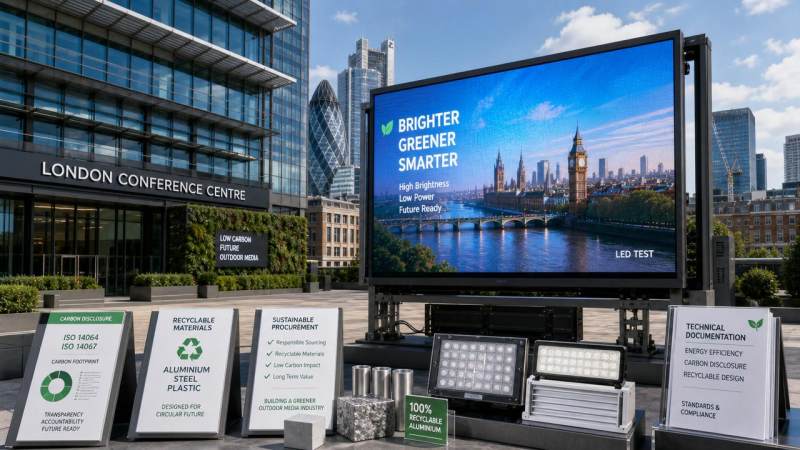
From June 3 to 5, 2026, a development at the WOO London Congress drew attention beyond event participation itself: a low-carbon efficiency protocol for outdoor LED luminaires was unanimously adopted by WOO members across 23 countries, with Absen taking part as the only Chinese brand involved in the event. For outdoor media operators, LED display suppliers, procurement teams, and certification-related service providers, this matters because purchasing criteria are no longer limited to display performance alone and are now being linked more directly to energy efficiency, carbon disclosure, and recyclability in upcoming evaluation processes.
What Was Confirmed in London
According to the information provided, Absen participated in the World Out of Home Organization (WOO) London Congress held on June 3–5, 2026, as the only Chinese brand at the event. During the congress, the Outdoor LED Luminaires Carbon-Responsive Efficiency Protocol was unanimously adopted by WOO members spanning 23 countries, including the United States, the United Kingdom, Australia, Singapore, and Germany.
The protocol adds three mandatory evaluation items to outdoor media procurement: LED module luminous efficacy measured in lm/W, carbon footprint disclosure, and the proportion of recyclable materials. The information provided also states that pilot implementation is scheduled to begin in Singapore and Germany in the third quarter of 2026.
Where the Impact May Appear First
Procurement teams may face a broader compliance checklist
From an industry perspective, buyers of outdoor media and related lighting or display assets may be among the first to feel the practical effect. The reason is straightforward: the protocol specifically moves lm/W performance, carbon footprint statements, and recyclable material content into mandatory evaluation items. That shifts attention from product price and visual output alone to documentation readiness and measurable environmental attributes during supplier review.
Manufacturers may need to align product data with tender requirements
Analysis shows that LED display and luminaire manufacturers could be affected at the quotation, specification, and bid-support stages. If procurement processes begin to use the protocol as a formal screening basis, suppliers may need to present product-level efficacy figures, carbon-related declarations, and materials information in a more standardized way. The change is less about a new product category and more about whether existing products can be documented in line with the new assessment logic.
Channel and project delivery partners may see new coordination demands
Distributors, integrators, and project service teams may also be affected because they often sit between manufacturers and end customers. Observably, once mandatory evaluation items are introduced, coordination risks can move upstream and downstream at the same time: upstream around supplier documentation, and downstream around customer expectations, tender clarification, and delivery consistency for pilot markets such as Singapore and Germany.
What Companies Should Watch Next
Monitor how the protocol is described in implementation materials
What deserves closer attention is whether later official wording, pilot guidance, or procurement use cases define these three mandatory items in narrower or broader operational terms. Companies should pay close attention to how lm/W, carbon footprint disclosure, and recyclable material share are requested, presented, and verified in real procurement contexts.
Separate adoption of the protocol from market-wide execution
Analysis shows that unanimous adoption by WOO members is an important signal, but it should not automatically be read as immediate uniform execution across all markets and projects. The confirmed near-term change is the Q3 2026 pilot in Singapore and Germany. For companies serving multiple regions, the practical question is which tenders, customers, or project categories begin applying these criteria first.
Prepare supplier documents and customer communication early
For firms already active in outdoor media or LED display supply, current attention should focus on document readiness and communication rather than broad strategic repositioning. That includes checking whether product efficacy data, carbon-related statements, and recyclable material information can be supplied consistently to customers, especially where pilot implementation may influence procurement discussions.
Review lead times around verification and bid support
Observably, once procurement criteria expand, the pressure point is not only product qualification but also response time. Companies may need to assess whether internal teams and suppliers can support tenders, client questions, and compliance-related document requests without delaying commercial timelines.
Why This Looks More Like a Policy Signal Than a Finished Market Shift
In editorial observation, this development is best understood as a concrete industry signal rather than a fully settled market outcome. The confirmed facts show consensus adoption within WOO membership and an upcoming pilot in two markets. What remains to be observed is how consistently the protocol is translated into actual procurement practice, how strictly the mandatory items are applied, and whether adoption in pilot markets influences broader cross-border buying behavior.
Analysis also suggests that the significance of this update lies in the structure of the criteria themselves. By combining efficacy, carbon disclosure, and recyclable content in procurement assessment, the discussion moves from energy-saving claims alone to a more documentation-driven environmental screening approach. Even so, the commercial pace and depth of impact still depend on implementation details that are not yet provided in the input information.
How to Read the Development at This Stage
At this stage, it is more appropriate to understand the news as an actionable standards signal with early procurement implications, especially for outdoor media operators, LED display suppliers, and project delivery partners connected to Singapore and Germany. It does not yet confirm a universal change across every market, but it does indicate that environmental performance metrics may carry more formal weight in future outdoor media purchasing decisions.
For industry participants, the most rational takeaway is to watch the pilot rollout, track how procurement language evolves, and assess whether internal product and supplier documentation is ready for more structured evaluation. The event is therefore neither a short-lived headline nor a fully completed market transition; it is a development that warrants continued monitoring.
Basis of This Article
This article is generated from the user-provided news title, event date, and event summary. The analysis is limited to the confirmed information supplied: the June 3–5, 2026 WOO London Congress, Absen's participation as the only Chinese brand, the unanimous adoption of the Outdoor LED Luminaires Carbon-Responsive Efficiency Protocol by WOO members across 23 countries, the inclusion of lm/W, carbon footprint disclosure, and recyclable material share as mandatory procurement evaluation items, and the planned Q3 2026 pilot in Singapore and Germany.
For this type of industry update, source types typically worth checking include official announcements, company statements, industry association releases, authoritative media coverage, and standard-setting documents. No specific official source link was provided in the input, so further verification remains necessary. Continued attention should focus on subsequent official wording, pilot execution details, and how procurement requirements are applied in practice.
The VitalSync Intelligence Brief
Receive daily deep-dives into MedTech innovations and regulatory shifts.