
Security
Agrochainhub Launches AI Compliance Engine at CAC 2026
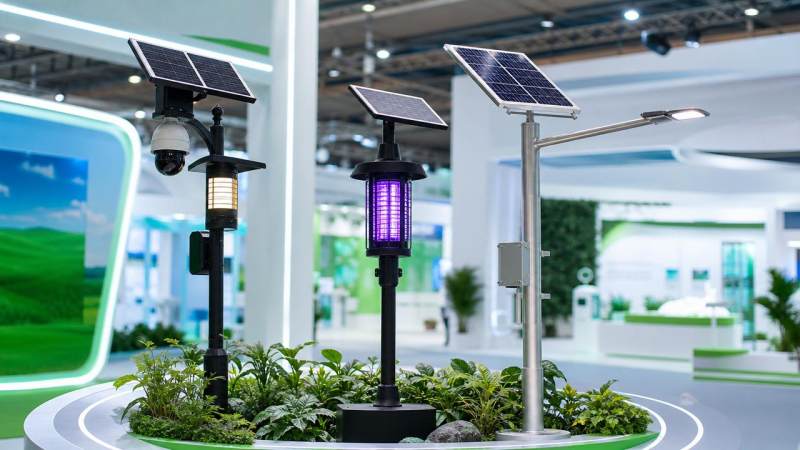
On May 17, 2026, Nanjing Changjingling Digital Technology unveiled Agrochainhub 2.0 — an AI-powered agricultural compliance platform — at the 26th China Agrochemical Exhibition (CAC) in Nanjing. The launch signals a notable shift in how global agri-tech exporters navigate increasingly fragmented and technically stringent regulatory landscapes, particularly for smart farming hardware and solar-powered field equipment.
Event Overview
On May 17, 2026, Nanjing Changjingling Digital Technology launched Agrochainhub 2.0 at the 26th CAC exhibition. The update introduces the ‘Agri-Safe Compliance Engine’, a module designed to deliver market-specific regulatory diagnostics for agricultural security and solar lighting products. Supported product categories include GPS-fenced farm security systems, infrared intrusion alarms, photovoltaic irrigation lamp poles, and solar insecticidal lamps. The engine covers technical requirements under the EU Radio Equipment Directive (RED), US FCC Part 15, Brazil’s ANATEL regulations, and EMC/EMI and light pollution standards across multiple Southeast Asian jurisdictions. The platform integrates product data from 127 Chinese manufacturers and generates compliance reports in English, Spanish, and Arabic with one-click functionality.
Industries Affected
Direct Export Trading Firms: These firms face heightened pre-shipment compliance risk due to diverging electromagnetic compatibility (EMC), radiofrequency (RF), and environmental standards — especially where solar-powered devices incorporate wireless communication or emit visible/near-IR radiation. The Agri-Safe Compliance Engine reduces manual interpretation of Annex IV declarations or test report mapping, but does not replace third-party certification. Its impact is most immediate for SMEs lacking in-house regulatory affairs teams.
Raw Material Procurement Enterprises: Procurement entities sourcing components such as lithium iron phosphate (LiFePO₄) batteries, polycrystalline PV modules, or RF transceivers must now align supplier documentation with downstream export targets. For example, battery certifications accepted under China’s GB/T standards may not satisfy EU RED’s Class 2 safety thresholds for integrated radio modules. This increases scrutiny on bill-of-materials traceability and component-level conformity declarations.
Manufacturing Enterprises: Factories producing solar lamps or smart perimeter systems must adapt design workflows to embed compliance-by-design principles — e.g., shielding layouts for EMI mitigation, spectral power distribution (SPD) controls to meet ASEAN light pollution limits, or firmware-level RF emission caps. Agrochainhub’s diagnostic output highlights gaps early, but implementation requires engineering revision cycles, not just reporting automation.
Supply Chain Service Providers: Logistics, testing lab aggregators, and customs brokers are seeing demand shift toward bundled services: pre-certification gap analysis + lab referral + multilingual technical file assembly. Agrochainhub’s API-ready architecture enables integration with ERP or PLM systems, but adoption depends on whether service providers invest in interoperability layers — a capability currently limited to top-tier compliance facilitators.
Key Focus Areas and Recommended Actions
Verify target-market alignment before prototype finalization
Manufacturers should run Agrochainhub’s diagnostic on functional prototypes — not finished goods — to identify conflicts between hardware architecture (e.g., unshielded switching regulators) and regional EMC limits. Delaying this step until post-testing risks costly redesigns.
Prioritize component-level certification harmonization
Exporters should audit key subassemblies (e.g., solar charge controllers, BLE modules) against dual-standard benchmarks — such as FCC Part 15 Subpart B *and* EU RED Annex III — to avoid retesting when expanding from North America to Europe.
Assign bilingual technical writers to compliance workflows
Since Agrochainhub generates reports in English, Spanish, and Arabic, firms targeting LATAM or MENA markets must ensure internal reviewers can validate translated technical claims — especially around photobiological safety (IEC 62471) or RF exposure (ICNIRP guidelines) — rather than relying solely on machine-generated text.
Editorial Perspective / Industry Observation
Observably, the Agri-Safe Compliance Engine reflects a broader industry pivot: from reactive certification (i.e., “test-and-fix”) toward predictive, data-driven regulatory intelligence. However, its utility remains bounded by database coverage — currently limited to 127 manufacturers — and does not address jurisdictional enforcement variability (e.g., how Brazilian INMETRO inspectors interpret ANATEL Resolution 615/2022). Analysis shows that while AI accelerates documentation readiness, it does not reduce the need for human-led technical judgment in borderline cases — such as classifying a solar lamp’s RF transmitter as intentional radiator vs. incidental emitter.
Conclusion
This development marks a pragmatic response to regulatory fragmentation in agritech exports — not a de-risking silver bullet. It lowers entry barriers for compliant hardware deployment but shifts complexity upstream into R&D and procurement. For the sector, the more durable implication lies in accelerating standardization pressure: as more exporters rely on shared diagnostic logic, informal alignment around test protocols and declaration formats may gradually coalesce — even absent formal international harmonization.
Source Attribution
Official announcement: Nanjing Changjingling Digital Technology press release, May 17, 2026 (published via CAC 2026 official media channel). Technical scope confirmed against publicly available versions of EU RED Directive 2014/53/EU, FCC Part 15, ANATEL Resolution 615/2022, and ASEAN MRA on EMC (2023 revision). Note: Ongoing monitoring required for upcoming EU updates to RED Annex II (expected Q4 2026) and Thailand NBTC draft regulation on outdoor LED spectral limits (consultation period open until July 2026).
The VitalSync Intelligence Brief
Receive daily deep-dives into MedTech innovations and regulatory shifts.