
Security
Saudi Rule Tightens Solar Lighting Entry From July 2026
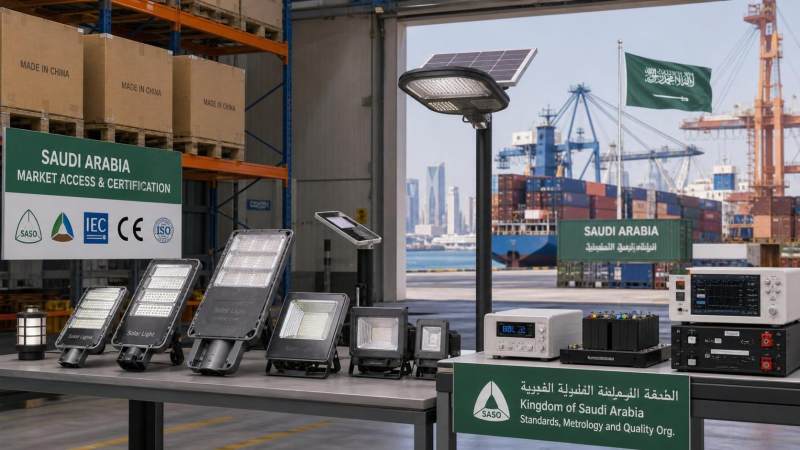
On July 1, 2026, market access rules for solar lighting products entering Saudi Arabia tightened abruptly after SASO issued an urgent notice on June 26. The change affects imported solar lighting equipment including garden lights, street lights, and off-grid industrial and mining lights, and it is especially relevant to exporters, manufacturers, compliance teams, and supply chain operators serving Saudi buyers. What makes this update worth close attention is not only the dual certification requirement itself, but also its immediate link to SABER registration and the potential effect on shipment readiness and delivery timing.
What the new requirement says
According to the information provided, SASO announced on June 26, 2026 that, starting July 1, 2026, all solar lighting equipment imported into Saudi Arabia must obtain both IEC 62109-2 certification for photovoltaic inverter safety and IEC 62619 certification for industrial lithium battery safety. The requirement applies to product categories specifically including garden lights, street lights, and off-grid industrial and mining lights. In addition to the dual certification requirement, mandatory registration in the SABER system is required for these products.
Where the pressure will likely appear first
Export-facing manufacturers and traders
From an industry perspective, companies directly shipping solar lighting products to Saudi Arabia may be affected first because the new rule changes the access path for products already planned for that market. The main pressure points are likely to be product compliance review, document completeness, and shipment scheduling. What deserves closer attention is whether product configurations currently sold into Saudi Arabia already align with both cited standards and the SABER registration process.
Certification and documentation workflows
For teams responsible for testing, certification, and export documentation, the impact is likely to show up in lead-time management and file preparation. Analysis shows that the requirement is not limited to one safety dimension: it combines inverter-related safety and lithium battery safety, then connects both to mandatory system registration. That means the compliance file for Saudi-bound solar lighting products may require tighter internal coordination before goods are released for export.
Supply chain and delivery coordination
Supply chain service providers, including those coordinating booking, customs-related paperwork, and delivery planning, may also feel the effect. Observably, when a new entry rule takes effect within a short window, the immediate operational risk often sits in whether goods are fully ready for submission and registration before dispatch. In this case, the key issue is not only whether the product can be manufactured, but whether the supporting compliance path is complete in time for delivery commitments.
Saudi buyers and project-side procurement
Procurement teams and downstream buyers in Saudi Arabia may need to pay closer attention to supplier readiness. From an industry perspective, the new requirement can affect product selection, purchase timing, and acceptance conditions because imported products now need both certifications as well as SABER registration. For buyers, the practical concern is whether suppliers can demonstrate compliance without creating delays in order execution.
What companies should monitor now
Check product scope against the new rule
Companies should first identify which Saudi-bound products fall within the solar lighting categories described in the notice, especially where product lines span garden, street, and off-grid industrial lighting uses. The practical issue is scope clarity: teams need to know which SKUs, configurations, or ongoing orders are exposed to the new requirement from July 1 onward.
Review whether both certifications are covered together
What deserves closer attention is the dual nature of the requirement. Businesses should not treat IEC 62109-2 and IEC 62619 as interchangeable or optional tracks. The current notice indicates that both are required together, so internal compliance reviews should focus on whether the full document chain supports both standards for Saudi market entry.
Prepare for SABER registration as an operational step
The notice ties product compliance to mandatory SABER registration, so registration should be handled as part of shipment execution rather than as a separate administrative formality. Analysis shows that, in practical terms, incomplete registration can become a delivery issue even when the product itself appears technically ready. This makes document sequencing, data consistency, and submission timing especially important.
Manage customer communication and delivery expectations
Exporters and service teams should also monitor how the new rule affects delivery promises already made to Saudi customers. From an industry perspective, the key point is not to assume that existing lead times remain unchanged. Where orders are already in process, companies may need to clarify compliance status, expected registration timing, and any possible effect on dispatch schedules.
How this development should be read
Analysis shows that this is more than a routine wording update because it combines two named IEC standards with mandatory SABER registration and takes effect within a very short timeframe. At the same time, it is more appropriate to understand this as a concrete compliance change already tied to market access, rather than as a distant policy signal. Observably, the industry still needs to keep watching how implementation is handled in practice, especially in relation to product scope interpretation and execution timing, but the rule itself should not be treated as speculative.
Why the market should keep watching
This update matters because it directly reshapes the entry conditions for solar lighting products sold into Saudi Arabia from July 2026. For companies active in this trade lane, the issue is not simply regulatory awareness; it is whether certification, registration, and delivery planning remain aligned under a tighter timeline. At this stage, it is more appropriate to understand the development as an immediate compliance requirement with broader operational implications, while still continuing to monitor how implementation details play out.
Basis of this article
This article is based on the user-provided news title, event date, and event summary. For this type of industry update, commonly relevant source categories may include official notices, company announcements, industry association releases, authoritative media coverage, and standards-related documents. A specific official source link was not provided in the input, so further verification is still needed. Areas that warrant continued monitoring include any follow-up official wording, implementation clarifications, and practical registration requirements connected to SABER.
The VitalSync Intelligence Brief
Receive daily deep-dives into MedTech innovations and regulatory shifts.