
Security
Vietnam Mandates Dual Certification for Solar Lighting
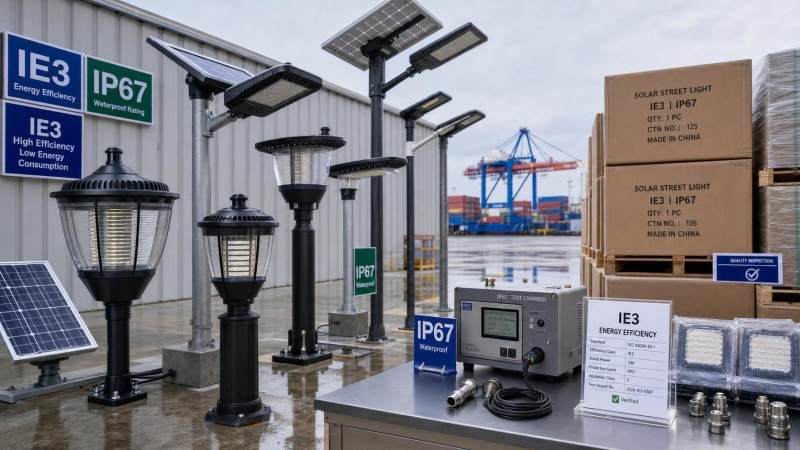
On June 30, 2026, a new compliance change took effect in Vietnam for imported solar lighting products. Under QCVN 17:2026, products such as solar street lights and garden lights must now meet both an energy efficiency threshold of at least IE3 and an enclosure protection rating of at least IP67. With only a 30-day transition window and port rejection after July 31 for uncertified goods, this is a development that importers, exporters, manufacturers, certification-related businesses, and supply chain operators need to treat as an immediate trade and delivery issue rather than a distant policy signal.
What the new rule clearly requires
The confirmed information provided for this update is limited but clear. Vietnam’s Directorate for Standards, Metrology and Quality, referred to as STAMEQ, brought QCVN 17:2026 into effect on June 30, 2026. The rule applies to imported solar lighting products, including solar street lights and garden lights. The requirement is a mandatory dual certification condition: covered products must simultaneously satisfy an energy efficiency level of at least IE3 and an ingress protection level of at least IP67.
The transition period is 30 days. After July 31, uncertified products will be returned at the port. Based on the provided information, this is the core confirmed change: the market access condition for the relevant imported solar lighting products is no longer tied to a single technical requirement, but to two mandatory compliance thresholds that must be met together.
Where the pressure will show up first in the supply chain
Import and export transactions face an immediate documentation threshold
From an industry perspective, trading companies are likely to feel the impact first because the rule is tied directly to import entry. The key issue is no longer only product availability or commercial terms, but whether shipments can be supported by compliance materials that align with the dual requirement. What deserves closer attention is the risk that orders already arranged under earlier assumptions may now face interruption if certification readiness, technical files, or supporting evidence are incomplete by the time goods arrive.
Manufacturing and product specification decisions move closer to market access
For manufacturers supplying solar street lights, garden lights, and related solar lighting products, the change affects product specification alignment as much as certification itself. Analysis shows that the new rule may force closer review of whether existing product configurations can demonstrate both the IE3 efficiency threshold and the IP67 protection threshold at the same time. This matters not only for production planning, but also for model selection, technical declarations, and which products remain suitable for Vietnam-bound orders.
Procurement and project delivery timelines may tighten
Buyers, project contractors, and channel participants may also face practical disruption. Observably, a 30-day transition period is short for any product category that depends on testing, certification review, or cross-border shipping schedules. The immediate effect may appear in procurement planning, shipment timing, and delivery commitments. Parties involved in tendering or project supply should pay attention to whether procurement documents, technical specifications, and acceptance conditions now need to reflect the dual certification requirement more explicitly.
Testing and certification-related service providers may become a critical checkpoint
Certification-related businesses and testing service institutions are likely to become central to transaction execution under this rule. The reason is straightforward: the issue is no longer whether compliance is desirable, but whether it is a condition for import clearance. For companies using third-party testing, technical validation, or compliance document preparation, the main concern is whether the supporting materials are sufficient for the new requirement and whether they can be completed within the compressed transition period.
What companies should review now
Check whether affected SKUs are already mapped to the dual requirement
Analysis shows that companies dealing in solar lighting products should first identify which imported models fall within the scope described in the provided information. The practical question is whether each relevant product can be matched to evidence for both the IE3 energy efficiency threshold and the IP67 enclosure protection threshold, rather than relying on partial or legacy compliance assumptions.
Review technical files and shipment papers before July-end movements
What deserves closer attention is the alignment between product claims, technical documentation, and shipment timing. For orders moving close to or after July 31, businesses should pay attention to whether certification materials, test-related documents, product specifications, and trade papers are consistent with the new access condition. The provided information does not specify detailed document formats or procedural steps, so this area remains one to verify carefully rather than assume.
Watch for changes in procurement wording and contract risk allocation
For companies supplying projects or distributors, it is more appropriate to understand this change as something that may soon appear in commercial documentation, not only in border control. Tender documents, purchase orders, supply contracts, and acceptance terms may begin to reference the dual certification threshold more directly. Businesses should therefore examine whether compliance responsibility, delivery timing, and rejection risk are clearly addressed in ongoing transactions.
Continue tracking how the rule is interpreted in practice
The provided information confirms the rule, the thresholds, the transition period, and the consequence of port return for uncertified goods after July 31. It does not provide detailed implementation guidance. For that reason, companies should continue monitoring official wording, execution practice, and any clarifications that affect certification scope, review procedures, or border enforcement standards.
How this development is best understood at this stage
Observably, this is more than a general policy direction and less than a fully documented implementation map. It is more appropriate to understand the development as an already effective compliance signal with direct trade consequences, because the effective date, the dual threshold, the short transition period, and the stated port return outcome are all clearly indicated in the provided information.
At the same time, analysis shows that the market still needs to watch how the rule is applied in operational detail. The most important follow-up questions are not about whether the requirement exists, but about how certification evidence will be checked in practice, how procurement documents will adapt, and whether industry participants encounter bottlenecks in execution during the first phase of enforcement.
A near-term compliance shift rather than a distant policy trend
In practical terms, this update should be read as a near-term compliance and delivery issue for the solar lighting trade linked to Vietnam. The main significance is not the publication of another technical rule in the abstract, but the conversion of market access into a dual-condition requirement tied to both energy efficiency and ingress protection, with a short transition period and a stated border consequence for non-compliant goods.
From an industry perspective, the most balanced conclusion is that QCVN 17:2026 already signals real execution pressure, while several operational details still require continued verification. Businesses should therefore treat it neither as a routine headline nor as a basis for exaggerated conclusions, but as a rule change that may materially affect compliance review, shipment planning, and transaction timing in the immediate term.
Basis of this article and points still to verify
This article is generated solely from the user-provided news title, event date, and event summary. The content is based on the stated information that QCVN 17:2026 took effect on June 30, 2026, that imported solar lighting products such as solar street lights and garden lights must meet both IE3 and IP67 thresholds, that the transition period is 30 days, and that uncertified products will be returned at the port after July 31.
For events of this type, commonly relevant source categories may include official regulatory notices, releases from standards or supervisory authorities, customs or trade administration information, industry association updates, standard-setting documents, and reporting by authoritative media. A specific official source link was not provided in the input, so it still needs to be verified on an ongoing basis. Further observation should focus on detailed implementation language, certification enforcement practice, procurement document changes, market feedback, and how affected companies carry out compliance in actual transactions.
The VitalSync Intelligence Brief
Receive daily deep-dives into MedTech innovations and regulatory shifts.