
Security
Critical Infrastructure Protection: Cost vs Risk
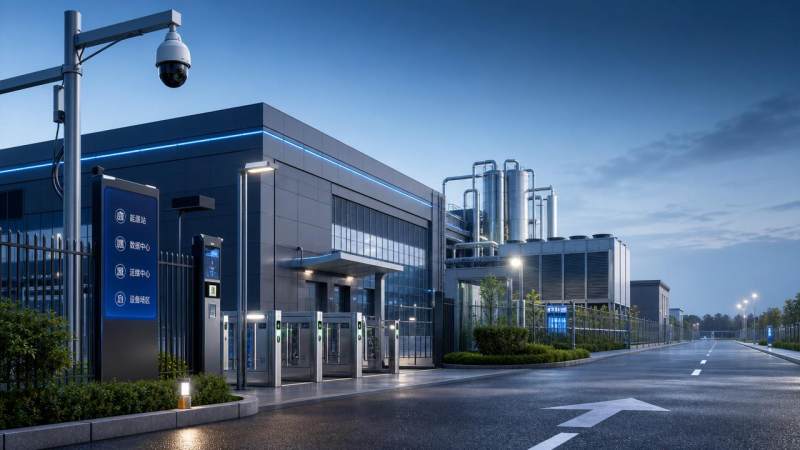
For financial approvers, critical infrastructure protection is no longer just a technical expense—it is a balance-sheet decision shaped by operational risk, compliance exposure, and long-term resilience. As investment pressure rises across digital and urban security upgrades, choosing the right critical infrastructure protection solutions means weighing upfront cost against the far greater price of disruption, liability, and strategic blind spots. In energy networks, transport corridors, public facilities, data-intensive campuses, and integrated urban assets, the real question is not whether protection costs money, but whether underprotection creates losses that exceed any short-term savings.
Defining Critical Infrastructure Protection in Financial Terms
Critical infrastructure protection refers to the systems, policies, technologies, and operating controls used to keep essential assets available, safe, compliant, and resilient. In practice, critical infrastructure protection solutions often combine perimeter security, intelligent surveillance, access control, lighting strategy, alarm integration, incident response workflows, and data-backed governance. The objective is broader than guarding a site. It is to preserve continuity across operations that support public safety, service delivery, logistics, communications, utilities, and digital infrastructure.
From a cost perspective, these solutions are often judged by procurement price, installation complexity, maintenance needs, and upgrade cycles. From a risk perspective, they are evaluated by the ability to reduce downtime, detect abnormal activity early, support legal defensibility, and maintain confidence across regulators, insurers, operators, and investors. This is why the cost-versus-risk discussion matters: the cheapest deployment may lower this year’s capital burden while quietly raising long-term operational exposure.
GSIM frames this discussion through its Strategic Intelligence Center, where physical security assurance and optical environment optimization are assessed together. That perspective is increasingly relevant because surveillance quality, lighting conditions, AI vision performance, and policy compliance now influence each other. Effective critical infrastructure protection solutions are therefore not isolated products, but decision architectures built around measurable risk reduction.
Why Cost Alone Is a Weak Decision Model
A narrow focus on acquisition cost can distort infrastructure planning. Lower-cost devices may appear attractive in budget reviews, yet hidden costs often emerge through higher false alarm rates, weak image performance under poor lighting, fragmented monitoring platforms, expensive retrofits, and noncompliance remediation. In environments where one outage can halt services, delay logistics, trigger penalties, or damage public trust, underinvestment may become the most expensive option.
The stronger model compares full lifecycle cost with quantified risk reduction. That includes direct and indirect consequences such as service interruption, emergency response burden, legal claims, reputational loss, insurance impacts, audit failures, and the strategic cost of operating without reliable visibility. Well-designed critical infrastructure protection solutions improve detection confidence, accelerate response, and support better evidence collection, all of which influence the real economics of resilience.
Key cost elements often underestimated
- System integration between surveillance, access control, lighting, and command platforms
- Environmental adaptation for glare, low light, vibration, dust, heat, and weather
- Operator training, workflow redesign, and incident escalation protocols
- Data retention, cyber hardening, and compliance documentation
- Downtime during replacement, retrofit, or failed deployment correction
Current Industry Signals Shaping Infrastructure Decisions
Across the broader industry landscape, demand for critical infrastructure protection solutions is being shaped by converging pressures: digital transformation, urban safety modernization, stricter compliance expectations, and the need for operational continuity in unstable environments. Physical security is no longer assessed separately from data quality, optical conditions, and system interoperability. The market now favors solutions that can scale across mixed asset portfolios while remaining auditable and resilient.
Business Value of Critical Infrastructure Protection Solutions
The strongest business case for critical infrastructure protection solutions is not fear-based spending. It is disciplined resilience planning. High-value systems create measurable advantages when they reduce event frequency, shorten detection time, improve response coordination, and preserve service continuity. These outcomes support both operational and financial performance.
First, protection investments help avoid concentration risk. Many organizations operate assets where one compromised node can cascade into wider delays, outages, or safety incidents. Second, integrated systems improve decision speed during uncertainty. Reliable video, controlled access, and well-calibrated lighting enable better human judgment and stronger machine analytics. Third, standardized platforms lower future adaptation costs by making expansion and policy updates easier to manage.
GSIM’s emphasis on combining security intelligence with optical optimization is particularly useful here. In many deployments, poor illumination weakens camera performance, while disconnected systems limit the value of otherwise good hardware. The result is spending without sufficient risk reduction. Better critical infrastructure protection solutions align environment, hardware, software, and governance so that every layer contributes to visibility and resilience.
Typical Scenarios Where Cost vs Risk Becomes Visible
The cost-versus-risk balance becomes easiest to evaluate when mapped to real operating contexts. Different assets face different threat profiles, but the decision logic is similar: compare prevention and preparedness cost with the probable impact of failure.
In each of these scenarios, low-cost deployment can fail if it overlooks environmental realities or governance needs. For example, advanced analytics cannot compensate for poorly positioned cameras or inconsistent illumination. Similarly, a compliant-looking system may still be weak if incident data is difficult to retrieve or verify. That is why critical infrastructure protection solutions should be evaluated on operational reliability, not brochure specifications alone.
A Practical Framework for Evaluating Cost Against Risk
A useful evaluation model begins with asset criticality. Identify which locations, processes, and services would create the highest financial or societal impact if disrupted. Then estimate likely threat pathways, operational vulnerabilities, and recovery difficulty. After that, compare solution options not just by purchase price, but by expected contribution to prevention, detection, response, and recovery.
Five evaluation questions
- Does the solution reduce the probability of a high-cost event?
- Does it improve visibility under real optical and environmental conditions?
- Can it support compliance, audit, and evidence requirements?
- Will it integrate with existing systems without creating new fragility?
- Does the lifecycle cost remain justified against the value of resilience gained?
This framework also supports phased investment. Not every asset requires the same level of protection at once. Some environments benefit most from immediate perimeter and access upgrades; others need optical redesign to unlock the value of AI monitoring. Using risk-ranked sequencing helps direct capital toward the areas where critical infrastructure protection solutions can produce the fastest and most defensible return.
Implementation Considerations That Protect Investment Value
Implementation quality often determines whether security spending becomes a durable asset or a recurring correction cost. Good planning should include site-specific optical assessment, system interoperability testing, maintenance modeling, and clear governance over data use and incident handling. This is especially important in mixed-use environments where infrastructure, public access, and digital systems overlap.
Attention should also be given to standards alignment and legal defensibility. Surveillance and access systems may carry different obligations depending on location and sector, and these obligations can affect storage practices, retention periods, evidentiary chain, and operational transparency. GSIM’s intelligence-led approach is valuable because it connects technology choices with evolving policy interpretation rather than treating compliance as a final checklist.
Finally, resilience should be measured over time. Review false alarms, response intervals, downtime episodes, environmental performance, and near-miss trends. These indicators reveal whether deployed critical infrastructure protection solutions are actually reducing risk or merely adding equipment. Continuous measurement turns protection from a sunk cost into a managed performance function.
Next-Step Decision Path
A sound next step is to build a simple decision matrix: list critical assets, assign impact severity, note current control gaps, and compare solution options by lifecycle cost, compliance support, optical suitability, and resilience benefit. This turns abstract security discussion into an investment-grade review process. It also creates a clearer basis for prioritizing upgrades across facilities, campuses, utilities, transport nodes, and public infrastructure.
When the objective is long-term resilience, the most effective critical infrastructure protection solutions are those that reduce uncertainty, strengthen visibility, and stand up under operational, legal, and financial scrutiny. Cost matters, but unmanaged risk compounds faster. With intelligence-led planning, measurable optical performance, and phased implementation, infrastructure protection becomes not just a defensive expense, but a strategic foundation for continuity and trust.
The VitalSync Intelligence Brief
Receive daily deep-dives into MedTech innovations and regulatory shifts.