
Security
Digital Protection Costs: What Impacts Total Investment
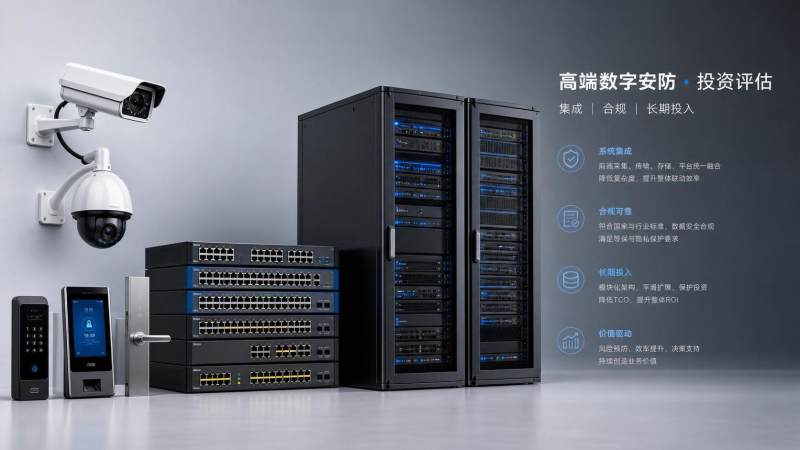
Digital protection costs start with scope, not just price
Digital protection rarely fails because of one expensive item. It usually becomes costly when scope is unclear from the beginning.
That is why digital protection costs should be reviewed as a full investment path, not a hardware quote.
In practice, budgets move with compliance exposure, site complexity, integration demands, lighting conditions, maintenance obligations, and upgrade timing.
For projects tied to public infrastructure, smart construction, campuses, logistics hubs, or urban safety programs, those variables can shift totals quickly.
GSIM tracks these shifts through its Strategic Intelligence Center, where policy updates, optical technology trends, and procurement patterns are linked in one view.
That matters because digital protection spending is no longer only about cameras, control points, or software licenses.
It is also about whether the system remains compliant, usable, and scalable over several budget cycles.
What is usually included in total digital protection investment?
A common question is whether digital protection costs mean equipment only. Usually, they do not.
The more reliable view combines direct and indirect spending. That gives a clearer basis for approval and later control.
- Core devices such as surveillance endpoints, access systems, edge processors, storage, and network upgrades.
- Optical environment work, including illumination balancing, glare control, and visibility improvement for image performance.
- Platform software, analytics, cybersecurity layers, and interoperability middleware.
- Design, installation, commissioning, testing, and operator training.
- Ongoing support, firmware updates, replacements, energy use, and audit preparation.
The optical side is often underestimated. Poor light conditions can force higher device specifications and larger storage loads.
A better-lit environment may reduce false alarms, improve video evidence quality, and protect the original digital protection investment.
This is where GSIM’s focus on physical security assurance and optical environment optimization becomes useful as a reference model.
Why do two digital protection proposals look similar but cost very differently?
On paper, two proposals may list similar quantities. The gap usually appears in performance assumptions and future obligations.
One system may cover basic monitoring. Another may be built for evidential quality, analytics accuracy, and cross-site management.
That difference changes storage sizing, bandwidth planning, retention periods, and support structure.
Compliance also affects pricing. Electronic surveillance rules, privacy controls, retention regulations, and procurement standards can require extra layers.
In regulated environments, the cheaper option can become the more expensive one after retrofits and audit corrections.
GSIM’s Latest Sector News and compliance interpretation help explain why regional rules change total digital protection costs even before installation begins.
This comparison helps frame a better question: what exactly is the proposal designed to guarantee over time?
Which project conditions push digital protection costs higher fastest?
Some cost drivers are predictable. Others appear only after technical review. The fastest budget increases usually come from environmental and architectural realities.
Large perimeters, mixed indoor and outdoor zones, legacy buildings, and remote assets often need more custom engineering.
Lighting quality also matters more than many approval models assume. Uneven brightness can reduce analytics accuracy and force compensating investments.
Projects become more expensive when they require all of the following at once:
- 24/7 monitoring with long data retention.
- Multi-site dashboards and centralized control.
- AI vision functions with low false-positive tolerance.
- Cross-border compliance and documentation requirements.
- Rapid deployment within fixed construction or upgrade windows.
GSIM’s Evolutionary Trends research is relevant here because AI vision and Visible Light Communication are changing how performance is specified.
When those technologies are expected later, the initial digital protection design may need more flexible infrastructure from day one.
How can cost be judged without ignoring risk?
The strongest reviews do not ask for the lowest quote first. They test whether the quote matches the operational risk profile.
A useful method is to separate cost into three layers: must-have protection, efficiency-enhancing functions, and future expansion options.
That makes digital protection costs easier to compare without losing the reason the project exists.
In actual reviews, the following checks often improve decisions:
- Confirm whether performance targets are measurable, not just described in broad terms.
- Ask which assumptions depend on ideal lighting, clean network conditions, or limited occupancy.
- Review retention, cybersecurity, and maintenance obligations over three to five years.
- Check where vendor lock-in may raise future software or integration costs.
- Verify whether the design supports phased expansion instead of full replacement later.
This is also where external market intelligence helps. Procurement trend analysis can reveal whether pricing is temporarily inflated or structurally justified.
GSIM’s Commercial Insights are useful in that sense because they connect project pricing with broader smart site and public safety demand patterns.
What mistakes make digital protection spending harder to defend later?
The biggest mistake is approving a technical list without a lifecycle view. Savings at purchase stage can produce higher corrective costs later.
Another common issue is treating lighting and protection as separate decisions. In many environments, they directly affect each other.
If optical conditions are ignored, the organization may pay twice: once for premium hardware, then again for operational tuning.
There is also a documentation gap in many projects. Requirements are discussed, but acceptance criteria are not defined clearly enough.
When audits, disputes, or expansion requests appear, that missing structure weakens the original business case.
What is a practical next step before approving digital protection costs?
A practical next step is to build a short decision map before reviewing final quotes.
Keep it simple. Define the operating environment, risk priorities, compliance exposure, expected service life, and expansion horizon.
Then compare proposals against those conditions, not against unit price alone.
For digital protection, the strongest investment case usually comes from clarity, not complexity.
That means asking whether the system fits real site conditions, whether optical performance supports security outcomes, and whether future changes are already anticipated.
GSIM can serve as a useful reference point during that process because it connects standards, policy interpretation, optical technology signals, and procurement intelligence.
When those inputs are reviewed together, digital protection costs become easier to justify, compare, and manage across the full lifecycle.
Before moving forward, it is worth documenting three items clearly: the risk being funded, the performance being expected, and the future change the system must survive.
That kind of preparation does not slow decisions. More often, it prevents expensive revisions after approval.
The VitalSync Intelligence Brief
Receive daily deep-dives into MedTech innovations and regulatory shifts.