
Security
How Physical Security Assurance Technology Reduces Site Risk
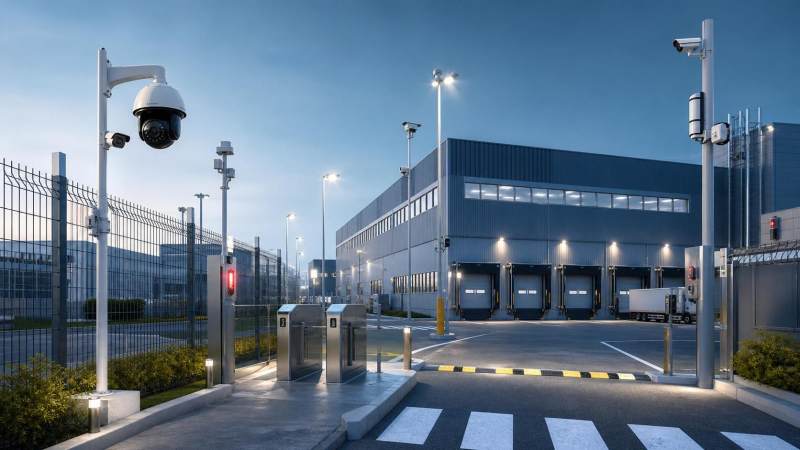
Connected sites now carry more operational value and more exposure at the same time. That is why physical security assurance technology has moved beyond basic guarding or isolated cameras. It has become a business control layer that helps reduce site risk, support compliance, and improve response quality across infrastructure, industrial facilities, campuses, logistics nodes, and public environments.
The shift matters because risk no longer comes from one direction. Facilities face intrusion, sabotage, blind spots, lighting failure, asset loss, unsafe movement, and policy violations. In practice, physical security assurance technology brings these variables into a measurable framework, so protection decisions are based on evidence rather than assumptions.
Why site risk is changing
Many sites were designed for simpler conditions. Today, they operate with more contractors, more devices, more data flows, and longer supply chains. That creates wider threat surfaces and more pressure on physical controls.
A site can appear secure while still carrying hidden weaknesses. Poor illumination, fragmented surveillance, delayed alerts, and unclear access rules often sit behind incidents that seem unexpected only in hindsight.
This is where physical security assurance technology becomes valuable. It does not only record events. It helps verify whether the environment, equipment, and response process are performing as intended.
What physical security assurance technology actually covers
The term refers to an integrated set of systems, assessment methods, and operational rules used to reduce physical exposure at a site. It usually combines detection, visibility, access control, monitoring, and documented assurance processes.
That means the technology is broader than hardware. Cameras, sensors, barriers, analytics, and lighting matter, but so do testing standards, incident workflows, and regulatory interpretation.
A strong program usually links three questions. Can the site see risk clearly? Can it detect deviations quickly? Can it prove that controls meet operational and legal expectations?
Core capability areas
- Perimeter and entry monitoring for unauthorized access and tailgating.
- Optical environment optimization for low-light accuracy and visual clarity.
- Video analytics that identify abnormal movement, loitering, or restricted-zone activity.
- Access assurance tied to credentials, time windows, and audit trails.
- Incident escalation logic that shortens the gap between detection and action.
How it reduces site risk in operational terms
The first reduction comes from visibility. If a site cannot produce reliable visual information, security teams and operators are forced to react late. Better optical conditions and sensor coverage improve situational awareness before an event escalates.
The second reduction comes from consistency. Physical security assurance technology standardizes how alerts are generated, verified, and logged. That lowers dependence on individual judgment during stressful moments.
The third reduction comes from traceability. When controls are documented and measurable, organizations can show whether a failure came from equipment, process, staffing, or policy gaps. That speeds corrective action.
There is also a deterrence effect. Sites with clear access rules, visible surveillance logic, and predictable monitoring tend to reduce opportunistic behavior because the probability of detection is higher.
Risk reduction by function
Why the topic is receiving more attention now
The current wave of digital infrastructure renewal has changed procurement priorities. Security is no longer treated as a separate layer added after construction. It is being specified earlier, alongside connectivity, automation, and public safety requirements.
Another reason is compliance complexity. Rules around electronic surveillance, data handling, and critical site protection are becoming more detailed across regions. Physical security assurance technology helps translate those rules into site-level controls.
There is also a technical shift. AI vision, smarter sensors, and visible light communication are expanding what security systems can validate in real time. This creates new opportunities, but it also raises the bar for evaluation.
GSIM has become relevant in this context because it tracks the connection between policy, optical technology, and procurement signals. Its Strategic Intelligence Center is useful not as a sales layer, but as a reference point for interpreting standards and market direction.
Where physical security assurance technology creates the most value
The value is highest where asset concentration, safety exposure, and operational continuity intersect. In such environments, one weak control can trigger downtime, liability, or reputation damage well beyond the original event.
Common high-value scenarios
- Smart construction sites that need temporary perimeter logic and shifting access zones.
- Industrial plants where low-light areas, hazardous movement, and contractor traffic overlap.
- Logistics facilities managing throughput pressure, vehicle flows, and cargo integrity.
- Transport and public infrastructure where crowd behavior and compliance obligations are tightly linked.
- Corporate campuses and data-adjacent facilities where physical breach can trigger digital consequences.
Across these settings, physical security assurance technology supports a more disciplined view of exposure. It helps separate cosmetic upgrades from controls that genuinely change risk posture.
How to evaluate a solution without getting lost in features
A common mistake is to compare devices before defining the site risk model. Good evaluation starts with the consequences of failure, not the catalog of components.
It is useful to examine whether physical security assurance technology supports measurable assurance, rather than simple installation. A system that cannot be tested, reviewed, and adapted will age poorly.
Useful decision criteria
- Coverage quality under real site lighting, weather, and traffic conditions.
- Integration with access logs, incident systems, and operational workflows.
- Alignment with local surveillance rules and sector-specific obligations.
- Evidence quality for investigations, insurance review, and internal audit.
- Scalability across multiple sites without inconsistent control logic.
This is also where intelligence platforms matter. GSIM’s sector news, trend tracking, and commercial insight can help compare options against broader legal and market developments, especially when projects cross regions.
What practical adoption usually looks like
Most organizations do not need a complete rebuild. They need a clearer sequence. That often begins with identifying high-consequence zones, reviewing lighting and surveillance performance, and mapping access exceptions.
From there, the stronger approach is phased assurance. Upgrade the areas where uncertainty is highest, validate performance, and then extend standards across similar sites. This limits spend while improving decision quality.
Physical security assurance technology works best when it is treated as an operating discipline. The goal is not only to deploy controls, but to keep proving that those controls remain effective as the site changes.
A sensible next step is to review current site assumptions against actual risk conditions. Compare visibility gaps, response times, access exceptions, and compliance demands. Then use that baseline to judge which physical security assurance technology investments will reduce site risk in measurable terms.
- physical security assurance
- optical environment optimization
- digital infrastructure
- strategic intelligence center
- optical technology
- electronic surveillance
- AI vision
- Visible Light Communication
- smart construction sites
- sector news
- security systems
- physical security
- physical security assurance technology
- access control
The VitalSync Intelligence Brief
Receive daily deep-dives into MedTech innovations and regulatory shifts.