
Security
How to Evaluate a Security Compliance Solutions Manufacturer
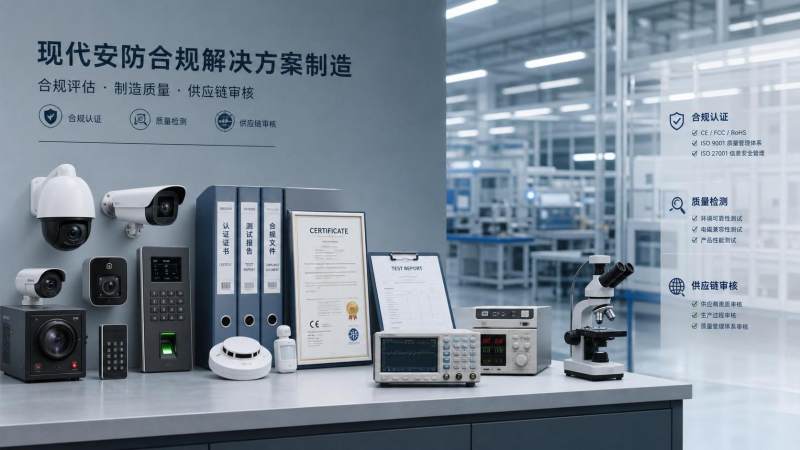
How to Evaluate a Security Compliance Solutions Manufacturer
Choosing the right security compliance solutions manufacturer can determine whether your procurement project achieves regulatory readiness, operational reliability, and long-term value.
For buyers navigating complex security standards, evolving technologies, and global sourcing risks, a structured evaluation process is essential.
This guide outlines the key factors procurement teams should review to identify qualified manufacturers and make more confident purchasing decisions.
Why Manufacturer Evaluation Matters More in 2026
Security procurement is no longer just about price, lead time, and product catalogs.
In 2026, compliance pressure is rising across surveillance, access control, perimeter detection, and smart infrastructure projects.
That means every security compliance solutions manufacturer must now prove legal alignment, quality discipline, and technical resilience.
A weak supplier can create hidden costs through failed audits, delayed approvals, system incompatibility, and expensive rework.
A strong security compliance solutions manufacturer reduces these risks and supports faster, cleaner project execution.
Start with Regulatory and Standards Competence
The first test is simple.
Can the security compliance solutions manufacturer clearly explain which standards apply to your market and application?
Good manufacturers do not give vague answers.
They map products to standards, testing methods, certification status, and regional compliance pathways.
Depending on the project, this may include ISO, IEC, CE, FCC, UL, NDAA-related sourcing checks, RoHS, or cybersecurity baselines.
In practical sourcing, it helps to request a compliance matrix early.
This document should show product models, certificates, expiry dates, test labs, and market access notes.
Review these areas:
- Validity of product certifications and test reports
- Traceability of standards updates and document control
- Experience with export compliance and customs documentation
- Ability to support local registration or authority review
Assess Manufacturing Quality Beyond the Brochure
A polished brochure does not confirm production discipline.
A dependable security compliance solutions manufacturer should show repeatable quality systems, not just sample-level performance.
Ask how incoming materials are checked, how process deviations are managed, and how final inspections are documented.
If possible, review audit reports or conduct a factory assessment.
This becomes even more important for products used in public safety, transportation, utilities, or critical site monitoring.
Key quality signals include:
- Stable bill of materials and controlled component substitutions
- Clear nonconformance handling and corrective action process
- Lot traceability for finished units and critical parts
- Environmental, burn-in, or stress testing records
- Measured defect rates and warranty claim history
A credible security compliance solutions manufacturer will usually share this information with confidence, even if some data is under NDA.
Check Technical Fit for Real Deployment Conditions
Compliance alone is not enough.
The security compliance solutions manufacturer must also fit the real operating environment.
That includes climate, network conditions, lighting complexity, maintenance access, and integration with existing platforms.
From recent market shifts, one stronger signal is the merging of AI vision, optical optimization, and compliance-driven security design.
This is especially relevant in smart construction sites, logistics facilities, campuses, and urban safety projects.
In other words, the best supplier is not always the one with the longest product list.
It is the one that understands system performance in context.
Ask these technical questions:
- Can the solution integrate with your VMS, PSIM, access platform, or edge analytics stack?
- How does the product perform in low light, glare, dust, vibration, or temperature extremes?
- Are firmware updates secure, documented, and manageable at scale?
- Does the manufacturer support interoperability testing before rollout?
Review Supply Chain Transparency and Sourcing Risk
Supply chain visibility has become a core procurement issue.
A security compliance solutions manufacturer may look strong on paper, yet still depend on unstable components or opaque subcontractors.
That creates cost volatility and regulatory exposure.
This also matters when projects require origin disclosure, restricted vendor screening, or resilient delivery planning.
Review the following points carefully:
- Critical component sourcing and approved alternatives
- Use of contract manufacturers or secondary assembly sites
- Business continuity planning for shortages or geopolitical disruption
- Lead-time consistency across standard and customized orders
- Ability to provide documentation for traceable sourcing
A transparent security compliance solutions manufacturer will discuss these risks early instead of waiting for contract signing.
Compare Total Cost, Not Just Unit Price
Price still matters, but unit price alone can be misleading.
When evaluating a security compliance solutions manufacturer, total cost of ownership gives a much clearer picture.
This includes installation efficiency, configuration time, training needs, maintenance load, spare parts strategy, and lifecycle support.
Cheaper products often become expensive when certifications are incomplete or technical support is slow.
In real projects, delays caused by reapproval or field failures usually cost more than the original discount.
Build a comparison table around these items:
Validate Service Capability After the Purchase Order
Support quality often separates average suppliers from strategic ones.
A reliable security compliance solutions manufacturer should stay useful after delivery, not disappear once the invoice is paid.
Look at onboarding support, technical escalation paths, replacement handling, and documentation responsiveness.
This matters even more when deployments span multiple countries or involve phased installation schedules.
Useful checkpoints include:
- Named support contacts for sales, engineering, and after-sales
- Documented SLA or response commitments
- Availability of training materials and commissioning guides
- Regional service partners or multilingual support coverage
Use a Practical Evaluation Scorecard
To make decisions more objective, use a weighted scorecard.
This helps compare each security compliance solutions manufacturer using the same logic.
It also reduces the chance of choosing a supplier based only on sales confidence or short-term discounts.
A simple structure may look like this:
- Compliance and certifications: 25%
- Manufacturing quality and traceability: 20%
- Technical fit and interoperability: 20%
- Supply chain resilience: 15%
- Total cost of ownership: 10%
- Service and post-sales support: 10%
You can adjust the weighting by project type, risk level, or contract size.
Final Decision: Choose Evidence Over Claims
The best security compliance solutions manufacturer is not simply the biggest, cheapest, or most visible online.
It is the one that can prove compliance readiness, production consistency, technical fit, and long-term support.
In actual business, better procurement decisions usually come from better questions, not faster quotes.
That is why a structured review process matters.
As global safety standards and digital infrastructure demands continue to rise, supplier evaluation becomes a strategic capability.
Organizations that verify deeply usually buy better, deploy faster, and face fewer compliance surprises later.
If you are reviewing a security compliance solutions manufacturer now, start with evidence, score risk honestly, and compare long-term value before making the final award.
The VitalSync Intelligence Brief
Receive daily deep-dives into MedTech innovations and regulatory shifts.