
Security
New Maritime Code Shifts No-Pickup Liability to Shippers
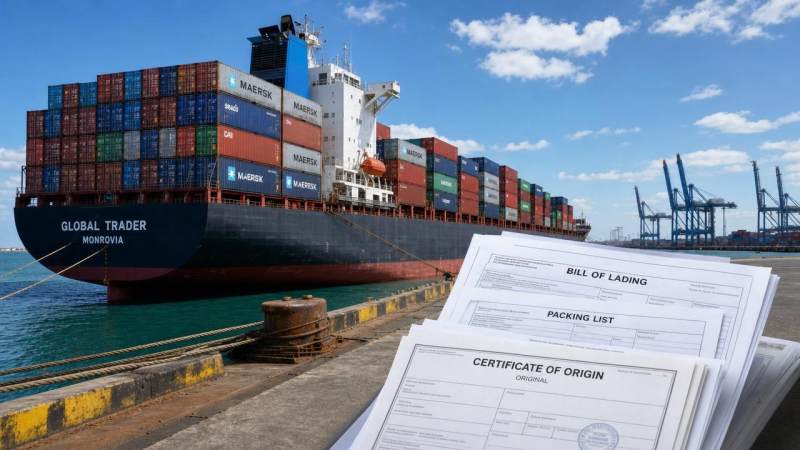
Effective May 1, 2026, the revised Maritime Code of the People’s Republic of China introduces a material change in liability allocation for cargo abandonment at discharge ports — shifting primary legal responsibility from consignees to shippers. This adjustment directly affects export-oriented enterprises in high-value, long-lead-time sectors such as security equipment, industrial LED lighting, and fire protection systems, where documentation precision, insurance alignment, and buyer credit assessment are now under heightened operational scrutiny.
Event Overview
As of May 1, 2026, Article 93 of the newly revised Maritime Code of the People’s Republic of China stipulates that in cases of non-takeover of goods at the port of discharge — including failure to present documents, refusal to pay duties, or outright buyer default — the shipper, not the consignee, bears primary legal and financial liability. The provision applies irrespective of contractual terms agreed between shipper and consignee, unless explicitly validated and enforceable under applicable international conventions (e.g., Hague-Visby Rules) and recognized foreign law jurisdictions.
Industries Affected
Direct Export Trading Enterprises: These firms — typically SMEs handling end-to-end export transactions — face elevated exposure in documentary compliance, pre-shipment risk mitigation, and post-discharge contingency planning. Under the new rule, standard Incoterms® such as FOB or CIF no longer insulate shippers from liability arising after cargo arrival if the consignee fails to act; thus, trade finance instruments, letters of credit conditions, and delivery confirmation protocols require urgent review.
Raw Material Procurement Enterprises: While not directly involved in shipping documentation, procurement entities supplying components to exporters (e.g., optical sensors for surveillance cameras or lithium battery cells for emergency lighting) may experience upstream pressure to accept shorter payment cycles or extended liability clauses in supply agreements — particularly when their downstream customers seek to reallocate risk stemming from the revised Code.
Contract Manufacturing Enterprises: OEM/ODM producers fulfilling export orders on behalf of foreign brand owners now confront dual-layer exposure: first, under their manufacturing agreements (where liability for shipment defaults may be contractually assigned back to them), and second, under the new statutory framework if named as ‘shipper’ on bills of lading. This increases demand for precise role definition in logistics documentation and clearer delineation of ‘shipper’ status across supply chain tiers.
Supply Chain Service Providers: Freight forwarders, customs brokers, and marine insurers must adapt service offerings to reflect the shift. Forwarders may need to revise standard terms to clarify their advisory scope versus legal liability; brokers may face increased requests for pre-arrival consignee verification; and insurers may adjust premium structures or exclusions for ‘non-takeover’ scenarios — especially in markets with weak import infrastructure or volatile currency regimes (e.g., certain Middle Eastern and Latin American jurisdictions).
Key Focus Areas and Recommended Actions
Review and Redraft Shipping Documentation
Shippers should audit all standard bills of lading, sea waybills, and booking confirmations to ensure ‘shipper’ identity aligns with actual legal responsibility — avoiding inadvertent designation where third parties (e.g., trading intermediaries) appear as shipper without assuming associated risk. Where feasible, use negotiable bills with explicit ‘shipper’s lien’ clauses to retain title and control pending payment or pickup confirmation.
Strengthen Pre-Shipment Credit Due Diligence
Especially for emerging-market buyers, exporters should integrate real-time commercial registry checks, bank reference validation, and local agent verification into order acceptance workflows. Consider requiring advance payments or standby letters of credit covering demurrage, storage, and re-export costs — not just product value.
Reassess Marine Cargo Insurance Coverage
Standard Institute Cargo Clauses (A) do not cover liabilities arising from non-takeover at destination. Exporters must evaluate whether supplemental ‘shipper’s liability’ or ‘warehousing & disposal’ endorsements are available — and confirm insurer willingness to underwrite such risks given jurisdictional enforcement uncertainty.
Editorial Perspective / Industry Observation
Observably, this amendment reflects a broader regulatory trend toward strengthening domestic accountability in cross-border trade — prioritizing port efficiency and carrier recourse over traditional consignee-centric liability models. Analysis shows the change is less about penalizing shippers than about incentivizing more rigorous counterparty vetting and documentation discipline. From an industry standpoint, it signals a structural recalibration: the ‘shipper’ is increasingly treated not merely as a contractual party, but as the anchor of end-to-end supply chain integrity. Current evidence does not suggest immediate enforcement escalation, but early case law from Shanghai and Guangzhou maritime courts indicates growing judicial emphasis on bill-of-lading privity and shipper identification accuracy.
Conclusion
The revision marks a consequential pivot in maritime risk allocation — one that reframes export compliance not as a procedural formality, but as a strategic governance function. For sectors characterized by complex global distribution, long lead times, and fragmented buyer ecosystems, the new framework elevates documentation rigor, credit intelligence, and contractual clarity from operational best practices to core risk management imperatives. A measured, proactive adaptation — rather than reactive compliance — will define competitive resilience in the post-May 2026 landscape.
Source Attribution
Official text: Standing Committee of the National People’s Congress, Decision on Amending the Maritime Code of the People’s Republic of China, adopted December 28, 2025; effective May 1, 2026. Published in the State Council Gazette, No. 52, 2025. Interpretive guidance issued by the Supreme People’s Court (SPC Notice No. [2026] 7) remains pending — further clarification on burden of proof, force majeure carve-outs, and applicability to multimodal transport is subject to ongoing judicial interpretation and warrants continued monitoring.
The VitalSync Intelligence Brief
Receive daily deep-dives into MedTech innovations and regulatory shifts.