
Security
Procurement Trends Shaping 2026 Budget Decisions
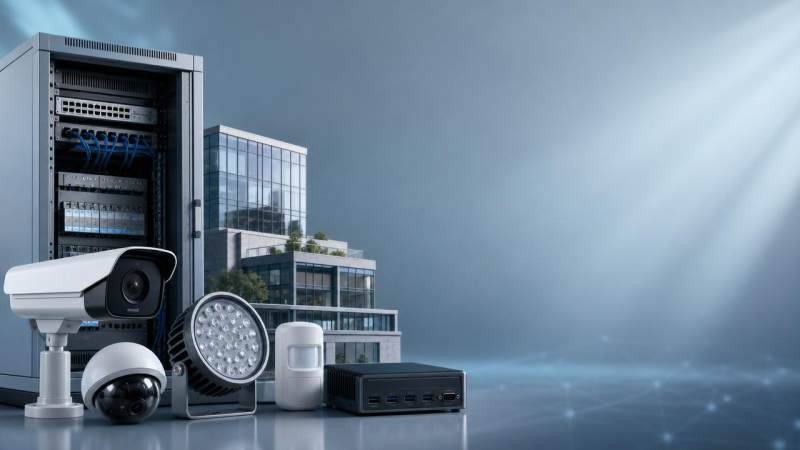
As 2026 budget cycles approach, financial approvers face growing pressure to justify every investment in security, illumination, and digital infrastructure. The latest procurement trends show a shift from price-led purchasing to risk-based, compliance-ready, and lifecycle-focused decision-making. For organizations planning smart construction sites, public safety upgrades, or AI-enabled surveillance environments, understanding these trends is essential to balancing capital discipline with long-term resilience. GSIM helps decision-makers evaluate where spending creates measurable protection, operational efficiency, and future-ready value.
Procurement Trends Shaping 2026 Budget Decisions
The 2026 planning cycle is different because assets are no longer purchased as isolated products. Cameras, lighting, sensors, edge devices, software, and compliance records now operate as one connected environment.
This is why procurement trends matter. They reveal how capital requests, operating costs, security assurance, and public safety outcomes are being evaluated together.
GSIM tracks these procurement trends across digital infrastructure, electronic surveillance, optical optimization, and smart-site modernization. The goal is practical clarity, not technology noise.
Why Checklist-Based Budget Review Is Now Essential
Budget decisions in 2026 need a structured checklist because risk exposure is increasing. Regulatory scrutiny, cyber-physical convergence, and AI governance are changing purchase justification.
Traditional price comparison misses hidden liabilities. Poor interoperability, weak audit trails, unsuitable lighting, and unsupported analytics can turn low-cost purchases into expensive failures.
Current procurement trends favor evidence. Spending proposals should connect each item to operational need, legal defensibility, maintenance planning, and measurable protection value.
A checklist also reduces fragmented decision-making. It helps security, facilities, technology, finance, and compliance considerations remain aligned during budget approval.
Core Checklist for 2026 Procurement Trends
Use this checklist to evaluate whether a proposed investment reflects the strongest procurement trends for resilient and compliant infrastructure planning.
- Map each purchase to a documented risk scenario, such as perimeter intrusion, low-visibility incidents, unauthorized access, traffic exposure, or public-space monitoring gaps.
- Validate compliance requirements before vendor selection, including surveillance law, data retention, evidence handling, accessibility rules, and applicable electrical or optical standards.
- Compare total lifecycle cost, not only purchase price, by including installation, calibration, energy use, software licensing, maintenance, upgrades, and decommissioning.
- Require interoperability evidence across cameras, lighting controls, access systems, cloud platforms, edge processors, dashboards, and incident response workflows.
- Assess illumination performance under real site conditions, including glare, contrast, uniformity, color rendering, weather impact, and camera image quality.
- Confirm AI readiness through data quality, model transparency, bias controls, human review procedures, cybersecurity protection, and responsible escalation rules.
- Prioritize modular architecture so future upgrades can be added without replacing entire systems or locking budgets into rigid infrastructure.
- Score supplier resilience by reviewing component availability, warranty depth, service response, documentation quality, regional support, and continuity planning.
- Demand measurable outcomes, such as reduced incident response time, improved detection accuracy, lower energy consumption, fewer blind spots, and stronger audit readiness.
- Document decision logic clearly, linking procurement trends to budget assumptions, risk controls, operational savings, and governance expectations for 2026.
Budget Criteria Behind Strong Procurement Trends
The strongest procurement trends are moving budgets toward value verification. Decision files need more than product specifications and supplier quotations.
They need assumptions that can survive audit. This includes why the investment is needed, what risk it reduces, and how performance will be measured.
1. Shift from Capex Price to Lifecycle Value
Many procurement trends show that the cheapest approved asset often becomes expensive after commissioning. Energy use, labor time, repairs, and license renewals change the real cost.
For lighting and security systems, lifecycle value also includes visibility quality, forensic usefulness, safety outcomes, and the ability to remain compliant over time.
2. Shift from Product Buying to System Assurance
Modern procurement trends favor system assurance. A surveillance device, luminaire, or sensor must work inside a larger chain of detection, verification, response, and reporting.
GSIM supports this view by linking physical security assurance with optical environment optimization. This makes budget review more practical and less fragmented.
3. Shift from Vendor Claims to Evidence-Based Selection
Procurement trends for 2026 require proof. Field test reports, compliance certificates, integration references, cybersecurity documentation, and maintenance records carry increasing weight.
Evidence protects budgets from optimistic assumptions. It also helps distinguish durable infrastructure investments from attractive but under-supported technology claims.
Scenario Guidance for Different Investment Environments
Smart Construction Sites
Smart construction sites require mobile visibility, temporary power planning, worker safety monitoring, and rapid deployment. Procurement trends point toward modular systems with ruggedized components.
Budget requests should include relocation costs, site phase changes, dust exposure, network availability, and night-work illumination. These factors affect real performance.
Public Safety Upgrades
Public safety projects face higher accountability. Procurement trends emphasize transparent governance, privacy controls, reliable evidence capture, and clear response protocols.
Lighting quality is also critical. Poor illumination can reduce camera accuracy, increase glare complaints, and weaken incident reconstruction.
AI-Enabled Surveillance Environments
AI-enabled environments need careful budgeting because analytics depend on camera placement, image quality, bandwidth, compute power, and human validation procedures.
Procurement trends suggest funding AI governance as part of the system. Excluding training, monitoring, and review processes creates operational risk.
Commercial and Mixed-Use Facilities
Commercial facilities need investments that protect people, assets, and brand trust without disrupting daily operations. Procurement trends favor discreet, integrated, and energy-aware solutions.
Budgets should consider visitor flow, parking areas, delivery zones, emergency lighting, tenant requirements, and long-term service continuity.
Commonly Ignored Risks in 2026 Budget Planning
Ignoring optical conditions weakens security performance. Cameras and analytics cannot compensate fully for poor lighting, harsh contrast, blind zones, or glare-heavy environments.
Underestimating compliance costs creates later budget pressure. Data handling, consent requirements, evidence storage, and audit reporting must be funded from the beginning.
Buying closed systems reduces future flexibility. Several procurement trends show that rigid platforms create replacement costs when expansion, integration, or regulation changes.
Skipping cybersecurity review exposes physical assets. Networked lighting, cameras, sensors, and control platforms are digital infrastructure, not simple hardware.
Failing to budget maintenance reduces protection quality. Dirty lenses, degraded luminaires, outdated firmware, and misaligned sensors can silently reduce system effectiveness.
Practical Execution Steps for 2026 Budgets
- Start with a risk register that ranks threats by likelihood, impact, visibility conditions, response limits, and regulatory exposure.
- Create a system map showing how lighting, cameras, analytics, access control, connectivity, and reporting tools interact.
- Build a three-year lifecycle model that separates capital cost, operating cost, compliance cost, and upgrade cost.
- Run site validation before approval, using sample footage, lighting measurements, network checks, and workflow simulations.
- Require supplier evidence that includes certifications, integration records, service terms, cybersecurity controls, and continuity commitments.
- Define success metrics before deployment, then link payment milestones or renewal decisions to measurable performance outcomes.
These steps turn procurement trends into budget discipline. They also reduce the risk of approving disconnected purchases that fail during real incidents.
How GSIM Supports Better Procurement Decisions
GSIM provides intelligence that connects global security policies with optical technology developments. This helps decision files reflect both current obligations and emerging risks.
Through sector news, evolutionary trend analysis, and commercial insights, GSIM monitors procurement trends affecting smart construction, public safety, and digital infrastructure.
Its perspective is especially useful when budgets must balance safety, compliance, energy performance, AI adoption, and supplier reliability.
Summary and Action Guide
The most important procurement trends for 2026 point toward disciplined, evidence-based investment. Price still matters, but it no longer defines value alone.
Budget decisions should prove risk reduction, lifecycle efficiency, compliance readiness, interoperability, and future scalability. This is the foundation of resilient infrastructure planning.
Begin with a checklist review of active projects. Identify where assumptions are weak, where evidence is missing, and where lifecycle costs remain unclear.
Then align investment proposals with the procurement trends shaping 2026. The result is clearer approval logic, stronger protection outcomes, and smarter long-term spending.
With GSIM’s principle of “Visioning Risks, Illuminating the Future,” organizations can plan security and illumination budgets that are measurable, defensible, and ready for change.
The VitalSync Intelligence Brief
Receive daily deep-dives into MedTech innovations and regulatory shifts.