
Security
Security Compliance Gaps That Lead to Costly Corrective Actions
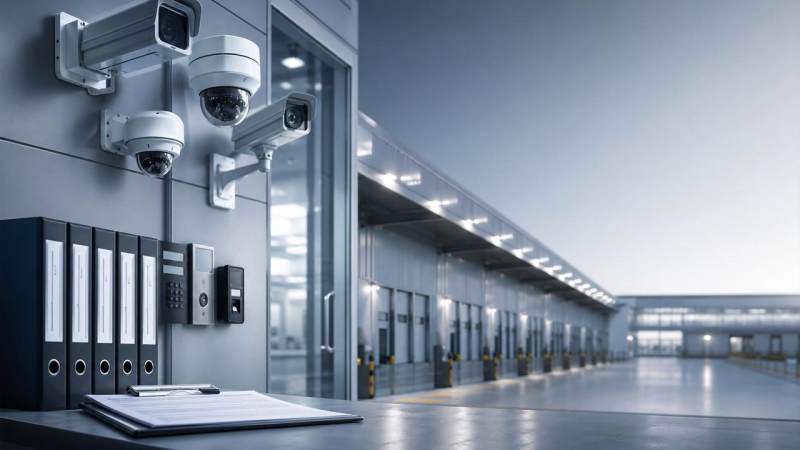
Security compliance gaps rarely fail loudly at first—they surface later as audits, delays, fines, and expensive corrective actions. For quality control and safety managers, understanding where standards break down is essential to protecting operations, reputation, and project continuity. This article explores the most common compliance blind spots and how intelligence-driven oversight can reduce risk before small failures become costly disruptions.
What are security compliance gaps, and why do they become expensive so quickly?
In practical operations, security compliance gaps are not limited to obvious violations. They often begin as missing inspection records, outdated camera placement drawings, unverified access control logic, lighting levels that no longer match risk zones, or procurement decisions made without checking the latest legal and technical requirements. For quality control and safety managers, these gaps matter because they usually sit inside normal workflows for 30, 60, or 90 days before they trigger a formal issue.
The cost grows because corrective action rarely affects one department only. A single nonconformity may force re-inspection, contractor remobilization, additional site testing, revised documentation, replacement components, and delayed handover. In smart buildings, logistics hubs, public areas, and industrial campuses, one unresolved security compliance issue can easily interrupt commissioning sequences across surveillance, perimeter control, lighting, and networked monitoring.
Another reason these gaps become expensive is that physical security assurance now overlaps with optical performance, data governance, and operational continuity. A camera may be technically installed, but if illumination uniformity is poor, retention settings do not meet policy, or the line of sight creates privacy conflict, the system may still fail an internal or client review. That is why security compliance should be treated as a living control framework rather than a one-time checklist.
Which hidden failures appear most often before a corrective action notice?
Most recurring failures are small but cumulative. Teams may assume a site is compliant because equipment was sourced from reputable vendors, yet the actual gap exists in integration, documentation, operating settings, or field conditions. In many projects, the problem is not missing hardware but missing alignment between standard, application, and proof.
- Incomplete audit trails for inspections, firmware changes, alarm tests, and access rights reviews.
- Mismatch between security design intent and on-site optical conditions such as glare, dark zones, or excessive contrast.
- Outdated regulatory interpretation when projects span multiple regions, contractors, or handover phases.
- Procurement substitutions made without rechecking certifications, performance thresholds, or compatibility.
- Weak ownership of periodic review cycles, especially after expansion, retrofit, or staffing changes.
For managers responsible for quality and safety, early warning signs often appear in document lag, change control exceptions, and repeated field clarifications. When those signals are ignored for 2 to 3 review cycles, the final corrective action can be several times more expensive than early adjustment.
Which security compliance blind spots affect quality control and safety teams the most?
The most damaging blind spots are the ones that look operationally acceptable on the surface. Quality teams may verify installation quality, while safety teams focus on risk coverage, but neither side fully validates whether the installed system still aligns with current compliance expectations. This is common in facilities where security infrastructure evolves in phases over 6 to 18 months.
A frequent issue is fragmented ownership. One team manages surveillance hardware, another handles lighting, another controls network policy, and another signs off on contractor deliverables. Without a shared review matrix, security compliance becomes reactive. Corrective action then arrives after a client audit, insurer question, internal incident review, or authority inspection.
Optical environment control is also underestimated. Even when camera specifications are suitable on paper, the actual scene may include backlighting, reflective surfaces, vehicle headlight flare, or poor lux distribution. These conditions reduce recognition reliability and weaken the evidence value of surveillance, creating a compliance gap that is technical, operational, and legal at the same time.
What blind spots should be reviewed first?
The following table helps teams prioritize high-impact review areas. It focuses on common cross-industry conditions where security compliance failures often result in avoidable corrective cost.
This table shows why security compliance should be checked at control points, not only at project completion. In many facilities, the most effective approach is a 4-stage review: design approval, pre-installation verification, commissioning validation, and post-handover audit within the first 60 to 120 days.
How can teams separate minor issues from structural compliance risk?
A practical method is to classify each issue by three filters: effect on legal conformity, effect on operational coverage, and effect on evidence integrity. If one finding affects two or more filters, it is no longer a minor defect. For example, a misaligned camera combined with poor nighttime lux levels can compromise both operational coverage and evidentiary usefulness.
Teams should also score issues by correction burden. A documentation fix may take 1 to 3 days, while reworking field devices, cable routes, or lighting plans can take 2 to 6 weeks depending on site access, procurement lead time, and contractor availability. This helps prioritize interventions before cost escalates.
How do changing regulations and technology upgrades create new security compliance risks?
Security compliance becomes harder when legal expectations change faster than project delivery cycles. A facility upgrade approved at the design stage may face different documentation, retention, privacy, or device validation expectations by the time it reaches handover. This is particularly relevant in international projects and multi-site programs that extend across 9 to 24 months.
Technology integration adds another layer. AI-enabled analytics, remote monitoring, networked lighting controls, and emerging optical communication applications can improve performance, but they also require new governance decisions. If the compliance review process still reflects older hardware-only logic, managers may miss issues in data flows, algorithm use boundaries, or interoperability obligations.
This is where intelligence-driven oversight becomes valuable. A platform such as GSIM helps organizations connect evolving security policies with optical technology developments, procurement shifts, and implementation patterns across global infrastructure upgrades. Instead of reviewing compliance as a static file, teams gain a current decision-support view that reduces blind spots before purchase or deployment.
What changes should managers monitor continuously?
Not every update demands immediate redesign, but several categories should be tracked monthly or at least once per quarter. This is especially important for organizations managing high-footfall spaces, smart construction environments, transport interfaces, or distributed industrial operations.
- Regional policy updates affecting surveillance use, retention, disclosure, or cross-border data handling.
- Revisions in project specifications after contractor change, scope expansion, or phased opening.
- Optical environment changes caused by new structures, reflective materials, landscaping, or traffic patterns.
- Technology upgrades such as analytics, VLC-related infrastructure convergence, or integrated control platforms.
In practice, a quarterly review cadence is sufficient for many stable sites, while active construction or urban upgrade projects may need a 30-day cycle. The point is not to over-audit. It is to keep security compliance synchronized with the real operating environment.
What does a strong security compliance review process actually look like?
A strong process is structured, evidence-based, and repeatable across project stages. It does not wait for a formal audit to discover issues. Instead, it sets measurable checkpoints before design freeze, before installation closeout, before commissioning sign-off, and after initial operation. For many organizations, this means combining policy review, field inspection, optical verification, and document control into one workflow.
Quality control and safety managers should avoid treating documentation as a final administrative step. In high-risk applications, records are part of compliance itself. If alarm response tests, access rights approvals, firmware updates, or maintenance intervals are not recorded consistently, the organization may not be able to prove control, even if the physical system works.
The review process should also reflect operational realities. A hospital, warehouse, mixed-use development, and municipal public area do not share identical exposure patterns. Security compliance criteria should therefore be mapped to zone criticality, traffic density, incident history, and lighting conditions, rather than copied from a generic template.
Which checkpoints are most useful before corrective actions become expensive?
The next table outlines a practical review sequence that quality and safety teams can adapt for cross-industry use. It emphasizes timing, evidence, and decision responsibility.
This structure reduces the chance that security compliance becomes a late discovery. It also gives management a clearer basis for budgeting. A controlled fix at installation stage is usually less disruptive than a post-handover correction that affects users, contractors, and service continuity at the same time.
What evidence should always be retained?
At minimum, teams should retain approved layouts, equipment schedules, test records, maintenance logs, incident-response validation, change approvals, and records of any exception accepted by management. For regulated or high-exposure sites, retaining photographic verification and lux test references for key zones can help resolve later disputes about whether field conditions matched the approved design intent.
A practical retention period depends on project type and internal rules, but many organizations review security records at 12-month intervals to confirm completeness, retrievability, and continued relevance. This kind of discipline supports both operational readiness and future procurement decisions.
What are the most common mistakes when companies try to improve security compliance?
One common mistake is treating compliance as a procurement filter only. Teams confirm that products meet basic requirements, then assume the project is protected. In reality, security compliance depends just as much on installation quality, optical environment, maintenance discipline, and documentation integrity as it does on equipment selection.
A second mistake is overreliance on annual audits. Annual reviews are useful, but they are not enough for dynamic sites with contractor turnover, phased occupancy, or integrated digital infrastructure. If critical changes happen every 8 to 12 weeks, annual checks will inevitably miss risk accumulation.
A third mistake is isolating security from lighting and visibility planning. For GSIM’s field of focus, this is especially important. Physical security assurance and optical environment optimization affect each other directly. If visual conditions undermine detection, recognition, or incident reconstruction, a nominally compliant system can still fail operational expectations.
Which misconceptions should managers challenge internally?
The table below summarizes several frequent misconceptions and the more reliable interpretation for decision-makers.
For many organizations, the biggest improvement comes not from more paperwork, but from better timing and cross-functional visibility. When policy, technology, procurement, and field conditions are reviewed together, security compliance becomes more predictable and corrective actions become smaller, faster, and less expensive.
How can quality control and safety managers reduce corrective action costs before they happen?
The most effective way to reduce cost is to identify compliance drift early. That means setting up a review rhythm, defining ownership, and using intelligence that connects regulation, technology, and application reality. In many cases, avoiding one major rework cycle saves more time and budget than adding multiple late-stage inspections.
Managers should begin with a practical baseline: which standards apply, which zones are most sensitive, what evidence must be retained, what optical conditions are required, and what changes need formal approval. This baseline should then be translated into a site-ready checklist that can be used by procurement, installation, quality, and operations teams alike.
GSIM supports this approach by functioning as both a strategic intelligence source and a decision-support resource. Through structured monitoring of policy developments, technology convergence, and commercial project trends, teams can assess security compliance more proactively instead of reacting after a failure has already become visible to auditors or clients.
What should managers confirm before the next review, purchase, or rollout?
- Whether the current design basis still matches the latest compliance obligations in each operating region.
- Whether proposed equipment or substitutions affect certification, interoperability, visibility, or retention controls.
- Whether critical zones have been rechecked for illumination, glare, obstruction, and evidence quality after site changes.
- Whether the documentation chain is complete from specification through maintenance and change control.
- Whether the review cycle is aligned with project speed, typically every 30, 90, or 180 days depending on risk.
If your team is preparing a facility upgrade, evaluating a multi-site security program, or trying to reduce recurring corrective actions, early clarification is far more efficient than late remediation. The right questions usually involve parameter confirmation, product selection, delivery timing, documentation expectations, optical performance, and applicable compliance requirements.
Why choose us for security compliance decision support?
GSIM brings together global policy interpretation, physical security assurance thinking, and optical environment insight in one professional knowledge framework. That combination is useful for quality control and safety managers who need more than product data—they need a clearer basis for judging risk, implementation fit, and future-proof compliance decisions.
You can contact us to discuss security compliance priorities for your project, including specification review, application scenarios, product selection direction, delivery cycle planning, custom solution alignment, certification-related concerns, sample support, and quotation communication. If your current challenge involves surveillance, lighting interaction, smart infrastructure upgrades, or cross-region compliance interpretation, an early consultation can help narrow risk before corrective action becomes the more expensive option.
The VitalSync Intelligence Brief
Receive daily deep-dives into MedTech innovations and regulatory shifts.