
Security
Security Compliance Solutions: What to Compare
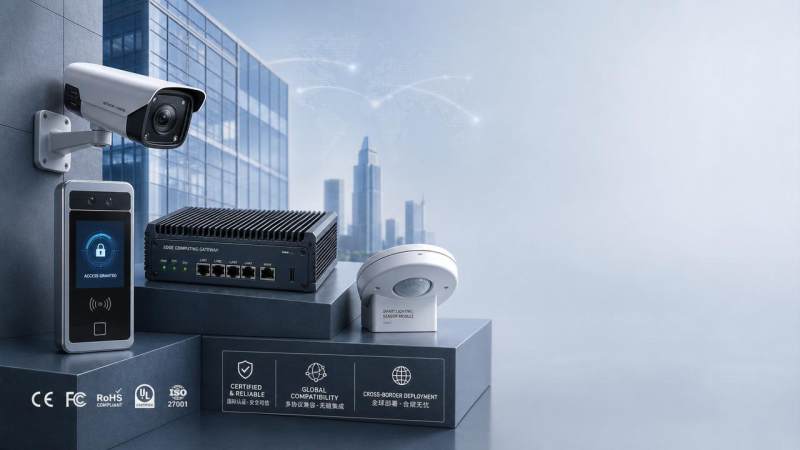
Choosing security compliance solutions now shapes eligibility, resilience, and cross-border continuity. In security, lighting, and smart infrastructure, compliance has become a strategic filter, not a final checklist.
Across integrated projects, buyers compare legal fit, technical assurance, and lifecycle governance together. That shift makes security compliance solutions central to surveillance, access control, data handling, and optical environments.
GSIM tracks this shift through policy intelligence, optical technology analysis, and procurement trend observation. Its perspective helps connect standards, hardware realities, and long-term operational decisions.
Why security compliance solutions are moving from support function to market gatekeeper
The market changed because security systems now operate inside broader digital infrastructure. Cameras, sensors, smart lighting, edge devices, and control software increasingly share networks, data, and accountability.
At the same time, regulations became less isolated. Product safety, cybersecurity, privacy, retention rules, and procurement eligibility now overlap in one decision path.
This means weak security compliance solutions can block tenders, delay approvals, or increase retrofit costs. Stronger solutions reduce uncertainty before deployment begins.
The trend is especially visible in public safety upgrades, smart campuses, logistics sites, transport hubs, and digitally managed construction environments.
The strongest trend signals behind security compliance solutions comparison
Several signals explain why comparing security compliance solutions has become more complex and more necessary in 2026 planning cycles.
These signals show why security compliance solutions should be assessed as operating systems for trust, not only as documentation packages.
What to compare first when evaluating security compliance solutions
A useful comparison starts with scope. Many offerings sound complete, yet only address one layer of compliance.
1. Regulatory coverage
Check whether security compliance solutions map to surveillance law, electronic safety, privacy duties, and critical infrastructure requirements in target markets.
Coverage should include local updates, not only static standards lists. Fast-changing rules make outdated mappings risky.
2. Certification depth
Ask which certifications are product-specific, system-level, or process-level. Those categories are often confused during evaluation.
Strong security compliance solutions clarify test methods, certifying bodies, renewal timing, and any limits on use conditions.
3. Technical interoperability
Compliance fails in practice when devices cannot integrate safely. Compare APIs, protocol support, encryption options, identity management, and logging compatibility.
This matters in blended environments where optical controls, CCTV, alarms, and building systems share event data.
4. Audit readiness
Security compliance solutions should produce evidence quickly. Good platforms support traceability, document history, incident records, and controlled access to proof files.
5. Update governance
Compare how vendors manage patches, vulnerabilities, firmware notices, and policy revisions. Compliance weakens if maintenance responsibility stays vague.
The drivers pushing security compliance solutions into broader infrastructure decisions
The rise of security compliance solutions is tied to several structural drivers that go beyond traditional guarding or video monitoring.
- Public tenders increasingly require documented compliance before technical scoring.
- Urban safety programs combine surveillance, illumination, and digital command systems.
- Insurance and liability reviews now examine cyber-physical control weaknesses.
- Supply chains need proof that components and software meet regional obligations.
- AI vision tools create new governance questions around monitoring and retention.
GSIM’s intelligence model reflects this convergence. It links policy interpretation with optical technology trends, helping teams compare compliance in real deployment contexts.
How security compliance solutions affect different business stages
The impact of security compliance solutions appears differently across project phases, from planning to operation.
In practice, the most valuable security compliance solutions reduce rework between these stages. They keep evidence, controls, and technical configurations aligned.
Where comparison mistakes still happen most often
Many evaluations still focus too heavily on visible certificates. That approach misses whether the compliance model survives real operating conditions.
- Assuming a global certificate covers every local requirement.
- Treating privacy compliance and device compliance as the same issue.
- Ignoring firmware maintenance obligations after commissioning.
- Overlooking lighting or optical performance rules in smart environments.
- Failing to test evidence availability for audits and investigations.
These gaps are costly in mixed-use facilities, smart public spaces, and international rollouts where one weak point can trigger larger review delays.
What deserves the closest attention over the next cycle
Several focus areas should remain high on the comparison list for security compliance solutions in the near term.
- Alignment between physical security controls and cybersecurity frameworks.
- Governance for AI video analytics, event scoring, and automated alerts.
- Regional data residency and access rules for stored footage and logs.
- Compatibility with smart lighting, VLC, and sensor-rich infrastructure.
- Supplier transparency on component origin and software dependencies.
Because GSIM studies both security order and optical environment optimization, these combined factors are increasingly important in modern infrastructure evaluation.
A practical way to judge security compliance solutions before commitment
A stronger decision method compares legal fit, operational realism, and future adaptability together.
- Map target regions, sectors, and site types before reviewing vendor claims.
- Separate mandatory certifications from desirable assurances and internal preferences.
- Request evidence for updates, incident handling, and certificate maintenance.
- Test integration across surveillance, access, networking, and illumination systems.
- Review whether the solution supports expansion into new jurisdictions.
This approach helps compare security compliance solutions based on actual risk reduction, not marketing language.
The next move: compare with intelligence, not only with paperwork
Security compliance solutions now sit at the intersection of law, infrastructure, and digital trust. Better comparisons start with trend awareness and end with evidence-backed operational fit.
GSIM supports that path by connecting compliance developments, optical innovation, and commercial direction. In a market shaped by converged risk, informed comparison becomes a competitive advantage.
Use the next review cycle to benchmark security compliance solutions against evolving standards, integration depth, and lifecycle governance. Clearer comparison today prevents heavier correction tomorrow.
The VitalSync Intelligence Brief
Receive daily deep-dives into MedTech innovations and regulatory shifts.