
Security
Security Innovation Without Disruption: What to Evaluate First
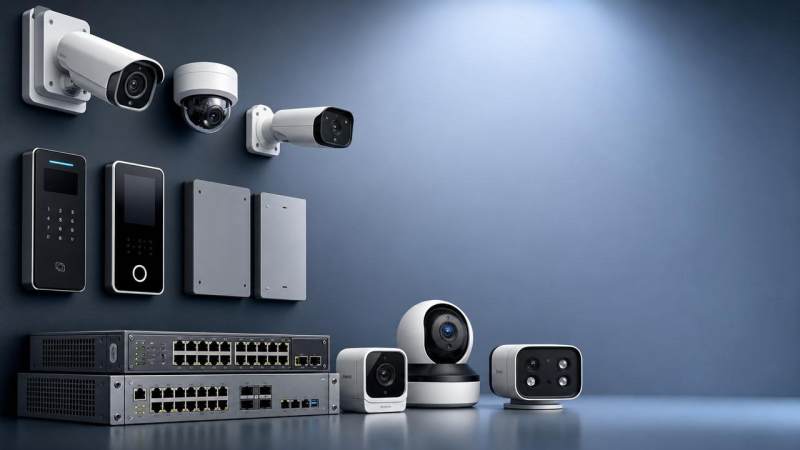
For procurement teams, security innovation should strengthen protection without forcing costly downtime, complex retraining, or compliance risk. Before approving any upgrade, evaluate how new systems fit existing infrastructure, align with global standards, support optical performance, and deliver measurable operational value. This guide outlines the first factors to assess so buyers can make confident, future-ready decisions.
Why procurement should evaluate security innovation with a checklist first
In a market shaped by urban safety upgrades, digital infrastructure expansion, and stricter cross-border compliance expectations, security innovation is no longer judged only by technical novelty. Procurement teams must decide whether a solution can be introduced without disrupting operations, weakening governance, or creating hidden lifecycle costs. That is why a checklist-based evaluation is more effective than a feature-by-feature comparison.
A structured review helps buyers separate attractive marketing claims from practical deployment value. It also supports alignment between security managers, IT teams, facilities operators, compliance officers, and finance stakeholders. For organizations comparing surveillance systems, access control upgrades, perimeter protection technologies, or optical environment improvements, the first decision is not “Which product is newest?” but “Which solution fits the environment with the least disruption and the clearest return?”
For platforms such as GSIM, which connect global security assurance with optical environment optimization, the most useful procurement approach is to evaluate security innovation through operational fit, standards readiness, integration practicality, and measurable performance. This reduces procurement risk while improving long-term decision quality.
The first evaluation checklist: what to confirm before comparing vendors
Before requesting final pricing or approval, procurement teams should verify the following core points. These are the first filters that determine whether a proposed security innovation deserves deeper evaluation.
- Infrastructure compatibility: Confirm whether the solution works with existing cameras, sensors, lighting systems, network architecture, storage environments, and command platforms. A strong upgrade path is often more valuable than a complete replacement.
- Compliance alignment: Check whether the solution supports applicable regional laws, data handling rules, electronic surveillance standards, and audit requirements. A technically advanced system can still become a procurement liability if compliance evidence is weak.
- Operational disruption risk: Assess installation complexity, expected downtime, commissioning requirements, retraining needs, and business continuity impact. Security innovation should improve resilience, not interrupt it.
- Optical and environmental performance: Verify image quality under real lighting conditions, glare control, low-light behavior, visible range consistency, and compatibility with site illumination. This is especially important in transportation, public infrastructure, logistics, and smart construction settings.
- Cybersecurity and system integrity: Review device hardening, patch management process, encryption options, credential controls, remote access governance, and vendor security maintenance commitments.
- Scalability and future-readiness: Determine whether the platform can support AI analytics, multisite expansion, cloud or hybrid architectures, and future optical communication layers such as VLC-related integrations where relevant.
- Total cost of ownership: Go beyond purchase price and estimate maintenance, licenses, storage, bandwidth, integration labor, training, replacement cycles, and service support obligations.
- Evidence of measurable value: Ask for proof tied to incident reduction, monitoring accuracy, maintenance efficiency, site visibility, false alarm reduction, or energy-performance improvement.
How to judge fit without causing operational disruption
The central promise of security innovation is improvement without unnecessary friction. For procurement teams, this means examining fit at the operational level before discussing advanced capabilities. If deployment requires broad rewiring, long shutdown windows, or major workflow redesign, the business case weakens quickly.
Key questions to ask vendors early
- Can the system be phased in by zone, site, or function rather than deployed all at once?
- What legacy devices, protocols, or management software can remain in place?
- How long does installation take per location, and what level of business interruption should be expected?
- What operator retraining is required, and can existing teams manage the system without adding new specialists?
- Is rollback possible if deployment results do not match the pilot scope?
These questions help buyers identify solutions that improve security posture while preserving continuity. In most procurement settings, a lower-disruption project with predictable integration outcomes is preferable to a higher-risk technology leap, even if the latter appears more innovative on paper.
Standards, compliance, and cross-border assurance: the non-negotiable layer
One of the most overlooked issues in security innovation is the assumption that technical capability automatically satisfies legal and regulatory expectations. Procurement teams should not rely on general vendor assurances. They should request documented proof of conformity, including certification status, audit records, data flow descriptions, and policy mapping where relevant.
This is particularly important when solutions involve electronic surveillance, remote access, cloud storage, AI-enabled analytics, or public-area monitoring. In multi-country procurement, standards interpretation can vary significantly, which is why intelligence-led review is valuable. GSIM’s role as a decision-support provider is relevant here: buyers need practical visibility into changing rules, not just static compliance statements.
At minimum, procurement should confirm whether the vendor can clearly explain data retention logic, user access permissions, evidence integrity, firmware support timelines, and how the product design supports lawful operation in target jurisdictions. Security innovation that cannot pass a policy review should not move forward, regardless of price or features.
Optical performance is not a secondary detail
In real environments, security outcomes depend heavily on optical conditions. Procurement teams often focus on software analytics, but poor illumination, reflective surfaces, inconsistent brightness, and low-light instability can undermine system value. For this reason, security innovation should be assessed together with optical environment optimization.
A practical review should include site-specific questions: How does the system perform at dawn, dusk, and under mixed artificial lighting? Does glare from glass, metal, or wet surfaces reduce detection quality? Will camera positioning and illumination design support recognition objectives rather than just recording activity? If AI vision tools are included, under what visual conditions were accuracy claims tested?
For procurement teams in public safety, transportation, campuses, industrial sites, or smart construction projects, these are purchasing questions, not engineering side notes. Better optical planning can reduce false alerts, improve evidence quality, and extend the effective life of the investment.
A simple decision table for comparing security innovation options
Use a scoring approach to compare options consistently across business, technical, and compliance requirements.
Scenario-based checks procurement teams should not skip
Not every security innovation should be evaluated the same way. Context matters, and procurement teams should adapt their checklist to the operating environment.
For public infrastructure and city-linked projects
Prioritize interoperability, policy traceability, evidence integrity, and long-term maintenance capacity. Multi-agency environments need systems that can be governed clearly across departments.
For industrial and logistics facilities
Focus on harsh-environment durability, perimeter visibility, downtime sensitivity, and integration with existing operational technologies. Optical reliability under variable weather or shift-based lighting is critical.
For commercial buildings and campuses
Balance safety outcomes with user experience. Check access convenience, surveillance transparency, privacy controls, and whether the system supports efficient facility operations rather than adding friction.
Common blind spots that weaken security innovation decisions
- Overvaluing headline features: AI, automation, and smart analytics matter only if site conditions support dependable performance.
- Ignoring service capability: A capable product with weak regional support can delay deployment and raise maintenance risk.
- Underestimating data implications: Storage, access logs, retention rules, and cross-border data handling can significantly affect project viability.
- Skipping pilot definition: Without clear pilot success metrics, procurement may approve solutions based on demonstrations rather than evidence.
- Separating security from lighting conditions: Many performance problems start with poor visual environments, not weak devices.
Practical execution steps before moving to purchase approval
To move from interest to confident selection, procurement teams should prepare a short internal evaluation pack. This should include the current system map, target use cases, compliance obligations, site lighting conditions, uptime requirements, budget boundaries, and expected success metrics. With that foundation, vendor discussions become more precise and comparable.
Next, request a phased proposal rather than a generic quotation. Ask vendors to define integration assumptions, deployment sequence, support model, optical performance expectations, and measurable outcomes. If the project involves multiple facilities, test one representative site first. A controlled pilot can reveal hidden costs and fit issues before enterprise-scale commitment.
Finally, ensure the evaluation team includes security, operations, IT, and compliance voices from the start. Security innovation decisions fail when procurement receives fragmented input too late. A cross-functional review reduces rework and speeds final approval.
FAQ: first questions buyers ask about security innovation
What should be evaluated first: technology features or deployment fit?
Deployment fit should come first. If the solution cannot integrate smoothly, maintain compliance, and avoid major disruption, advanced features will not deliver practical value.
How can procurement reduce risk when adopting security innovation?
Use a checklist, require documented compliance evidence, run a pilot in a representative environment, and compare full lifecycle cost instead of initial purchase price alone.
Why does optical environment matter in security innovation?
Because detection quality, recognition accuracy, and event verification depend on visual conditions. Illumination, glare, and low-light behavior directly affect real-world security outcomes.
Conclusion: the smartest first move is a better question set
For procurement teams, the best security innovation decisions begin with disciplined evaluation, not fast adoption. Start by checking infrastructure fit, compliance readiness, optical performance, operational impact, and lifecycle value. These five areas reveal whether a solution is truly future-ready or simply well marketed.
If you need to move the process forward, the most useful next step is to clarify key parameters before supplier comparison: current system architecture, site conditions, regulatory obligations, deployment timeline, budget range, service expectations, and success metrics. With those inputs, procurement can ask better questions, compare options more accurately, and adopt security innovation without unnecessary disruption.
The VitalSync Intelligence Brief
Receive daily deep-dives into MedTech innovations and regulatory shifts.