
Security
Security Integration Costs: What Impacts Total Project Value
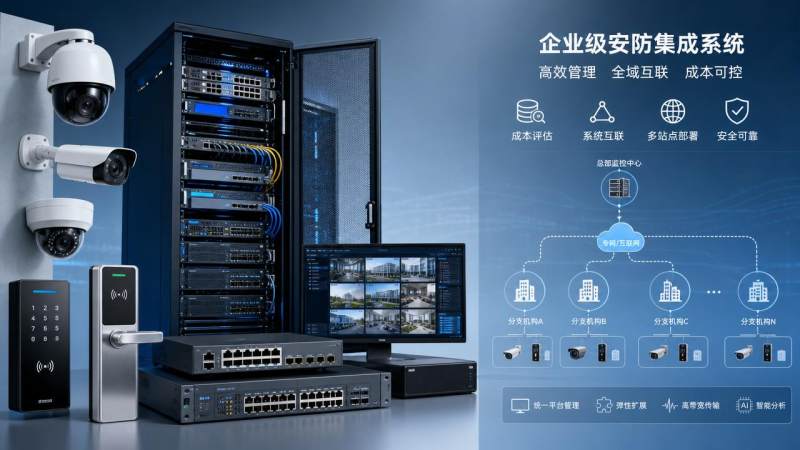
For finance approvers, security integration is not just a technical line item—it is a capital decision shaped by scope, compliance, interoperability, labor, and long-term maintenance. Understanding what drives total project value helps reduce budget risk, improve vendor evaluation, and align investment with measurable operational outcomes. This guide breaks down the core cost factors behind modern security integration projects so decision-makers can approve with greater confidence.
In 2026, investment decisions around physical security systems are increasingly tied to broader digital infrastructure, smart building, and urban safety programs. For buyers reviewing budgets across multiple sites, the total value of a security integration project rarely depends on equipment price alone.
A reliable cost review must account for design complexity, integration depth, compliance exposure, installation conditions, service expectations, and future scalability. This is especially important when video surveillance, access control, lighting, networking, and analytics must work as one coordinated environment.
For organizations using strategic market intelligence from platforms such as GSIM, the goal is not only cost control. It is also to improve procurement timing, compare vendors on equal terms, and prevent under-budgeted projects from generating expensive change orders 3 to 12 months after deployment.
What Security Integration Really Includes in Project Value
Many finance teams first see security integration as a package containing cameras, readers, control panels, and software licenses. In practice, the project value often spans 5 to 8 major cost layers, some visible in the initial quotation and others hidden in implementation or lifecycle support.
Core cost layers beyond hardware
Hardware may represent only 30% to 50% of the approved budget in a medium-complexity deployment. The remaining value can include system design, network preparation, structured cabling, field labor, software configuration, compliance documentation, user training, testing, and post-installation maintenance.
This is why two bids with similar device counts can differ by 20% to 40%. One vendor may include commissioning, integration middleware, and 12 months of support, while another quotes only supply and basic installation. For finance approvers, line-by-line scope clarity is essential.
Typical project components
- Field devices: cameras, access readers, sensors, intercoms, controllers, lighting interfaces
- Platform licenses: VMS, access control software, analytics modules, mobile credentials
- Infrastructure: switches, storage, power backup, fiber or copper cabling, racks
- Professional services: site surveys, design drawings, integration engineering, testing
- Operational support: training, service-level response, preventive maintenance, reporting
The table below helps separate direct purchase items from the cost drivers that often expand total project value during execution.
The key takeaway is that security integration value is cumulative, not additive in a simple hardware sense. The more systems that must exchange data or share workflows, the more engineering hours and verification steps become part of the financial equation.
The Biggest Factors That Change Security Integration Costs
Most project overruns can be traced to a small set of variables. For finance approvers, these variables should be reviewed before approval, not after purchase order release. Even a 4-site rollout can shift significantly in value if one of these elements is poorly defined.
1. Project scope and site count
A single facility with 40 cameras and 12 doors is very different from a portfolio rollout covering 6 buildings, 3 parking areas, and a central monitoring room. Scope affects design time, installation sequencing, logistics, and acceptance testing.
Multi-site projects can produce economies of scale in procurement, but they also increase coordination risk. If standards differ by site, costs rise through duplicate engineering, inconsistent device sets, and fragmented training requirements.
2. Interoperability requirements
Interoperability is one of the most important hidden drivers in security integration. A standalone CCTV deployment is simpler than a platform where video, access control, intrusion alarms, visitor management, and emergency lighting triggers must share events in real time.
The cost difference can be meaningful when custom APIs, protocol bridges, or middleware are required. Integration with legacy systems may add 2 to 6 weeks to deployment schedules, especially if existing documentation is incomplete or vendor support is limited.
3. Compliance and documentation burden
Electronic surveillance laws, data retention rules, procurement controls, and sector-specific safety standards all affect budget structure. In regulated environments, approval packages may need device schedules, retention policies, user-rights matrices, commissioning records, and cyber hygiene documentation.
These items do not always look expensive individually, but together they can add 5% to 15% to the total project effort. For public infrastructure, transportation, education, healthcare, and smart city environments, this burden is often non-negotiable.
4. Labor conditions and installation environment
Labor rates vary by region, shift timing, access limitations, and safety controls. Night work, confined spaces, operating facilities, and high-ceiling installations often increase labor totals more than device pricing does.
An installation in a live transit hub or public-use building may require phased work over 3 stages, each with separate testing windows. This can be far more expensive than installing the same system in an empty shell building.
5. Maintenance model and lifecycle planning
A low initial quote may exclude firmware management, remote diagnostics, replacement spares, analytics tuning, or annual preventive maintenance. Finance teams should review the first 36 months of ownership, not just the initial 90-day implementation cost.
If service response targets are 4 hours instead of next business day, ongoing support value changes significantly. The same applies when uptime expectations, storage retention periods, or redundancy requirements are tightened.
How to Evaluate Quotes Without Missing Hidden Costs
The most useful financial review does not ask only, “Which quote is cheaper?” It asks, “Which quote defines risk more clearly?” Security integration proposals should be compared through a standardized review model, ideally with 4 to 6 approval dimensions.
A finance-friendly quote review framework
Before approval, require each vendor to break out assumptions, exclusions, and post-install support. This reduces the chance that missing items return later as variations, urgent purchase requests, or emergency remediation spend.
The following framework can help financial reviewers score security integration proposals on a more consistent basis.
When vendors are forced into the same comparison structure, price becomes more meaningful. A quote that appears 12% lower may in fact transfer technical and compliance risk back to the buyer.
Questions every approver should ask
- What is explicitly excluded from the security integration scope?
- How many commissioning visits are included before final acceptance?
- Are storage, cybersecurity settings, and retention policies priced in full?
- What support is included during the first 12 months?
- How will legacy system compatibility be verified before procurement?
Budgeting for Long-Term Value, Not Just Initial Delivery
A common mistake in security integration buying is approving a technically acceptable project with no realistic lifecycle reserve. Security systems increasingly depend on software updates, network health, analytics refinement, and user administration over time.
Where lifecycle costs usually appear
Recurring costs often include license renewals, cloud services, storage expansion, failed device replacement, battery refresh cycles, and annual compliance checks. Depending on architecture, 3-year operating cost can equal 25% to 60% of initial deployment value.
This is especially relevant where analytics, AI-assisted detection, or optical environment optimization are part of the system. Tuning these functions after handover may require specialist service hours, not just standard maintenance calls.
Planning for scalability
Finance approvers should ask whether the system can scale by 20%, 50%, or a full second site without major redesign. Early investment in open architecture or excess network capacity may look more expensive upfront, but it can reduce future expansion cost significantly.
In fast-changing public safety and smart infrastructure programs, a system designed only for today’s device count can become a stranded asset within 18 to 24 months. Scalability should therefore be treated as a cost control strategy, not a technical luxury.
Practical lifecycle budgeting checklist
- Reserve budget for software and firmware support across 12, 24, and 36 months
- Confirm storage growth assumptions for higher-resolution video or longer retention
- Identify spare device policy for critical readers, cameras, and power components
- Check whether user retraining is needed after platform upgrades
- Include at least 1 annual health review for integrated systems and event logic
How GSIM Supports Better Capital Approval Decisions
For organizations evaluating security integration in a shifting global environment, decision quality improves when procurement is supported by timely intelligence. This is where GSIM adds value beyond product visibility.
Its Strategic Intelligence Center helps buyers connect 3 critical layers: regulatory movement, technology evolution, and commercial procurement signals. For finance approvers, this can improve timing, reduce compliance blind spots, and sharpen vendor evaluation criteria before funds are committed.
Why intelligence matters in cost control
Security integration budgets are affected not only by what is installed, but also by when and where it is installed. Shifts in electronic surveillance requirements, optical technology maturity, and public infrastructure demand can materially influence pricing and specification choices.
By tracking sector news, AI vision convergence, Visible Light Communication trends, and buyer-side procurement behavior, finance teams can move from reactive approvals to evidence-based planning. That reduces the chance of funding obsolete architectures or poorly timed purchases.
Better approvals start with clearer benchmarks
A finance approver does not need to become a security engineer. However, they do need benchmark clarity on cost categories, implementation stages, and risk thresholds. With stronger market and policy visibility, approval discussions become faster, more consistent, and easier to defend internally.
Security integration projects deliver better value when scope is transparent, interoperability is verified, compliance is budgeted early, and lifecycle support is planned from day one. That is the standard needed for modern digital infrastructure, public safety, and smart construction investments.
If you are reviewing a new project, expansion plan, or multi-site upgrade, use these cost drivers as your approval checklist rather than relying on equipment totals alone. For more informed planning, vendor comparison, and intelligence-backed procurement guidance, contact GSIM to get a tailored solution, discuss project details, or explore broader security integration strategies.
The VitalSync Intelligence Brief
Receive daily deep-dives into MedTech innovations and regulatory shifts.