
Security
Security Integration: How to Avoid Hidden Upgrade Costs
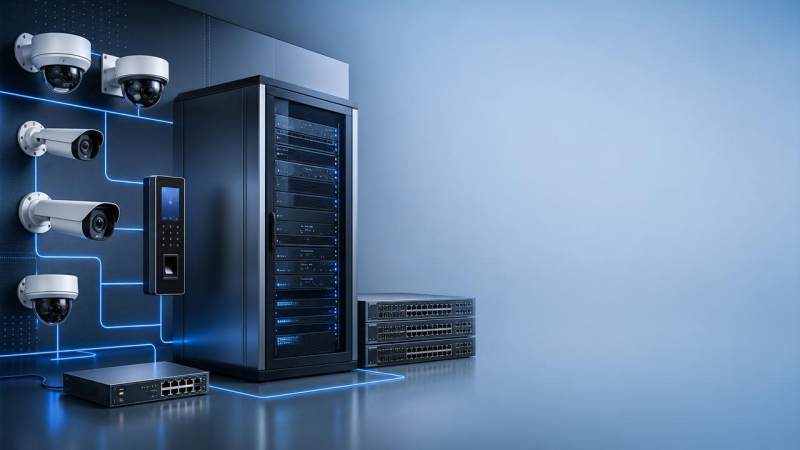
Security integration can streamline procurement, but hidden upgrade costs often emerge when systems, standards, and future expansion needs are overlooked. For procurement teams navigating global safety and infrastructure projects, understanding where these costs originate is essential to protecting budgets and long-term performance. This article explores how to evaluate compatibility, compliance, and scalability early, so every investment supports smarter, more resilient security decisions.
Why hidden upgrade costs appear in security integration projects
For procurement teams, security integration often starts as a cost-control strategy. One platform, fewer vendors, easier maintenance. Yet the real budget pressure usually appears after deployment, when subsystems do not communicate cleanly, software licenses expand unexpectedly, or compliance upgrades force hardware replacement.
In cross-sector projects such as public safety sites, smart construction environments, logistics hubs, transport corridors, and urban facilities, these risks multiply. Different stakeholders buy cameras, access control, lighting, storage, and network equipment on separate timelines. If procurement only compares initial prices, future integration costs remain invisible until change orders arrive.
The most common hidden costs in security integration include the following:
- Protocol mismatch between legacy devices and new management platforms, requiring gateways, middleware, or custom development.
- Insufficient network, storage, or power capacity when video resolution, retention time, or AI analytics increase.
- Regulatory updates related to surveillance, data retention, cybersecurity, or project-specific approvals across different regions.
- Expansion constraints when the original architecture cannot support new sites, extra channels, or integration with optical communication and smart lighting systems.
- Vendor lock-in caused by proprietary software, restricted APIs, or unclear licensing terms.
A disciplined procurement process treats security integration as a lifecycle decision, not a one-time equipment purchase. That means evaluating how systems behave under upgrade pressure before the purchase order is issued.
Where procurement teams usually underestimate cost exposure
The table below highlights common budget gaps in security integration planning and shows how hidden upgrade costs typically surface after handover.
This pattern is especially relevant when security integration spans multiple contractors, jurisdictions, or infrastructure phases. What looks like a low entry price can become a high total cost of ownership once operational requirements mature.
Three signals that an offer may carry future upgrade risk
- The quotation does not separate one-time costs from recurring licenses, maintenance, and support renewals.
- Compatibility claims rely on general statements instead of tested device lists, protocol versions, or feature matrices.
- Expansion assumptions are vague, with no reference to future camera counts, site additions, lighting integration, or AI workloads.
How to evaluate compatibility before buying security integration solutions
Compatibility is not simply a yes-or-no question. In security integration, procurement should ask whether devices connect, whether critical functions remain available, and whether upgrades preserve that connection over time. A camera that streams video but cannot pass analytics events or health data is only partially integrated.
What to verify at technical level
- Protocol support for video, access control, intrusion alarms, intercom, lighting controls, and building interfaces.
- API availability for event exchange, reporting, and third-party workflow integration.
- Firmware dependency, including whether future updates require matching software releases or extra license keys.
- Edge versus central processing, especially where AI vision functions may shift compute demand from camera to server.
- Time synchronization, cybersecurity hardening, and failover behavior under network interruption.
This is where GSIM adds practical value. Its Strategic Intelligence Center helps procurement teams connect global security policy direction with technical adoption patterns, reducing the chance of buying a system that meets today’s tender but struggles with tomorrow’s compliance or integration demands.
What to verify at operational level
Operational compatibility matters just as much as technical compatibility. Procurement should confirm who manages patches, how incidents are escalated, whether local integrators are available, and how long replacement parts or software branches remain supported. An integrated system that lacks clear lifecycle support can become expensive faster than a technically limited one.
Which standards and compliance checks reduce hidden upgrade costs
In international and multi-site procurement, hidden costs often come from compliance gaps rather than equipment failure. Security integration may involve surveillance law, cybersecurity baselines, electrical safety, electromagnetic compatibility, privacy controls, and procurement documentation requirements that differ by location and end-use.
The following table can be used as an early screening tool for security integration projects with cross-border or public-facing requirements.
GSIM’s intelligence-driven approach is useful here because it does not isolate products from policy context. Procurement teams can track evolving requirements in electronic surveillance and emerging technology convergence, including AI vision and VLC-related infrastructure planning, before those shifts become retrofit costs.
How to compare security integration options beyond upfront price
A low bid does not always mean a lower project cost. Procurement teams need a structured comparison that reflects lifecycle exposure, especially when security integration must support phased rollouts, multiple contractors, or future public safety upgrades.
Use the comparison model below when evaluating proposals.
This comparison does not guarantee that the higher-priced option is better. It simply reveals where security integration costs may shift from purchase to operation. Procurement decisions improve when price is evaluated alongside upgrade friction, contract clarity, and future compatibility.
What procurement teams should include in the specification
A practical checklist for tenders and RFQs
- Define current and planned device counts, not only phase-one quantities.
- Request a feature-level compatibility statement, not a general interoperability claim.
- Separate perpetual licenses, subscription items, optional modules, and support renewals in the quotation.
- Specify storage assumptions such as resolution, frame rate, analytics metadata, and retention days.
- Require cybersecurity functions and update responsibilities to be listed in writing.
- Ask how the security integration design can accommodate smart lighting, optical optimization, or future VLC-related infrastructure where relevant.
- Clarify acceptance testing, training scope, spare strategy, and end-of-support notice periods.
This level of procurement detail is increasingly necessary in the 2026 infrastructure upgrade cycle. As digital safety, visual intelligence, and optical environments become more connected, vague specifications create the conditions for expensive upgrades later.
Application scenarios where upgrade costs often escalate fastest
Smart construction and temporary-to-permanent migration
Construction projects frequently begin with temporary surveillance, access checkpoints, and site lighting. Hidden costs appear when temporary systems were never designed to migrate into permanent facilities. Procurement should check whether devices, mounts, power design, and software licenses can transition without replacement.
Public safety and multisite monitoring
In public safety environments, command visibility matters. Costs rise when regional sites use inconsistent firmware branches, different event taxonomies, or nonstandard retention rules. Security integration should support consistent operating logic across locations, not just basic connectivity.
Facilities with optical environment optimization goals
Where security overlaps with illumination strategy, procurement should assess whether camera performance, lighting controls, and future optical communication layers can coexist. Poor alignment can trigger later upgrades in luminaires, sensors, or network segments. GSIM’s sector intelligence is particularly relevant in these converging scenarios because it tracks the interaction between physical security assurance and optical technology evolution.
Common misconceptions about security integration
“Open protocol means no upgrade risk”
Not always. Open protocol support may cover discovery and video streaming but not advanced events, analytics metadata, remote management, or cybersecurity policy enforcement. Procurement should request a function matrix, not a label.
“If phase one works, future expansion will be easy”
Pilot success does not guarantee scalable architecture. Channel growth, retention growth, and multisite administration can expose limits that were invisible in a small deployment.
“Compliance can be handled after installation”
This assumption is expensive. When surveillance policy, cybersecurity baselines, or documentation obligations are addressed late, rework can affect hardware, software, operating procedures, and contracts at the same time.
FAQ: procurement questions about security integration
How do I know whether a security integration quote is truly complete?
Ask for a bill of scope, not only a bill of materials. A complete quote should identify hardware, licenses, storage assumptions, integration tasks, testing, training, maintenance terms, and upgrade conditions. If recurring costs or optional modules are missing, the quote is not complete enough for comparison.
Which projects are most vulnerable to hidden upgrade costs?
Projects with phased delivery, mixed legacy equipment, multisite management, public-sector oversight, or evolving analytics demands are most exposed. These environments change over time, so security integration decisions must absorb future policy, capacity, and interoperability requirements.
What should procurement ask about future scalability?
Ask where the first hard limit appears. It may be licenses, server throughput, storage write rate, switch capacity, operator count, or site count. Vendors should explain what happens at each threshold and what must be replaced, relicensed, or reconfigured.
How can GSIM support better purchasing decisions?
GSIM helps procurement teams connect technical selection with policy direction, market evolution, and real deployment trends. Through its Strategic Intelligence Center, buyers can monitor surveillance compliance shifts, AI vision and VLC convergence, and procurement movement in smart construction and public safety sectors before committing budget to a rigid design.
Why informed planning is the best way to control upgrade costs
Security integration creates value when it reduces complexity without creating long-term dependency. For procurement teams, the best protection against hidden upgrade costs is early clarity: clear interfaces, clear compliance mapping, clear scale assumptions, and clear commercial terms.
In a market shaped by digital infrastructure renewal and rising urban safety expectations, decisions cannot rely on device pricing alone. Buyers need current intelligence, technical context, and policy awareness. That is exactly where GSIM positions its advantage: helping organizations align protection requirements with practical, standards-aware, future-facing purchasing decisions.
Why choose us for security integration decision support
GSIM is built for procurement teams that need more than product lists. We help translate security integration requirements into workable decisions by linking global policy developments, optical environment considerations, and market-side procurement intelligence.
- Confirm technical parameters before tender release, including interoperability expectations, storage assumptions, and expansion thresholds.
- Review product selection paths for surveillance, access control, lighting-linked security environments, and future AI vision or VLC-ready infrastructure.
- Discuss delivery timing risks, phased rollout logic, and how to avoid duplication between temporary and permanent systems.
- Clarify certification and compliance questions that may affect cross-border procurement or public project approval.
- Support quotation comparison, sample evaluation direction, and structured budget communication with internal stakeholders.
If your next security integration project involves complex specifications, uncertain upgrade paths, or multi-region compliance pressure, contact GSIM to discuss parameter confirmation, solution matching, delivery planning, certification concerns, sample support direction, and quotation review priorities.
The VitalSync Intelligence Brief
Receive daily deep-dives into MedTech innovations and regulatory shifts.