
Security
Security Optimization Mistakes That Quietly Raise System Costs
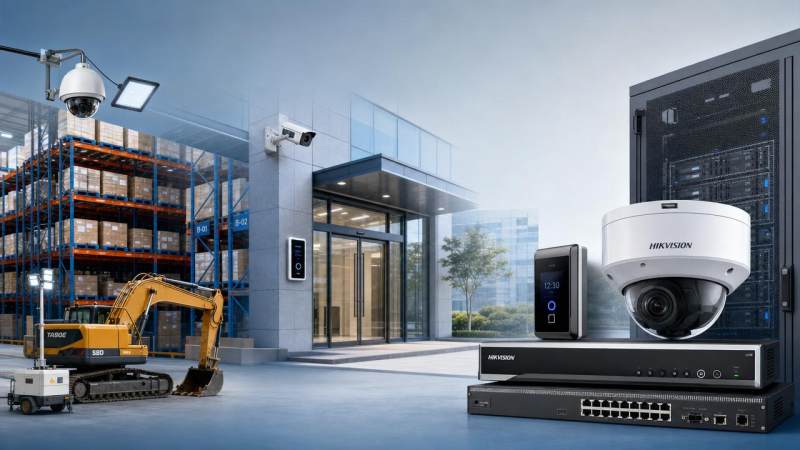
Many organizations pursue security optimization to reduce risk, yet small planning errors often create hidden costs that finance teams only notice later. From overbuilt surveillance deployments to poor integration between lighting, monitoring, and compliance workflows, these mistakes can quietly drain budgets and weaken long-term returns. For financial decision-makers, understanding where security strategies overspend is the first step toward building systems that are both resilient and cost-efficient.
Why scenario differences matter in security optimization
For finance approvers, the biggest mistake is treating security optimization as a single procurement category. In reality, a warehouse, a municipal corridor, a commercial office, a smart construction site, and a public safety command environment all carry different risk profiles, uptime expectations, lighting conditions, compliance demands, and maintenance burdens. A solution that looks efficient in one setting may become unnecessarily expensive in another.
This is where cost leakage begins. Teams often buy for the highest possible threat level instead of the most probable operating condition. They approve extra cameras with overlapping fields of view, install illumination systems that exceed practical use, or adopt software layers that duplicate existing capabilities. On paper, the investment appears prudent. Over three to five years, however, energy use, storage expansion, support contracts, retraining, integration work, and audit remediation create a much larger total cost.
A better approach to security optimization is scenario-based: match protection goals, optical environment needs, and reporting obligations to the actual business context. That framework helps financial stakeholders ask sharper questions before approval and avoid solutions that are operationally impressive but economically inefficient.
Where hidden costs usually appear across business scenarios
Across industries, hidden cost drivers tend to appear in the same five places, but their impact varies by use case. First is over-specification: buying premium hardware for routine environments. Second is fragmented system design: surveillance, lighting, access control, and incident reporting are procured separately and later forced together. Third is compliance misalignment: systems capture data without clear retention, privacy, or audit workflows. Fourth is underestimating maintenance: lens cleaning, firmware updates, recalibration, and lighting replacement are ignored in the budget. Fifth is poor scalability: short-term deployments cannot support future facility growth or policy change.
For a finance team, these cost drivers matter because they rarely appear as a single large invoice. They emerge as recurring operational expense, contractor change orders, delayed project acceptance, storage overruns, or compliance corrections. Security optimization should therefore be reviewed not only as a capital request, but as a lifecycle cost decision.
Typical scenarios where security optimization mistakes quietly raise system costs
1. Smart construction sites: buying for visibility, not for workflow
Construction projects are highly dynamic. Entry routes change, temporary structures move, and work zones shift weekly. A common security optimization error is deploying a fixed surveillance architecture as if the site were permanent. This leads to repeated relocation work, unused equipment zones, and temporary cabling costs that continue to grow.
Another issue is failing to align site lighting with video performance. Finance teams may approve security cameras and task lighting under separate budgets, only to discover that poor nighttime optical conditions reduce image usability. The result is a second round of spending on supplemental illumination, poles, power adjustments, or analytics tuning.
In this scenario, the right question is not “How many devices can we install?” but “How quickly can the system adapt to changing operational zones without repeated rework?”
2. Commercial buildings: overbuilding coverage in low-risk spaces
Office towers, mixed-use properties, and campuses often suffer from camera density inflation. Property teams want complete visibility, but complete visibility is not always the same as cost-efficient risk reduction. Hallways, reception areas, loading bays, parking levels, and tenant corridors do not all require identical resolution, retention periods, or analytics licenses.
An expensive pattern appears when every zone is treated as critical. Storage costs rise, monitoring fatigue increases, and legal review grows more complex. If lighting control systems are not integrated, buildings may also keep certain areas over-illuminated simply to support video clarity, increasing utility expense year-round.
For this environment, security optimization should focus on zoning. High-traffic public interfaces, service access points, and cash or data-sensitive areas deserve deeper investment than low-risk internal circulation spaces.
3. Warehousing and logistics: ignoring environmental realities
Warehouses introduce optical and operational challenges that make generic designs costly. Long aisles, variable loading schedules, dust, vibration, and large indoor-outdoor transitions affect camera performance and illumination reliability. When teams select systems based only on unit price, they often underestimate maintenance frequency and image degradation.
A hidden budget problem here is poor integration between security monitoring and process operations. If a site already has inventory scanning, vehicle flow records, and access event logs, a separate surveillance system that cannot correlate those data points may create duplicate investigation labor. That means more staff time per incident, even if the original hardware cost looked reasonable.
In logistics scenarios, effective security optimization depends on balancing durability, optical consistency, and event-search efficiency rather than maximizing device count.
4. Public safety and urban infrastructure: compliance gaps become cost multipliers
In streetscapes, transport nodes, civic facilities, and urban monitoring projects, the largest hidden costs often come from compliance and interoperability mistakes. Systems may be purchased by project package rather than by governance model, leaving inconsistent retention rules, fragmented oversight, and uneven evidence quality.
Lighting is also frequently treated as a separate utility matter instead of part of the optical environment. When illumination changes seasonally or by district schedule, surveillance quality may vary enough to reduce event usability. Upgrades then require both technical reconfiguration and policy review, which is far more expensive than coordinated planning at the start.
For public-facing infrastructure, security optimization must include legal defensibility, audit readiness, and multi-agency compatibility. Otherwise, the system becomes expensive not because it lacks hardware, but because it lacks governance fit.
Scenario comparison: what finance approvers should evaluate first
The table below highlights how the same security optimization objective can lead to very different spending risks depending on the operating environment.
Five costly misjudgments that repeat across scenarios
Mistake 1: Confusing higher specification with higher value
A premium camera, advanced analytics package, or high-output illumination system is not automatically a better financial choice. If the use case does not need that capability every day, the business is paying for unrealized performance. Security optimization should be tied to measurable outcomes such as reduced blind spots, faster incident review, better perimeter response, or lower false alarm rates.
Mistake 2: Budgeting by department instead of by system outcome
When facilities buys lighting, IT buys storage, security buys cameras, and compliance manages policy separately, no one owns the total economic picture. This structure is a common source of duplicate software, incompatible standards, and change-order spending. Finance approvers should ask for a cross-functional cost map before release of funds.
Mistake 3: Underestimating data retention and evidence handling costs
Storage often becomes the quietest budget escalator in security optimization projects. Retention periods that are longer than necessary, footage captured at unnecessarily high settings, and weak event-tagging workflows all increase storage and retrieval expense. In regulated or public environments, evidence export and chain-of-custody handling may add even more labor cost.
Mistake 4: Ignoring lifecycle maintenance in harsh or changing conditions
Systems installed in dusty, humid, high-traffic, or vibration-heavy spaces rarely maintain performance without routine upkeep. When maintenance assumptions are too optimistic, organizations face both degraded security value and unplanned service visits. The finance review should include annualized upkeep, not just purchase cost.
Mistake 5: Approving technology before defining decision workflows
A system only creates return when people can use it efficiently. If there is no clear workflow for monitoring, escalation, investigation, documentation, and review, even well-designed infrastructure can become expensive background equipment. Security optimization must support decisions, not simply device deployment.
How different organization types should adapt their approval criteria
Not every buyer should use the same financial lens. Large multi-site operators need standardization and interoperability. Mid-sized organizations often benefit more from simplified management and lower training requirements. Public projects need compliance resilience. Fast-growth businesses should prioritize modular scaling over fully built-out systems on day one.
Practical approval checklist for cost-efficient security optimization
Before approving a security optimization proposal, finance stakeholders should confirm several scenario-based conditions. Is the design matched to the real operating environment rather than a generic template? Are lighting, monitoring, storage, and compliance workflows planned together? Has the team modeled maintenance and relocation costs where relevant? Are retention rules tied to legal and operational needs? Can the system scale without replacing core components?
It is also useful to request a phased ROI view. Phase one should cover the highest-risk and highest-value areas first. Later phases can expand only after operational evidence shows that the first deployment improved incident response, reduced manual review, or avoided recurring losses. This staged method is often the most financially disciplined version of security optimization.
FAQ: scenario-based questions finance teams often ask
Is more surveillance coverage always better?
No. More coverage can increase storage, review time, licensing, and privacy management without materially improving risk control. Better placement and risk zoning often create stronger returns than simply increasing quantity.
Why should lighting be part of security optimization?
Because video quality, detection reliability, and nighttime usability depend on the optical environment. When lighting is planned separately, organizations often spend twice: once on surveillance, then again to correct poor visibility.
What is the most overlooked cost in multi-site projects?
Platform inconsistency. Different systems across sites create training inefficiency, integration barriers, and fragmented compliance practices that become expensive over time.
Turning security optimization into a better financial decision
The most effective security optimization strategies do not start with a product list. They start with a scenario map: where risk exists, how people move, what optical conditions affect performance, which regulations apply, and what level of response the business actually needs. For finance approvers, that perspective changes security from a reactive purchase into a controlled investment.
GSIM’s intelligence approach is especially relevant in this environment because cost-efficient protection increasingly depends on the connection between security policy, optical planning, and procurement insight. Organizations that evaluate those elements together are far less likely to overbuild, under-integrate, or discover hidden expenses after deployment. If your next project involves facilities upgrades, public safety modernization, smart construction, or multi-site standardization, the right next step is to assess security optimization by scenario, not by assumption.
The VitalSync Intelligence Brief
Receive daily deep-dives into MedTech innovations and regulatory shifts.