
Security
Security Optimization Mistakes That Raise System Costs
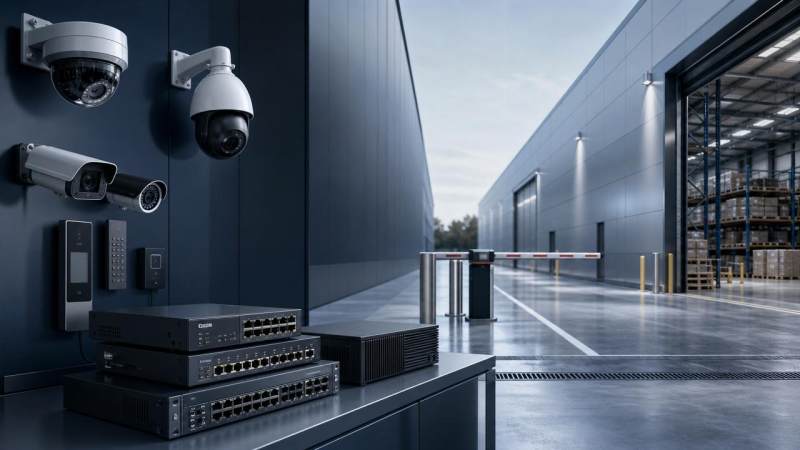
Security optimization can reduce risk, but when planning is fragmented, it often drives hidden costs across procurement, compliance, maintenance, and system upgrades. For financial approvers, understanding these costly mistakes is essential to protecting budgets while improving resilience. This article outlines where security optimization efforts commonly go wrong and how smarter, standards-aligned decisions can deliver stronger long-term value.
Why security optimization often increases cost instead of controlling it
In many organizations, security optimization starts with the right intention: reduce incidents, strengthen visibility, and support safer operations. Yet the financial outcome can turn negative when decision-making is split across departments, vendors, and project timelines. A camera upgrade may be approved without reviewing storage expansion. A lighting retrofit may be purchased without validating surveillance performance. A compliance-driven access control project may ignore lifecycle service costs.
For financial approvers in cross-industry environments, the problem is rarely the idea of security optimization itself. The problem is incomplete scope definition. Physical security assurance now intersects with optical environment optimization, cybersecurity boundaries, procurement risk, public safety expectations, and international regulatory pressure. When one layer is optimized in isolation, another layer often becomes more expensive to fix later.
This is why structured intelligence matters. GSIM supports decision-makers by connecting global security policy shifts, surveillance compliance expectations, optical technology trends, and commercial procurement signals. For a finance-led approval process, that stitched view reduces the chance of approving a project that looks efficient on paper but creates budget leakage in deployment or operation.
- Fragmented specifications create duplicate spending across devices, cabling, software licenses, and integration labor.
- Weak compliance review can trigger redesign, delayed commissioning, or restricted system use in regulated environments.
- Short-term price focus often hides long-term maintenance, energy, training, and upgrade expenses.
- Poor alignment between illumination and surveillance performance can lower evidence quality and force secondary corrective investment.
Which security optimization mistakes most often damage budgets?
The most expensive mistakes are not always the most visible during tender review. Financial approvers often see line-item savings, but not the downstream costs caused by design gaps. The table below highlights common security optimization errors and their practical budget effects across mixed-use facilities, logistics zones, campuses, public infrastructure, and smart construction projects.
For finance teams, the lesson is clear: security optimization should be evaluated as a system cost model, not as a device shopping exercise. The lower the visibility into interdependencies, the higher the risk of hidden expenditure after award.
Mistake 1: Treating compliance as a final checkpoint
Electronic surveillance, data retention, workplace monitoring, and public-facing security deployments can all involve regional legal interpretation. If compliance is reviewed only after a vendor has been selected, financial approvers may face change orders, reduced deployment scope, or operational restrictions. GSIM’s Strategic Intelligence Center is valuable here because it links procurement decisions to current international compliance developments rather than leaving legal review disconnected from technical specification.
Mistake 2: Separating lighting from surveillance design
Security optimization is often discussed as cameras, sensors, and access control. In practice, image quality depends heavily on the optical environment. Poorly planned illumination can reduce facial capture quality, distort motion detection, and weaken incident reconstruction. Financial approvers should question any security proposal that promises detection accuracy without discussing lux levels, contrast, glare, night conditions, and environmental variability.
Mistake 3: Funding expansion without lifecycle modeling
A larger system is not automatically a better system. More endpoints can mean more maintenance visits, more firmware dependencies, more software subscriptions, more power demand, and more user training. Security optimization that ignores lifecycle cost typically looks affordable in year one and expensive by year three.
How should financial approvers evaluate security optimization proposals?
A useful approval framework compares options beyond initial price. In cross-industry projects, finance leaders need a shortlist of decision filters that reveal whether a proposal is truly cost-efficient, scalable, and defensible. The next table can be used during internal review meetings, supplier clarification rounds, or pre-award analysis.
Using these filters helps financial approvers shift the conversation from “Which bid is lowest?” to “Which security optimization plan is least likely to create avoidable downstream cost?” That distinction is often where budget protection actually happens.
A practical approval checklist
- Ask for a site-risk classification so that expensive measures are reserved for genuinely high-impact zones.
- Request retention assumptions, network load estimates, and software licensing structure before signing.
- Confirm whether lighting conditions were measured or only assumed during solution design.
- Review whether cross-border compliance issues affect storage location, access rights, or evidence handling.
- Check support terms for firmware updates, replacement lead times, and field service obligations.
What does smarter security optimization look like in real operating scenarios?
The right level of security optimization differs by environment. A public-facing transit facility, a warehouse, a construction site, and a commercial campus do not share the same threat profile or visual conditions. Financial approvers should expect scenario-based design logic, not generic package selling.
Smart construction sites
These projects often suffer from temporary layouts, changing perimeter lines, variable lighting, and compressed delivery windows. Overbuying fixed infrastructure too early can waste budget when site geometry changes. A phased security optimization approach, aligned with project milestones, usually controls cost better than a full permanent-spec deployment at day one.
Public safety and urban environments
In these spaces, compliance sensitivity is higher and evidentiary expectations are more demanding. Poor lighting coordination can make video less useful in crowded or reflective environments. Here, optical environment optimization should be budgeted as part of security optimization, not as a separate facilities matter.
Logistics and industrial operations
Operational continuity matters as much as perimeter control. If a system requires frequent shutdowns for maintenance or does not integrate smoothly with access and incident workflows, the indirect cost can exceed the initial hardware savings. Finance teams should therefore consider downtime risk and support model quality, not only asset count.
How standards, trends, and intelligence reduce costly misjudgment
A growing challenge in security optimization is that technical decisions now move faster than internal procurement cycles. AI-assisted vision, analytics-driven detection, hybrid monitoring architectures, and even emerging links between visible light communication and intelligent infrastructure are reshaping evaluation criteria. At the same time, surveillance law and procurement compliance continue to evolve by jurisdiction.
This is where GSIM provides practical value for financial approvers. Its intelligence model does not treat market news, standards interpretation, and procurement insight as separate topics. Instead, it connects them. A finance reviewer can better judge whether a low-cost proposal is based on an aging specification, whether a premium design has a credible upgrade path, and whether a procurement strategy matches broader smart infrastructure investment trends.
- Track regulatory shifts before issuing tenders, not after vendor selection.
- Review trend data to avoid buying systems that will require rapid mid-cycle replacement.
- Use commercial insight to benchmark whether pricing and delivery assumptions are realistic for the region and project type.
FAQ: common finance-side questions about security optimization
How can we tell if a low bid will become expensive later?
Look for omissions rather than discounts. If storage duration, software licensing, installation scope, power backup, calibration, training, or maintenance response terms are unclear, the proposal may be under-scoped. In security optimization, missing scope is often a stronger warning sign than a high unit price.
What should finance ask about lighting in a security project?
Ask whether the design considered nighttime visibility, reflective surfaces, shadow zones, facial capture conditions, and analytics performance under changing illumination. If the answer focuses only on camera resolution, the proposal may be incomplete. Optical conditions directly affect whether security investment produces usable evidence.
Is it better to standardize one security package across all sites?
Not always. Standardization helps training and spare parts control, but blanket specification can inflate capital cost in low-risk areas. A tiered model is usually better: high-risk zones receive stronger coverage and retention requirements, while lower-risk zones use more economical configurations within the same management framework.
When should compliance review happen?
Before finalizing the bill of materials and before issuing the purchase order. Early compliance review helps avoid choosing equipment, retention methods, or access practices that later conflict with legal or policy requirements. For multi-region operations, this timing is especially important.
Why choose us for better security optimization decisions
GSIM supports financial approvers who need more than vendor claims. We combine physical security assurance, optical environment optimization insight, policy interpretation, and procurement intelligence into one decision-support view. That means you can examine security optimization not only as a technical requirement, but also as a controllable investment with compliance, upgrade, and lifecycle implications.
If you are reviewing a new project, a retrofit plan, or a multi-site rollout, you can consult GSIM on concrete issues that affect approval quality and total cost. This includes parameter confirmation for surveillance and illumination fit, solution selection for different risk zones, delivery cycle assessment, standards and certification alignment, customization logic for complex sites, sample or pilot evaluation planning, and quotation comparison from a lifecycle perspective.
For organizations facing tight budgets and high accountability, better security optimization starts with better questions. GSIM helps you ask the right ones before cost becomes irreversible: What performance is actually required? Which compliance risks affect deployment? Where can specification be reduced without weakening resilience? Which upgrade path protects future capital? Those are the questions that lead to stronger approvals and fewer expensive corrections.
The VitalSync Intelligence Brief
Receive daily deep-dives into MedTech innovations and regulatory shifts.