
Security
When Security Optimization Lowers Cost Without Cutting Protection
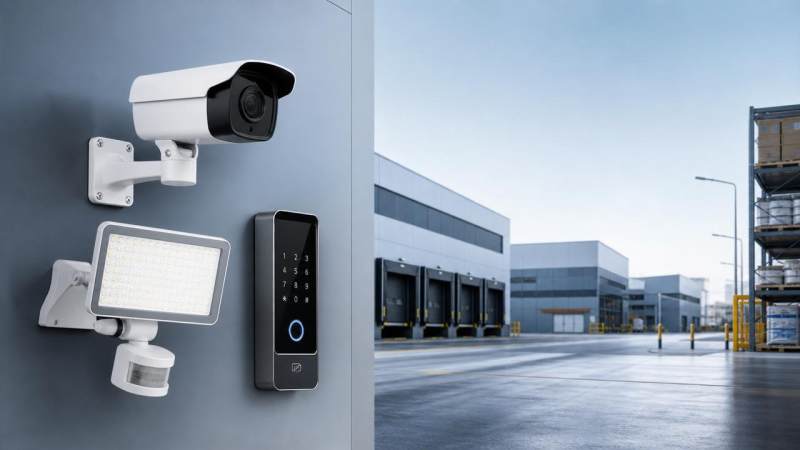
For finance approvers, security optimization is no longer just a technical upgrade—it is a practical strategy to reduce total cost while preserving protection standards. As global infrastructure and urban safety projects scale in complexity, smarter decisions depend on clear intelligence, compliance awareness, and long-term value. This article explores how organizations can align security spending with measurable efficiency without compromising resilience.
In boardrooms and procurement reviews, the real question is no longer whether protection matters. It is whether current security spending is producing measurable value across a 3-year to 7-year operating horizon. Cameras, lighting systems, access control, analytics, and compliance management all consume budget, but poorly coordinated investments often increase total cost rather than reduce it.
That is why security optimization has become a financial discipline as much as an operational one. For organizations managing smart construction sites, transport hubs, industrial campuses, logistics centers, and public safety assets, optimized security means lower lifecycle expense, fewer blind spots, faster incident response, and more predictable compliance outcomes.
Within this context, GSIM supports decision-makers with intelligence that connects physical security assurance and optical environment optimization. Its Strategic Intelligence Center helps finance teams compare regulatory exposure, technology maturity, and procurement timing before approving capital or operating expenditure.
Why Security Optimization Matters to Financial Approvers
A finance approver typically evaluates more than purchase price. Total cost of ownership often includes 5 cost layers: initial equipment, installation labor, software licensing, maintenance frequency, and compliance-related adjustment costs. In many projects, the first invoice represents only 35% to 50% of the 5-year spend.
Security optimization addresses this gap by reducing unnecessary overlap between devices, improving site illumination for better camera performance, and aligning specifications with real operational risk. In practical terms, a better optical environment can reduce the number of corrective interventions, while smarter placement of surveillance assets can improve coverage without simply adding more hardware.
The cost drivers hidden behind “standard” security projects
Many projects are approved based on headline equipment counts, yet cost overruns often emerge later. Common triggers include duplicated field of view, underpowered night visibility, fragmented vendor responsibility, and redesign after local compliance review. A site that appears adequately protected on paper may still require 2 or 3 rounds of post-installation correction.
- Over-specification in low-risk zones
- Under-specification in high-liability access points
- Lighting conditions that degrade AI video analytics accuracy
- Separate budgeting for surveillance and illumination, creating system mismatch
- Reactive maintenance with 24-hour to 72-hour response delays
For finance teams, each of these issues has a direct budget impact. A single redesign phase can extend deployment by 2 to 6 weeks. Additional cabling, temporary labor, and emergency procurement can push project variance beyond acceptable internal thresholds.
How optimized planning lowers cost without reducing protection
The most effective security optimization strategies do not start with cutting devices. They start with matching risk level, compliance requirement, and optical conditions to the right protection architecture. In some areas, better lighting uniformity and fewer but better-positioned cameras outperform a denser but poorly integrated layout.
The table below shows how finance approvers can compare traditional expansion logic with an optimization-led approach before releasing budget.
The financial takeaway is clear: optimized planning shifts spending from correction to prevention. That improves budget predictability, which is often more valuable to approvers than a superficially lower quotation.
Where GSIM adds decision value
GSIM’s Strategic Intelligence Center helps approvers review procurement through three connected lenses: compliance interpretation, technology evolution, and commercial insight. This is especially important in 2026-era projects where AI vision, Visible Light Communication, and digitally managed public infrastructure are converging faster than legacy approval models can track.
The Financial Framework for Evaluating Security Optimization
A reliable approval framework should measure both savings potential and protection integrity. In practice, finance teams benefit from using 4 evaluation dimensions: capital efficiency, operating stability, compliance resilience, and upgrade flexibility. If one of these is ignored, the organization may save in Year 1 but absorb greater cost in Years 2 through 5.
1. Capital efficiency
Capital efficiency asks whether every line item is tied to a defined security objective. If 20% of devices protect low-risk zones while critical entries remain optically weak at night, the budget is not optimized. A stronger design may require fewer endpoint devices but better integration between image capture, illumination, and analytics.
2. Operating stability
Operating stability includes uptime, service intervals, false alarm load, and staffing burden. For many multi-site environments, reducing avoidable alerts by even 10% to 15% can cut monitoring labor and contractor callout costs significantly over a 12-month period.
3. Compliance resilience
Compliance resilience is essential where surveillance laws, retention requirements, and public-space monitoring rules differ across regions. An apparently low-cost system may become expensive if retention settings, access logging, or field-of-view restrictions require reconfiguration after legal review.
4. Upgrade flexibility
Upgrade flexibility matters because infrastructure cycles rarely stand still. A system approved in 2026 may need to support AI-assisted analytics, edge processing, or VLC-related integration within 18 to 36 months. Security optimization should therefore preserve room for phased expansion without full replacement.
The table below can be used as a practical scorecard during internal budget review meetings.
Using a scorecard like this prevents the approval process from collapsing into a simple price comparison. It also creates a stronger internal record for why one solution creates lower long-term cost without weakening protection.
Where Cost Savings Usually Come From
In most projects, savings do not come from one dramatic cut. They come from coordinated improvements across 4 to 6 operational areas. This is why security optimization should be treated as a design and governance exercise rather than a discount negotiation.
Smarter coverage design
Blind spots and overlap often exist in the same system. A coverage audit can identify low-value device density, especially in perimeter stretches, loading zones, and internal transit corridors. Rationalizing those layouts can reduce installation complexity while preserving incident visibility where it matters most.
Optical environment improvement
Security performance is heavily influenced by illumination quality. Better consistency in light levels, glare control, and contrast management can improve image usefulness without forcing the organization to add more sensors. In environments operating 12 to 24 hours per day, this can also support more stable analytics performance.
Lifecycle maintenance planning
A planned service model can lower emergency callouts and reduce downtime. For example, sites exposed to dust, vibration, or weather fluctuation may need inspection every 3 to 6 months, while lower-stress indoor assets may follow a 6 to 12 month schedule. Matching maintenance to environment is a direct cost-control measure.
Compliance-first design
If regional surveillance restrictions are considered only after engineering is complete, the resulting changes can affect camera placement, storage policy, data access rules, and signage requirements. Early review supported by GSIM’s policy intelligence reduces the risk of late-stage budget erosion.
A practical checklist for approval meetings
- Confirm which zones are high, medium, and low risk.
- Review whether lighting conditions support intended surveillance quality.
- Check if compliance requirements vary by country, city, or asset type.
- Estimate 3-year and 5-year maintenance cost, not just installation cost.
- Verify whether phased expansion is possible without replacing the base system.
Common Approval Mistakes That Increase Long-Term Cost
Even experienced finance teams can approve projects that appear efficient but later become expensive. The problem is often not technical misunderstanding. It is incomplete evaluation of how security, lighting, compliance, and operations interact over time.
Mistake 1: Approving by unit price alone
A lower device price may conceal higher integration, software, or maintenance burden. If a low-cost component requires extra field adjustment, shorter replacement cycles, or proprietary lock-in, the initial savings may disappear within 12 to 24 months.
Mistake 2: Treating illumination as a facilities issue only
When optical conditions are excluded from security planning, surveillance quality can fall below operational expectations. This leads to manual review workload, more false positives, and reduced evidence quality during incidents. Security optimization works best when optical design and protection design are reviewed together.
Mistake 3: Ignoring policy changes across regions
Global infrastructure owners frequently operate across multiple legal environments. Approval teams that do not track policy updates may fund systems that later require localization changes. GSIM is particularly useful here because its intelligence model links sector news, legal interpretation, and procurement trends into one decision context.
Mistake 4: No measurable post-deployment review
Without a review at 90 days, 180 days, and 12 months, organizations cannot verify whether the approved solution is meeting cost and protection targets. Finance teams should request at least 6 performance indicators, such as service calls, downtime hours, false alarm rate, incident response time, coverage exceptions, and compliance actions.
How to Build a Better Security Optimization Roadmap
A workable roadmap does not need to be overly complex. It needs to be sequenced. For most organizations, a 4-stage model is sufficient to improve approval quality and spending control.
Stage 1: Baseline assessment
Review current assets, incident history, illumination condition, maintenance burden, and legal constraints. This stage usually takes 2 to 4 weeks depending on site count and data quality.
Stage 2: Risk and cost mapping
Assign budget relevance to each risk zone. Not every area deserves the same spend. Mapping should connect threat probability, consequence level, and operational criticality so that funding can be prioritized logically.
Stage 3: Solution alignment
Select the mix of surveillance, illumination, analytics, and service coverage that fits both the protection requirement and the financial model. This is the point where GSIM’s commercial insights and trend analysis can help teams avoid buying into soon-to-be-obsolete configurations.
Stage 4: Review and optimization loop
Set review intervals at 3 months, 6 months, and 12 months. Compare actual maintenance frequency, event handling load, and compliance observations against the approval assumptions. Security optimization should be treated as a repeatable management cycle, not a one-time procurement event.
For finance approvers, the strongest security investment is rarely the cheapest proposal or the largest equipment list. It is the one that delivers verified protection outcomes with controlled lifecycle cost, fewer corrective changes, and better readiness for future infrastructure demands.
GSIM supports this approach by connecting global policy intelligence, optical technology insight, and procurement visibility into a more disciplined decision framework. If your organization is evaluating how security optimization can reduce waste without cutting protection, now is the right time to compare risk, compliance, and total cost on the same page.
To build a more defensible approval process and identify the right path for your sites, contact us today, request a tailored evaluation, or explore more GSIM solutions designed for smarter security spending.
The VitalSync Intelligence Brief
Receive daily deep-dives into MedTech innovations and regulatory shifts.