
Security
Critical Infrastructure Protection Standards to Watch in 2026
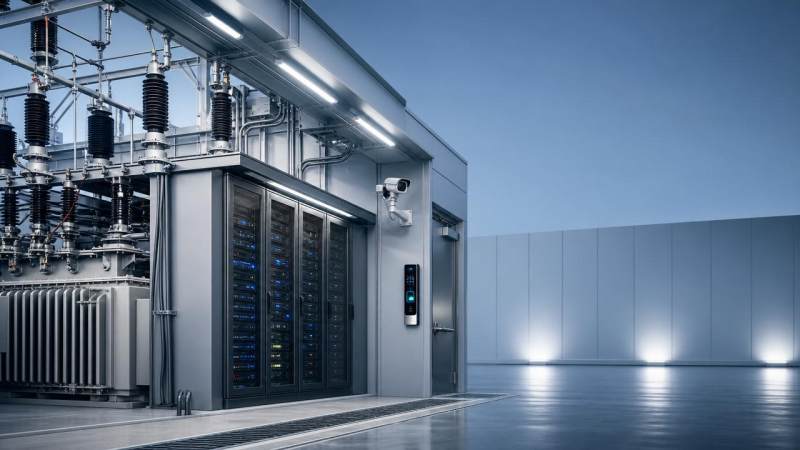
As governments and operators prepare for a new cycle of resilience investment, critical infrastructure protection standards are becoming a decisive benchmark for risk evaluation, procurement, and compliance planning in 2026. For business assessment professionals, understanding these evolving frameworks is essential to comparing suppliers, aligning security strategy, and identifying technologies that meet both regulatory expectations and real-world operational demands.
In energy, transport, telecom, water, healthcare, and public facilities, critical infrastructure protection standards now shape design, monitoring, incident response, and long-term asset planning. They no longer sit only inside legal documents. They directly influence technical architecture, vendor qualification, and capital allocation.
For GSIM, this shift confirms a wider market reality. Security assurance and optical environment optimization increasingly converge. Surveillance quality, lighting conditions, AI vision accuracy, and compliance traceability are being evaluated together rather than separately.
What do critical infrastructure protection standards mean in 2026?
Critical infrastructure protection standards are formal requirements, guidance frameworks, and sector rules that protect essential services from disruption, sabotage, cyber-physical failure, and safety breakdowns.
In 2026, the term covers more than perimeter security. It includes electronic surveillance, access control, resilient communications, emergency lighting, data integrity, asset visibility, and recovery readiness.
The most watched standards environment combines national regulation, sector-specific directives, international management systems, and procurement-based technical specifications.
Several forces are driving change:
- Convergence of cyber and physical risk
- Wider use of AI-enabled monitoring
- Higher audit expectations for public projects
- Climate resilience requirements for essential assets
- Greater scrutiny of supply chain trustworthiness
As a result, critical infrastructure protection standards are becoming cross-functional decision tools. They help evaluate whether a site can prevent, detect, respond, and recover under pressure.
Which standards and frameworks should be watched most closely?
There is no single universal rulebook. The most relevant critical infrastructure protection standards depend on geography, sector, and project ownership structure.
Still, several framework families deserve close attention in 2026.
1. Risk and management system frameworks
ISO 31000 remains important for structured risk management. ISO 22301 supports business continuity planning. ISO 27001 stays central where surveillance data and operational networks intersect.
These do not replace sector rules. They provide governance discipline, documentation logic, and audit language.
2. Physical security and electronic surveillance standards
Projects increasingly reference standards for CCTV performance, access control, alarm systems, image retention, and evidential quality. Lighting design requirements are also gaining importance because poor visibility weakens detection accuracy.
This is where GSIM’s focus becomes especially relevant. Optical conditions can directly affect whether technical compliance delivers operational results.
3. Sector directives and national resilience rules
Energy grids, ports, rail systems, airports, hospitals, and water utilities often face separate legal obligations. In Europe, resilience and cybersecurity directives continue to influence procurement language. Other regions are updating similar rules.
4. Supply chain and trusted technology requirements
In 2026, critical infrastructure protection standards increasingly test device origin, firmware governance, maintenance accountability, and vulnerability disclosure practices.
A compliant device is no longer enough. Decision quality depends on lifecycle assurance.
Who is affected most by these changes?
The impact reaches beyond operators of obvious high-risk sites. Many connected facilities now fall within the practical scope of critical infrastructure protection standards.
The strongest effect is visible in:
- Power generation and transmission facilities
- Transport corridors and logistics nodes
- Telecom exchanges and data-rich utility sites
- Hospitals and emergency service campuses
- Water treatment and distribution infrastructure
- Large public venues and smart urban platforms
However, the wider supply ecosystem is also affected. Integrators, lighting specialists, camera vendors, sensor developers, and construction partners are increasingly assessed against the same resilience expectations.
This creates a new comparison challenge. Technical capability must be judged alongside standards literacy, documentation maturity, and post-installation support discipline.
How can organizations judge whether a solution aligns with critical infrastructure protection standards?
A useful method is to move from product claims to evidence layers. Marketing language often sounds compliant. Real alignment is easier to verify through structured questions.
When reviewing critical infrastructure protection standards, ask whether the solution performs well in degraded conditions. Backup power loss, weather interference, communication delays, and crowd pressure should all be considered.
GSIM’s intelligence approach supports this comparison. Policy interpretation alone is not enough. Decision quality improves when legal signals, optical performance, and market procurement trends are assessed together.
What are the most common mistakes when preparing for 2026 compliance?
Many projects fail not because standards are unknown, but because they are treated too narrowly. Several recurring mistakes continue to slow readiness.
Mistake 1: Treating compliance as a document exercise
Critical infrastructure protection standards require operational proof. A specification sheet does not confirm field effectiveness, especially at night, during emergencies, or across interconnected systems.
Mistake 2: Ignoring lighting and visual conditions
Camera resolution alone cannot solve poor illumination. If glare, shadows, or inconsistent brightness remain unmanaged, surveillance compliance may exist on paper but fail in use.
Mistake 3: Overlooking supply chain dependencies
Trusted updates, component traceability, and service responsiveness now matter more. Critical infrastructure protection standards increasingly examine whether risk enters through maintenance and sourcing pathways.
Mistake 4: Separating cyber and physical review teams
Converged threats demand joined evaluation. Access systems, sensors, video analytics, and communications platforms often share data dependencies and attack surfaces.
Mistake 5: Waiting for final regulation language
By the time every requirement is finalized, procurement timelines may be too short. Early alignment with major critical infrastructure protection standards reduces redesign costs later.
How should planning, budget, and implementation be approached?
Preparation should be phased. The best results usually come from aligning standards review with asset criticality, not from forcing every location into the same upgrade path.
A practical sequence often looks like this:
- Map applicable critical infrastructure protection standards by site and jurisdiction.
- Rank assets by service impact, exposure, and recovery difficulty.
- Assess current surveillance, lighting, communications, and access architecture.
- Identify gaps in evidence, not only gaps in equipment.
- Pilot upgrades in sites where operational stress is measurable.
- Build maintenance, audit, and retraining costs into total ownership models.
Budget planning should also reflect hidden costs. These include integration testing, policy documentation, incident drills, low-light recalibration, and cross-vendor interoperability work.
Where AI vision or VLC-enabled environments are being considered, standards review should begin early. Performance, privacy, and communications resilience may each trigger different approval pathways.
Quick FAQ: critical infrastructure protection standards in practice
Critical infrastructure protection standards will be one of the clearest signals shaping security investment in 2026. They influence how essential facilities define resilience, compare technologies, and justify upgrades.
The strongest decisions will connect policy awareness with field performance. That means checking governance, hardware, optical conditions, and lifecycle support as one system.
GSIM supports that integrated view through strategic intelligence, compliance interpretation, and visibility into evolving market demand. The next practical step is to review site priorities against the critical infrastructure protection standards most likely to affect 2026 procurement and operational readiness.
The VitalSync Intelligence Brief
Receive daily deep-dives into MedTech innovations and regulatory shifts.