
Security
How Public Safety Projects Use Optical Intelligence Better
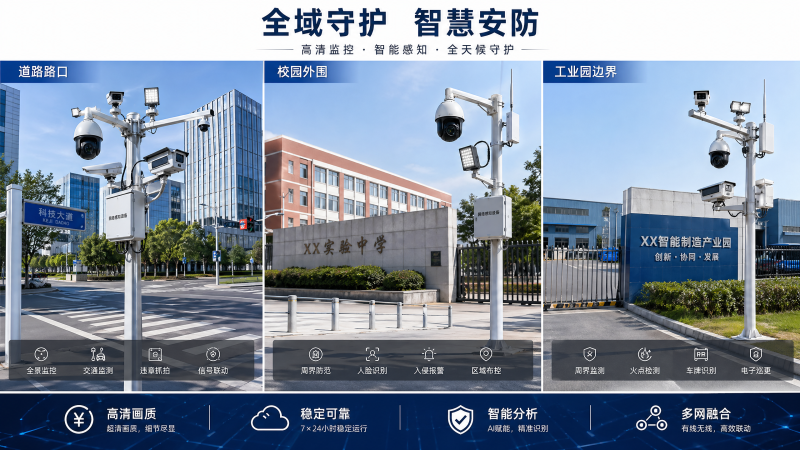
As public safety projects grow more complex in 2026, optical intelligence is becoming essential for stronger urban security solutions and sharper security forecasting. GSIM connects global security trends, risk foresight, and cutting-edge optical technology to help decision-makers align protection demands with real-world needs. Through a transparent knowledge system, it supports smarter planning, procurement, and execution for evolving global protection demands.
For researchers, operators, technical evaluators, procurement teams, project leaders, safety managers, and distributors, the challenge is no longer limited to choosing cameras, lighting devices, or network components one by one. Public safety programs now depend on how well visual sensing, optical conditions, compliance requirements, and operational workflows work together across 3 layers: infrastructure, intelligence, and response.
That is where optical intelligence delivers better value. It helps public safety projects improve scene visibility, target recognition, false alarm control, and decision speed in environments that may run 24/7. It also turns fragmented technical choices into a measurable framework for planning, procurement, installation, and long-term maintenance.
Why Optical Intelligence Matters More in Public Safety Projects
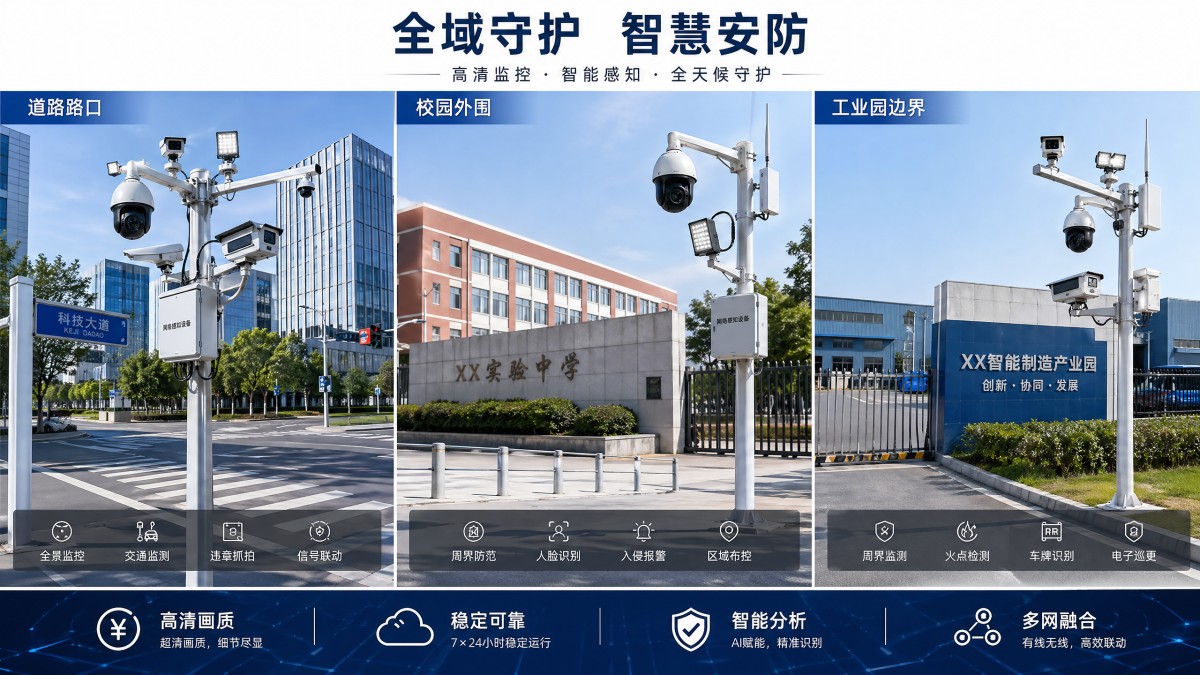
Public safety projects increasingly cover transport hubs, municipal roads, public squares, construction zones, schools, industrial parks, and mixed-use districts. In many of these settings, image capture alone is not enough. Optical intelligence combines visibility planning, illumination quality, sensor matching, environmental adaptation, and analytics support so that video systems can perform consistently in daytime, nighttime, fog, glare, and high-contrast conditions.
A typical city-scale project may involve 4 to 6 technical variables at once: lighting uniformity, color rendering, lens coverage, infrared reach, bandwidth limits, and compliance constraints. If one variable is ignored, the result is often reduced evidence quality, slower incident verification, and more field adjustments after deployment. For project owners, those failures translate into extended commissioning cycles of 2 to 6 weeks and higher operating costs.
GSIM is relevant here because it does not treat security hardware and optical environments as separate topics. Its Strategic Intelligence Center links international surveillance policy interpretation, AI vision trends, and procurement signals from public safety and smart construction sectors. That gives decision-makers a more complete basis for selecting systems that are technically suitable, commercially realistic, and easier to scale.
Core project pressures in 2026
In the current upgrade cycle, public safety teams are under pressure to do more with tighter timelines. A medium-sized deployment may need integration across 3 to 5 subsystems, including surveillance, perimeter lighting, command software, access control, and network storage. Optical intelligence reduces the risk of these subsystems being designed in isolation.
- Rising demand for 24-hour scene clarity in mixed lighting conditions.
- More compliance checks on data handling, surveillance placement, and evidence quality.
- Higher expectations for analytics readiness, especially for AI-based detection and classification.
- Need for procurement decisions that balance capital cost, lifecycle cost, and upgrade flexibility.
The table below shows how conventional device-led planning differs from optical intelligence-led planning in public safety environments.
The key takeaway is simple: better public safety outcomes are not achieved by adding more devices blindly. They come from aligning visual performance, environmental lighting, and operational goals from the start. That is the practical value of optical intelligence in 2026 projects.
Where Optical Intelligence Improves Real Public Safety Scenarios
Public safety projects perform best when optical intelligence is mapped to actual operating conditions instead of general specifications. A transport terminal needs fast moving-target capture and crowd visibility. A public square needs wide-area illumination balance and incident traceability. A smart construction perimeter needs temporary deployment logic, glare control, and flexible repositioning within 7 to 15 days as the site evolves.
In each case, the optical environment affects more than image brightness. It influences recognition distance, motion blur, reflective interference, edge visibility, and the effectiveness of AI classification. For operators, this determines whether alerts are actionable. For quality control and safety managers, it determines whether the system can support incident review and compliance documentation without repeated manual intervention.
GSIM’s value for multi-industry public safety users lies in comparing these scenarios through policy, technology, and commercial insight together. That helps teams avoid buying equipment designed for one scene type and forcing it into another where optical conditions are fundamentally different.
Typical scene-specific gains
The most effective projects often define measurable visual targets before procurement. Common targets include identification-quality coverage at key gates, stable face or object capture within 10 to 30 meters, reduced hotspot glare near entrances, and acceptable image usability under 2 or 3 distinct night conditions. These targets help technical teams and purchasing teams work from the same baseline.
Representative application areas
- Urban intersections: prioritize plate visibility, signal contrast, and low-light lane monitoring.
- Schools and campuses: balance people-flow observation, privacy-sensitive placement, and night perimeter visibility.
- Construction and industrial sites: address dust, temporary poles, moving equipment, and phased deployment over 3 stages.
- Transit spaces: maintain crowd scene interpretation and reduce blind zones caused by mixed indoor-outdoor lighting.
The table below outlines how optical intelligence priorities vary by public safety environment.
This comparison matters for distributors, integrators, and project managers because it turns abstract “better visibility” claims into use-case specific selection logic. It also reduces mismatch risk during bidding, especially when project documents include several site types under one procurement package.
How to Evaluate Optical Intelligence During Planning and Procurement
Public safety procurement often fails when buyers compare devices only by headline resolution, lumen output, or unit cost. Those numbers matter, but they do not explain whether the total optical setup fits the scene. A stronger approach is to evaluate 4 dimensions together: scene performance, environmental fit, system interoperability, and compliance readiness.
For technical evaluators, this means checking how sensors perform under varying light ratios, whether supplementary lighting creates reflections, how image compression affects evidence usability, and whether analytic engines can maintain acceptable confidence at peak traffic periods. For procurement personnel, it means asking what installation accessories, recalibration labor, and maintenance frequency are required over a 12 to 36 month cycle.
GSIM supports this decision process by combining strategic intelligence with commercial insight. Instead of treating compliance, optical performance, and procurement trends as separate reports, it helps teams compare them in one decision path. That is especially useful for multinational buyers and distributors who must track differing surveillance expectations across regions.
A practical evaluation checklist
- Define 3 to 5 key scenes, such as entrance, perimeter, road edge, loading zone, or public corridor.
- Set minimum visual tasks for each scene, including detection, observation, recognition, or identification.
- Review light conditions across at least 2 time periods: daylight and night, and ideally one adverse condition.
- Confirm network, storage, and analytics compatibility before comparing supplier pricing.
- Check regulatory and documentation requirements for installation, recording, and data retention.
The table below can be used by project owners and procurement teams as a structured scoring reference.
A disciplined checklist protects both technical quality and commercial outcomes. It also gives business evaluators and executive stakeholders a clearer basis for comparing offers that may look similar on paper but differ greatly in deployment complexity and long-term support demand.
Implementation Risks, Common Mistakes, and Better Project Execution
Even well-funded public safety projects can underperform if optical intelligence is introduced too late. One common mistake is designing lighting after camera positions are finalized. Another is assuming a single device profile can serve both open plazas and narrow access lanes. These errors often create hidden blind zones, overexposed hotspots, and analytic instability during live operations.
From an execution standpoint, most problems appear in 3 stages: pre-design, installation, and acceptance. In pre-design, teams may skip night surveys. During installation, mounting height and angle may change because of civil constraints. During acceptance, stakeholders may discover that the system records continuously but does not meet evidence-grade expectations at critical points. Each stage needs specific controls.
GSIM’s role as a decision-support platform is valuable because it helps connect strategic risk foresight with field-level execution choices. That includes understanding procurement trends, reading policy updates correctly, and identifying where AI vision and optical communication trends may affect future upgrade paths.
Frequent project mistakes
- Using nominal device specifications without testing them against actual light pollution or reflection patterns.
- Ignoring maintenance access, which can increase service time by 20% to 40% in elevated or temporary sites.
- Over-prioritizing acquisition price while underestimating integration labor and recalibration needs.
- Failing to document acceptance criteria for 2 or more weather and time conditions.
A stronger execution sequence
- Survey the site in at least daytime and nighttime conditions.
- Map critical visual tasks and scene categories before selecting devices.
- Validate lighting and surveillance interplay through sample positions or pilot zones.
- Set acceptance criteria for image usability, coverage continuity, and maintenance access.
- Plan quarterly or semiannual review cycles depending on environmental stress and asset criticality.
For project managers and safety officers, execution discipline is what turns optical intelligence from a concept into measurable field value. Better sequencing usually shortens troubleshooting loops, reduces contractor disputes, and improves long-term confidence in the deployed system.
What Decision-Makers Should Ask GSIM and Their Supply Chain Partners
Senior buyers and business evaluators rarely need more raw product brochures. They need a way to compare evolving security policies, optical technology shifts, and procurement realities across multiple regions and project types. That is the practical reason to use an intelligence portal such as GSIM during the early planning and bid preparation phases.
The best questions are specific. Ask whether the proposed solution fits the visual tasks of each zone. Ask how the optical setup supports AI analytics rather than obstructing them. Ask what changes in compliance expectations may affect deployment methods over the next 12 to 24 months. Ask what maintenance and replacement assumptions are built into the commercial offer.
For distributors, agents, and integrators, this approach also improves customer communication. Instead of selling isolated hardware, they can present a more credible framework: strategic intelligence, scene-based selection, compliance interpretation, and implementation support. That creates stronger trust with enterprise clients and public project stakeholders.
FAQ for planners and procurement teams
How do we know if optical intelligence is necessary for a small or mid-sized project?
If a project covers more than 2 scene types, operates at night, or expects evidence-grade review at critical points, optical intelligence is usually necessary. Even a modest deployment can suffer if lighting, camera placement, and analytics are not coordinated from the start.
What is a reasonable implementation timeline?
For standard public safety packages, assessment and configuration may take 1 to 3 weeks, installation another 1 to 4 weeks, and acceptance testing several days to 2 weeks depending on site count and operating conditions. Temporary or phased construction environments may require periodic revalidation.
Which metrics should procurement teams prioritize first?
Start with scene suitability, maintenance workload, and integration compatibility. Unit price should be considered after those 3 areas are clear. In many projects, the hidden cost of rework, service visits, and poor image usability exceeds initial price savings.
How can GSIM add value without replacing engineering teams?
GSIM functions as a strategic and commercial intelligence layer. It helps teams interpret policy developments, compare optical technology trends, and track procurement movements, while engineering teams remain responsible for design validation, deployment details, and system acceptance.
Public safety projects use optical intelligence better when they move beyond isolated hardware choices and treat visibility, sensing, compliance, and maintenance as one coordinated system. That approach helps researchers build stronger cases, helps technical teams reduce mismatch risk, and helps procurement leaders protect long-term project value.
GSIM supports that shift by connecting global security intelligence, optical environment insight, and commercial decision support in one professional framework. Whether you are evaluating a city upgrade, a smart construction perimeter, a campus safety rollout, or a distributor opportunity, the platform offers a clearer path from risk foresight to practical execution.
If your team needs a more informed way to plan, assess, or source public safety solutions, now is the right time to explore a tailored approach. Contact GSIM to get a customized solution path, discuss project-specific requirements, or learn more about security and optical intelligence strategies for your next deployment.
- strategic intelligence center
- security policies
- optical technology
- AI vision
- procurement trends
- public safety projects
- security hardware
- knowledge system
- security solutions
- urban security
- security intelligence
- cutting-edge optical technology
- global protection demands
- global security trends
- risk foresight
- urban security solutions
- transparent knowledge system
- protection demands
- global security
- security trends
- security forecasting
- optical intelligence
The VitalSync Intelligence Brief
Receive daily deep-dives into MedTech innovations and regulatory shifts.