
Security
International Standards for Security Technology in 2026
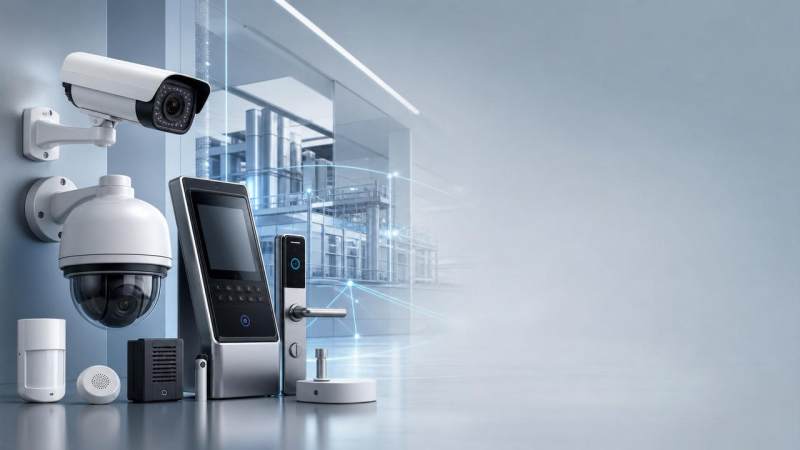
As digital infrastructure and urban safety projects accelerate worldwide, understanding international standards for security technology is becoming essential for technical evaluators. GSIM helps bridge compliance, optical innovation, and procurement intelligence by translating complex regulations and emerging trends into practical insight. This article outlines the 2026 standards landscape and highlights what evaluators need to assess performance, interoperability, and long-term risk with confidence.
For evaluation teams, the challenge is no longer limited to comparing cameras, sensors, access devices, or lighting components by specification sheets alone. In 2026, international standards for security technology are shaping procurement decisions across smart campuses, public transport hubs, industrial facilities, commercial buildings, and city-scale safety projects.
The practical question is how to verify whether a system is compliant, interoperable, cyber-resilient, and fit for long service cycles of 5 to 10 years. This is where GSIM adds value: it connects regulatory intelligence, optical performance trends, and implementation risk analysis into a decision framework technical evaluators can actually use.
Why International Standards for Security Technology Matter in 2026
The 2026 standards environment is broader than a simple checklist of certifications. It covers 4 interdependent areas: physical performance, system interoperability, cybersecurity controls, and optical environment quality. A device may perform well in one category but still fail an evaluation if it creates integration gaps or compliance risk.
Technical evaluators are increasingly asked to review mixed deployments that include video surveillance, perimeter intrusion detection, access control, emergency communication, and smart lighting. In many tenders, at least 3 review layers are now common: product compliance, network compatibility, and lifecycle support readiness.
The shift from device testing to systems assurance
Older assessments often focused on isolated hardware functions such as image resolution, ingress protection, or power consumption. Current projects require systems assurance. Evaluators must examine whether products can exchange metadata, maintain uptime under abnormal conditions, and support secure updates across 24-month to 60-month maintenance windows.
This matters especially in urban safety upgrades, where one site may connect 50 to 500 edge devices. Without alignment to international standards for security technology, integration costs can rise during commissioning, and performance gaps may not become visible until after handover.
The role of optical performance in security evaluation
Security effectiveness is closely linked to the optical environment. Camera performance depends on illumination levels, glare control, color rendering, contrast management, and low-light consistency. Evaluators should not review imaging devices separately from the lighting conditions in which they operate.
In practice, many projects set minimum lighting ranges such as 10 to 30 lux for perimeter walkways or higher values for identification zones. If the optical environment is poorly designed, even compliant surveillance hardware may produce unreliable evidence, especially during dawn, dusk, or weather transitions.
Four recurring evaluation failures
- Treating compliance as a one-time certificate review instead of an operational requirement.
- Ignoring interoperability between video, access control, and command platforms.
- Overlooking firmware governance, password policy, and remote update procedures.
- Evaluating optical devices without checking the surrounding illumination strategy.
The table below summarizes how international standards for security technology translate into practical review dimensions for technical teams working across public and commercial infrastructure.
The key takeaway is that technical evaluation should move from single-product approval to cross-domain assurance. GSIM’s intelligence approach is useful here because it links compliance interpretation with field-oriented optical and procurement analysis instead of treating them as separate workstreams.
Core Standard Categories Technical Evaluators Should Track
When reviewing international standards for security technology, evaluators should group requirements into operational categories rather than chasing every individual document. This reduces review time and makes supplier comparison more consistent across 6 to 12 procurement criteria.
1. Safety and environmental resilience
Outdoor and semi-industrial deployments require strong environmental resilience. Common checkpoints include dust and water resistance, surge resistance, enclosure integrity, and temperature performance. For projects exposed to rain, dust, or vibration, technical teams often define minimum thresholds before commercial scoring begins.
A practical review method is to match exposure conditions to installation zones: indoor controlled, indoor high-traffic, outdoor sheltered, and outdoor exposed. This 4-zone method helps prevent over-specification in low-risk areas and under-specification in critical perimeter locations.
2. Interoperability and open integration
Interoperability is one of the most overlooked parts of international standards for security technology. A technically advanced device can still become a procurement liability if it only works inside a closed ecosystem. Evaluators should ask for protocol declarations, integration guides, and evidence of event-level compatibility.
For multi-site projects, integration depth should be tested across at least 3 scenarios: live monitoring, alarm linkage, and historical retrieval. If any of these functions depend on unsupported plugins or unstable middleware, long-term operating cost often rises sharply after deployment.
3. Cybersecurity and data governance
In 2026, physical security devices are also network assets. Evaluators should verify account permissions, encryption options, patch frequency, recovery process, and log export capability. In sensitive projects, a 30-day to 180-day log retention requirement is common depending on local policy and risk level.
A strong evaluation should also confirm whether default passwords are disabled, whether firmware packages are verified before installation, and how quickly security updates can be distributed. A supplier with no clear patch process introduces operational uncertainty even if the hardware is competitively priced.
4. Optical quality and emerging VLC alignment
GSIM’s market perspective is especially relevant in the convergence of AI vision and Visible Light Communication. For evaluators, this means lighting infrastructure is no longer only a support system. It may influence sensing reliability, communication functions, and smart environment control in one architecture.
Where optical systems are part of the security environment, assessment should include color consistency, flicker control, directional coverage, and maintenance intervals. A 2% to 5% difference in illumination uniformity can affect analytics performance in challenging scenes such as tunnels, platforms, or logistics corridors.
A practical category map for 2026 reviews
- Confirm mandatory compliance documents and market-entry conditions.
- Check environmental and installation suitability by zone.
- Test interoperability across platforms and event logic.
- Review cybersecurity controls and update governance.
- Validate optical performance under real scene conditions.
A Decision Framework for Evaluating Vendors and Solutions
Technical evaluators often receive similar claims from multiple suppliers, which makes comparison difficult. A practical framework should separate compliance from capability, and capability from maintainability. This creates a more transparent scoring model for RFI, RFQ, or tender review stages.
Build a 5-factor evaluation matrix
A useful review model includes 5 factors: standards alignment, integration depth, cybersecurity maturity, optical suitability, and service readiness. Weighting may vary by project, but many evaluation teams assign 20% to 30% of the technical score to interoperability because post-installation integration drives both timeline and cost.
Service readiness should also be measured with concrete items such as spare parts response, software support cycle, documentation quality, and remote troubleshooting process. For large deployments, a replacement lead time beyond 2 to 4 weeks can materially affect system continuity.
The following comparison table can help evaluators review solutions against international standards for security technology in a structured and auditable way.
This matrix helps evaluators move discussions away from price-only comparisons. It also supports better internal communication between engineering, procurement, compliance, and operations teams, each of which tends to focus on different parts of the risk picture.
Questions to ask before approval
Before final approval, technical teams should request evidence for 6 checks: installation constraints, protocol support, firmware update method, event compatibility, lighting assumptions, and service escalation path. Missing detail in any one of these areas can delay commissioning by several days or even weeks.
- What conditions invalidate the declared performance?
- Which third-party platforms have been integration-tested?
- How is patch deployment managed across distributed devices?
- What minimum illumination level is assumed for analytics accuracy?
- What is the replacement or repair turnaround for critical failures?
Implementation Risks, Procurement Gaps, and How GSIM Supports Better Decisions
Even when products appear compliant, projects can still underperform due to fragmented interpretation of standards, rushed integration planning, or weak optical design coordination. This is why technical evaluation should continue beyond document review into scenario validation and procurement intelligence.
Three common procurement gaps
First, buyers often compare devices across inconsistent test assumptions. Second, they underestimate software and update responsibilities over a 3-year to 5-year service period. Third, they separate security equipment review from lighting and optical infrastructure review, which reduces field performance predictability.
These gaps are especially visible in smart construction sites, transportation nodes, and public safety modernization projects, where phased delivery and multiple subcontractors complicate accountability. A clear standards-based evaluation model reduces ambiguity during factory acceptance, site testing, and final handover.
How GSIM improves evaluator confidence
GSIM’s Strategic Intelligence Center is designed for exactly this environment. It interprets cross-border compliance developments, tracks sector news, and connects them with evolving optical technologies such as AI vision and VLC. For technical evaluators, this shortens the path from policy signal to procurement decision.
Instead of searching across fragmented documents, teams can use GSIM to align 3 critical decision layers: what regulations require, what technology trends are changing, and what commercial patterns suggest about supply continuity and deployment practicality. That combination is increasingly valuable in 2026 purchasing cycles.
A pragmatic review workflow
- Map the project into operational zones and risk priorities.
- Screen vendors against international standards for security technology.
- Test interoperability and optical suitability in real scenarios.
- Review lifecycle service, patching, and replacement planning.
- Document residual risks before procurement approval.
International standards for security technology are no longer a background compliance topic. They are now a frontline tool for evaluating system fitness, supplier reliability, and long-term operational risk. For technical evaluators, the strongest decisions come from combining compliance review with interoperability testing, optical analysis, and lifecycle planning.
GSIM supports that process by turning policy complexity and technology change into structured, actionable intelligence for security and illumination decisions. If you are assessing new infrastructure, upgrading public safety assets, or comparing multi-vendor solutions, now is the right time to refine your evaluation framework with clearer standards alignment.
Contact GSIM to get a tailored assessment approach, explore relevant standards intelligence, or learn more solutions for compliant, interoperable, and future-ready security technology selection.
The VitalSync Intelligence Brief
Receive daily deep-dives into MedTech innovations and regulatory shifts.