
Security
Optical Research Trends Changing Security Camera Performance
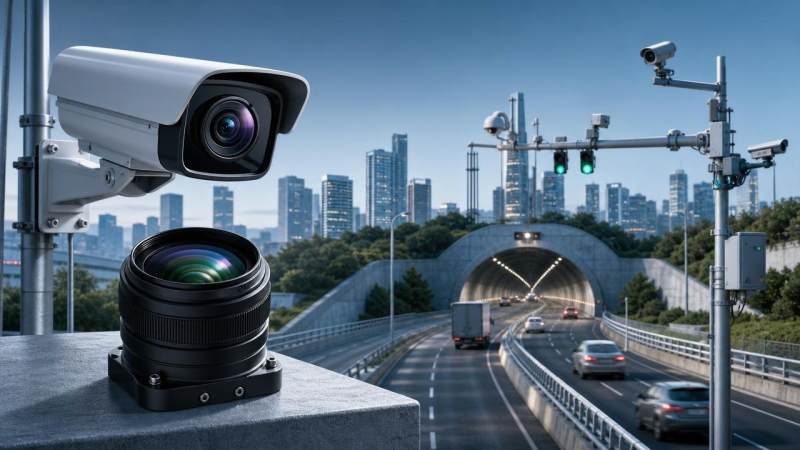
Optical research is rapidly reshaping how security cameras perform in real-world environments, from low-light monitoring to AI-assisted detection accuracy. For technical evaluators, understanding these trends is essential to comparing system reliability, compliance readiness, and long-term deployment value. This article explores the optical innovations influencing modern surveillance performance and how they align with evolving global security and infrastructure demands.
In 2026, technical assessment no longer stops at sensor resolution or bitrate. Evaluators are now expected to judge how optical design affects image usability across 24-hour cycles, harsh weather, mixed lighting, and increasingly automated incident workflows. That makes optical research a procurement issue, a compliance issue, and a lifecycle cost issue at the same time.
For organizations tracking public safety upgrades, smart construction programs, transport monitoring, and electronic surveillance regulation, the practical question is clear: which optical innovations materially improve security camera performance, and which ones only add specification noise? This is where GSIM’s intelligence-led perspective becomes useful, connecting optical development with policy interpretation, deployment scenarios, and long-range decision support.
Why Optical Research Has Become a Core Evaluation Factor
A decade ago, many camera comparisons focused on 3 to 4 visible metrics: megapixels, compression, frame rate, and storage efficiency. Today, optical research influences at least 6 operational outcomes that matter more to technical evaluators: low-light clarity, target contrast, focus consistency, edge distortion, AI detection confidence, and legal-grade image interpretability.
In field deployments, poor optics can reduce the value of a high-resolution sensor by 20% to 40% in practical terms, especially when scenes include glare, moving subjects, backlighting, fog, or uneven illumination. A 4K stream is not operationally useful if faces blur at 15 meters, plates bloom under headlights, or IR reflection overwhelms the scene after midnight.
From Image Capture to Decision Reliability
Modern surveillance systems are increasingly judged by downstream performance. If an optical stack degrades scene detail, analytics engines can misclassify objects, raise false positives, or miss events entirely. In AI-assisted environments, even a 5% drop in edge sharpness or contrast separation can affect object classification confidence when scenes are crowded or poorly lit.
This is why optical research now extends beyond lens coating or focal length. It includes spectral response tuning, anti-reflective treatment, aperture optimization, thermal compensation, IR-visible balance, and scene-specific light management. These are not academic refinements; they shape whether surveillance output is actionable within 2 seconds, 20 seconds, or not at all.
What Technical Evaluators Should Measure First
- Minimum usable illumination rather than theoretical illumination sensitivity
- Focus retention across temperature swings such as -20°C to 50°C
- Scene performance at 10 m, 30 m, and 60 m instead of center-frame lab images
- IR hotspot control and glare suppression in reflective environments
- Consistency between daytime color rendering and nighttime monochrome detail
These checkpoints help separate optical research that improves deployment outcomes from feature lists designed mainly for marketing comparisons.
Key Optical Research Trends Changing Security Camera Performance
Several areas of optical research are now changing camera performance in measurable ways. Their importance varies by use case, but for public safety projects, perimeter monitoring, and smart infrastructure, 5 trends stand out because they affect both real-world visibility and machine vision stability.
1. Low-Light Optimization Beyond Traditional IR
Conventional infrared illumination remains essential, yet newer optical research is focused on balancing visible and near-infrared sensitivity rather than maximizing one band alone. This improves image usability in mixed urban scenes where sodium lamps, LED signage, vehicle lights, and ambient spill create irregular spectral conditions.
For evaluators, the gain is not simply brighter footage. Better spectral balancing can reduce overexposure zones, preserve facial contours, and improve analytics performance during dusk-to-night transitions that typically last 20 to 45 minutes depending on location and season.
2. Advanced Lens Coatings and Flare Control
Glare is a growing issue in digital infrastructure environments because sites now include more glass, polished metal, reflective barriers, and high-output LED lighting. Advanced lens coatings are being optimized to suppress internal reflections, improve contrast, and limit ghosting in scenes with direct light intrusion.
This matters for compliance-sensitive surveillance, where image interpretation must remain reliable under difficult conditions. A camera that performs well in a controlled corridor may fail at a transport entrance or city intersection if flare reduces plate readability or obscures subject movement.
3. Wider Dynamic Range with Optical Support
Dynamic range is often treated as a sensor or image-processing feature, but optical research plays a major role in how much useful detail reaches the sensor in the first place. Lens geometry, coating quality, and aperture management affect highlight clipping and shadow retention before digital compensation begins.
In entrances, tunnels, parking ramps, and urban streetscapes, wide dynamic range only works well when the optical path supports it. Evaluators should test scenes with strong contrast ratios at multiple times of day rather than relying on a single vendor demo image.
The following comparison helps technical teams connect current optical research priorities with the performance issues they are most likely to face during evaluation and deployment.
The main takeaway is that optical research should not be reviewed as a separate engineering topic. It should be mapped directly to field risks such as low-light failure, AI instability, false alarms, and poor evidentiary quality.
How Optical Research Supports AI Vision, VLC, and Smart Infrastructure
GSIM’s strategic view is especially relevant because the next phase of surveillance is not isolated imaging. It is the fusion of optical capture, AI interpretation, and connected infrastructure. As AI vision and Visible Light Communication evolve together, camera optics become part of a broader digital environment rather than a standalone hardware layer.
Optics as an Input Quality Layer for AI
AI engines rely on data consistency. If image contrast, focus, and illumination vary too sharply, model confidence becomes less stable, especially in crowded scenes or edge deployments with limited processing headroom. Technical teams often spend weeks tuning software thresholds when the root issue is optical inconsistency at the point of capture.
In practice, better optical research can reduce retraining pressure and shorten validation cycles by 1 to 3 deployment stages. This is particularly useful in city safety platforms, logistics hubs, and construction sites where camera positions, weather exposure, and night conditions differ significantly across zones.
The Emerging Role of Visible Light Communication
VLC is still an evolving area, but it is increasingly relevant in controlled infrastructure environments where lighting and data functions may converge. Optical research in this space focuses on how camera systems interact with modulated light sources without losing scene readability or causing synchronization problems for analytics.
For evaluators, this means checking whether camera optics and image pipelines can operate in environments with advanced LED communication layers, smart streetlights, or digitally managed industrial illumination. Even where VLC is not yet active, future readiness can influence a 5-year or 7-year procurement decision.
Why Smart Construction and Public Safety Need Better Optical Planning
Temporary and semi-permanent sites often expose the weaknesses of generic camera selection. Smart construction projects combine dust, vibration, changing lighting angles, and frequent repositioning. Public safety networks deal with mixed vendor estates, long standoff distances, and legal scrutiny over image reliability.
- Construction zones need optics that tolerate particulate interference and unstable light conditions.
- Transit and civic spaces need stronger dynamic range and glare suppression.
- Perimeter security needs accurate long-distance detail without excessive focus drift.
- Integrated command systems need image consistency for AI-assisted triage.
This is where optical research directly supports infrastructure resilience rather than only image aesthetics.
A Practical Evaluation Framework for Technical Buyers
Technical evaluators need a repeatable framework to assess optical research claims during vendor comparison, pilot setup, and pre-acceptance review. A good framework should cover 4 layers: scene definition, performance testing, compliance fit, and lifecycle maintainability.
Step 1: Define the Real Scene, Not the Lab Scene
Start with operating distance, target size, ambient lighting type, reflective surfaces, and expected weather exposure. At minimum, create 3 scene classes: controlled indoor, transitional lighting, and hostile outdoor. Each class should be tested in daytime, dusk, and night conditions.
Step 2: Measure Optical Stability Across Time
Many cameras perform acceptably during a short demonstration but degrade over longer cycles. Run image checks over 24 hours and, where possible, across 3 to 5 environmental shifts such as rain, fog, direct sun, and temperature variation. Stability often matters more than peak image quality.
Step 3: Link Image Output to Use Case Thresholds
A technically sharp image is not always operationally sufficient. Match performance to task thresholds such as person detection, face comparison, plate review, incident reconstruction, or cross-camera AI correlation. Each task has a different tolerance for blur, noise, shadow, and color shift.
The table below gives a practical structure that procurement and engineering teams can use during pilot evaluation and tender review.
The value of this framework is that it forces a connection between optical research and actual acceptance criteria. It also reduces the risk of selecting cameras based only on nominal resolution or isolated demo conditions.
Step 4: Include Compliance and Procurement Readiness
For multinational or public-facing deployments, image quality must be reviewed alongside legal interpretation, retention policy, and surveillance governance. A system that captures more detail is not automatically more deployable if it creates issues around evidence handling, privacy boundaries, or cross-border operational policy.
GSIM’s role as a strategic intelligence center is valuable here because technical teams increasingly need both optical guidance and regulatory context. The strongest decisions are made when engineers, procurement leads, and compliance stakeholders evaluate the same evidence set.
Common Mistakes, Risk Signals, and Smarter Procurement Questions
Despite better product literature, many buying teams still misread optical performance. The most common mistake is assuming that more pixels or stronger illumination will compensate for optical weaknesses. In reality, over-illumination can intensify glare, and higher resolution can expose lens limitations more clearly.
Frequent Evaluation Mistakes
- Testing only in ideal daylight rather than across 24-hour use conditions
- Ignoring edge distortion and focusing only on center-frame detail
- Accepting vendor sample clips without scene-matched validation
- Separating optics review from AI performance review
- Failing to account for maintenance frequency in dusty or high-glare environments
Questions That Improve Vendor Review Quality
Technical evaluators can strengthen procurement outcomes by asking targeted questions. How does the optical stack behave between 0 lux assisted mode and low ambient visible light? What evidence supports focus retention over temperature cycling? How is glare tested against modern LED sources? What image changes occur when AI analytics are enabled at the edge?
These questions matter because they move the conversation from specifications to operational proof. They also create a more reliable basis for comparing systems intended for long service periods, often 5 years or more in infrastructure projects.
Maintenance and Lifecycle Considerations
Optical research also affects service planning. Coatings, enclosure interaction, thermal behavior, and light-source alignment can influence cleaning intervals, recalibration frequency, and replacement timing. In exposed sites, a camera with better optical resilience may reduce manual intervention cycles from monthly to quarterly, depending on dust load and lighting stress.
For technical assessment teams, this means total cost of ownership should include image stability over time, not just initial hardware price. A lower-priced camera can become more expensive if it triggers repeated site visits, analytics retuning, or incident review failures.
What This Means for Security Decision-Making in 2026
As urban safety upgrades accelerate, optical research is becoming one of the most practical indicators of whether a surveillance system will deliver reliable results after installation. It shapes how well cameras support AI vision, adapt to evolving lighting environments, and remain useful under regulatory and operational scrutiny.
For technical evaluators, the priority is not to chase every new feature but to identify which optical advances improve image integrity, analytics trust, and deployment resilience. In that process, GSIM offers a decision-support perspective that connects technology trends, procurement logic, and compliance-aware planning across global security environments.
If you are reviewing camera platforms for public safety, smart infrastructure, or construction-linked surveillance, now is the time to assess optical research as a strategic factor rather than a secondary specification. Contact GSIM to get a tailored evaluation framework, discuss optical performance criteria, or explore broader security and illumination solutions aligned with your deployment goals.
The VitalSync Intelligence Brief
Receive daily deep-dives into MedTech innovations and regulatory shifts.