
Security
Optical Research Trends Shaping Smarter Security Detection
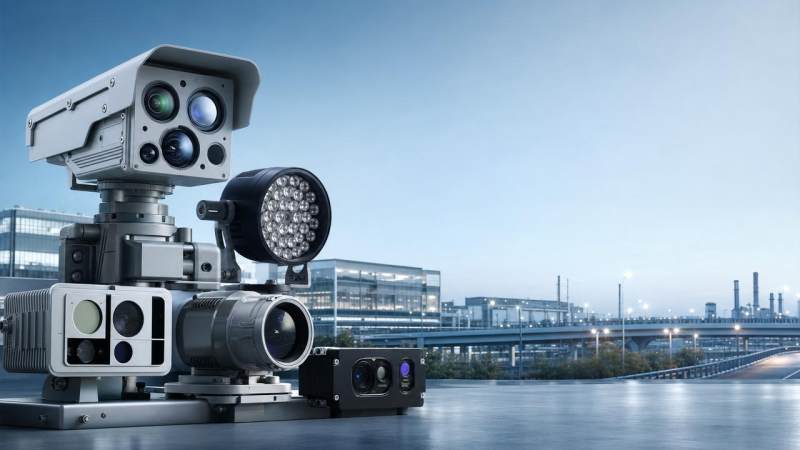
As cities, critical infrastructure, and public venues upgrade their security frameworks, optical research is becoming a decisive force in smarter detection. For technical evaluators, understanding how imaging, illumination, AI vision, and compliance requirements converge is essential to selecting reliable solutions. This article explores the trends shaping next-generation security systems and how they influence performance, procurement, and long-term risk control.
In 2026, security detection is no longer judged only by camera resolution or basic coverage. Technical assessment teams are being asked to validate low-light performance, AI-ready image quality, environmental resilience, interoperability, and legal suitability across 3 to 5 year deployment cycles. That shift is pushing optical research from a laboratory topic into a practical decision layer for public safety, transport nodes, smart construction sites, industrial campuses, and urban digital infrastructure.
For organizations using intelligence platforms such as GSIM, the value lies in connecting optical engineering with procurement reality. Optical research now informs not only sensor selection, but also illumination design, video analytics accuracy, edge computing efficiency, and surveillance compliance. For evaluators comparing multiple vendors, these factors directly affect false alarms, maintenance intervals, retrofit complexity, and total system risk.
Why Optical Research Has Become Central to Security Detection
The rise of AI vision has changed the minimum acceptable image standard. A system that looked adequate for live monitoring 5 years ago may now perform poorly when used for object classification, intrusion analytics, facial matching, or perimeter event reconstruction. Optical research helps evaluators understand how lens quality, dynamic range, signal-to-noise ratio, spectral sensitivity, and illumination uniformity affect machine interpretation as much as human viewing.
In practical deployments, even a 10% to 15% loss in image contrast at night can reduce analytics confidence and increase operator review workload. In transport hubs or public venues, where scenes may shift from bright entrance zones to dim corridors within seconds, poor optical adaptation creates blind spots that software alone cannot correct. This is why smarter detection begins with optical performance, not only algorithm selection.
From Visibility to Detectability
Traditional specification sheets often focus on whether a target is visible. Technical evaluators now need a deeper standard: whether the target can be detected, classified, and verified under changing light, weather, and motion conditions. Optical research supports this shift by measuring real-world variables such as glare control, backlight compensation, near-infrared response, and motion blur thresholds at different lux levels.
- Detection asks whether the system notices an object in the scene.
- Classification asks whether it can distinguish a person, vehicle, or non-threat event.
- Identification asks whether image detail remains usable for decision or investigation.
These 3 layers matter because many systems perform well in daytime detection but degrade sharply after dusk, during rain, or under mixed LED lighting. Optical research helps establish the right benchmark for each use case rather than relying on marketing claims.
The Security Impact of Illumination Engineering
Illumination is no longer a secondary utility. In high-risk environments, the lighting scheme can determine whether the optical stack produces stable data for AI analysis. Visible light, near-infrared, and hybrid illumination each serve different purposes, and the wrong choice may create washout, hotspotting, reflective interference, or privacy concerns. In many outdoor projects, a uniformity ratio within a practical 1:3 range delivers more reliable analytics than simply increasing brightness.
GSIM’s focus on optical environment optimization is relevant here because evaluators increasingly need policy-aware technical guidance. A site may be technically capable of using stronger illumination, but neighborhood restrictions, road safety considerations, or surveillance regulations may limit usable power, beam direction, or recording intent.
Key Optical Research Trends Technical Evaluators Should Track
Several research directions are now shaping procurement and engineering decisions. These trends matter because they influence not just performance, but also integration cost, deployment speed, and long-term support requirements. For technical evaluators, tracking 4 to 6 of these trends is often enough to narrow solution selection before pilot testing begins.
1. Low-Light Imaging Beyond Higher Resolution
Resolution remains important, but optical research increasingly shows that pixel count alone does not guarantee stronger security detection. Larger pixel architecture, better lens transmission, and improved low-lux sensitivity often produce better nighttime analytics than a higher-resolution sensor with weaker light handling. In many perimeter applications, a stable 2MP to 4MP stream with strong low-light optimization can outperform an 8MP stream affected by noise and compression artifacts.
Evaluators should review test conditions carefully. Claims such as “starlight performance” or “ultra low light” should be checked against shutter speed, noise reduction settings, and usable frame rate. A camera operating at 1/5 second exposure may look bright in a demo, but still fail to capture moving subjects accurately.
2. Multi-Spectral Sensing for Complex Scenes
Optical research is also advancing multi-spectral approaches that combine visible and non-visible bands to improve scene interpretation. For security detection, this can help in smoke, fog, glare-heavy environments, or mixed indoor-outdoor transitions. While not every project requires multi-spectral hardware, evaluators in energy, logistics, airports, or critical infrastructure should consider whether a single-band solution leaves operational gaps.
The value is often strongest where one modality verifies another. A visible stream may support identification, while an alternate band strengthens event detection under low contrast. This layered approach can reduce nuisance alerts over a 24-hour cycle.
3. AI Vision Dependence on Optical Quality
AI models are highly sensitive to the quality of incoming optical data. Research in security environments shows that distorted edges, poor color fidelity, or inconsistent illumination can weaken model confidence before inference even begins. This means optical research and AI evaluation must be performed together, not as separate procurement tracks.
For example, if a site expects person-vehicle separation, abandoned object detection, and queue density analysis from the same camera channel, evaluators should test whether the optical design supports all 3 tasks at day, dusk, and night. One sensor may pass object counting but fail event verification because highlights overwhelm fine detail.
Common AI-Optics Validation Points
- Image consistency across 3 lighting bands: daylight, twilight, and low-light night scenes.
- Motion retention at operational speeds such as walking, running, or vehicle transit.
- Lens distortion control at scene edges where analytic zones are often placed.
- Reflective surface handling for glass, wet pavement, metal gates, and helmets.
4. Visible Light Communication and Smart Infrastructure Convergence
One emerging area tied to GSIM’s intelligence focus is the convergence of AI vision and Visible Light Communication. VLC is not a universal replacement for traditional connectivity, but optical research suggests it may support specialized data exchange, positioning, or environment-aware services in enclosed or regulated spaces. For technical evaluators, the more immediate implication is that lighting infrastructure may become a dual-purpose asset for visibility and digital sensing.
This matters in newly built campuses, smart stations, public buildings, and controlled industrial facilities. If luminaires, sensors, and detection endpoints share planning logic from day 1, the project can reduce retrofit complexity later. A 2-stage design review that separates illumination engineering from security engineering may miss these efficiencies.
The table below highlights how several optical research trends translate into evaluation priorities for security programs.
A clear pattern emerges: optical research is shaping system-level decisions rather than isolated hardware upgrades. Technical evaluators who align sensor, illumination, and analytics testing early usually reduce late-stage redesign and shorten acceptance cycles.
How to Evaluate Security Solutions Through an Optical Research Lens
For B2B buyers, the challenge is not understanding that optical research matters. The challenge is converting that knowledge into a repeatable evaluation framework. A practical review model should cover at least 4 dimensions: scene requirement, optical performance, AI compatibility, and compliance risk. Without this structure, teams often compare products with inconsistent assumptions.
Define the Operational Scene First
Before comparing devices, evaluators should map the detection task. Is the project protecting a 30-meter gate, a 120-meter perimeter line, a 24-hour loading area, or a mixed pedestrian-vehicle plaza? The required optical profile changes significantly with distance, movement, light variability, and target size. A generic urban camera profile may not suit a logistics corridor or critical utility boundary.
- Define the target event type and response priority.
- Measure the light environment across at least 3 time periods.
- List reflective, weather, and obstruction variables.
- Decide which events require AI automation and which require human review.
Use Measurable Optical Criteria
Optical research becomes useful when converted into decision criteria. Instead of asking whether a device is “good in low light,” ask whether it maintains acceptable detail at a target range under 1 to 5 lux, whether it controls bloom around headlights, and whether it supports stable analytics without aggressive image smoothing. These questions are harder to market around and easier to validate in pilot tests.
The following table provides a practical scoring framework for technical evaluators reviewing optical research relevance in procurement.
Using a framework like this helps teams compare bids on operational outcomes rather than headline specifications. It also reveals hidden cost drivers such as added luminaires, more frequent cleaning, edge server tuning, or the need for wider pilot testing.
Account for Compliance and Governance Early
Security detection is increasingly shaped by legal and governance constraints. Technical evaluators should confirm not only whether a system can capture more data, but whether it should. Optical research can increase capability through better imaging or broader scene illumination, yet surveillance regulations may limit field of view, retention logic, or personally identifiable detail in some environments.
A disciplined assessment should include at least 3 review layers: technical adequacy, data governance, and site-specific policy fit. This is especially important for cross-border projects, public-sector procurement, and mixed-use developments where one detection strategy may not be acceptable in every zone.
Implementation Risks, Common Mistakes, and Practical Recommendations
Even strong technologies underperform when optical assumptions are not matched to the site. In field projects, the biggest issues are often not dramatic hardware failure, but small design mismatches that accumulate into unreliable detection. Technical evaluators should treat implementation as a controlled process rather than a product handoff.
Common Mistakes in Optical Security Planning
- Choosing high resolution without validating usable nighttime clarity.
- Adding more illumination power instead of improving beam angle and uniformity.
- Testing AI models in ideal scenes but not in rain, glare, or mixed traffic flow.
- Ignoring maintenance impacts such as dust, lens contamination, or lighting degradation over 6 to 12 months.
- Separating security procurement from smart building or lighting infrastructure decisions.
These mistakes raise false event rates, delay commissioning, and weaken stakeholder confidence. In large estates or public infrastructure, they can also trigger expensive change orders after civil and electrical work is already completed.
A Practical 5-Step Evaluation and Deployment Path
A structured workflow helps technical evaluators turn optical research into consistent project outcomes. In most cases, a 5-step path is sufficient for pre-procurement and early implementation alignment.
- Map mission-critical scenes and define event priorities.
- Audit ambient light, reflective materials, and weather exposure.
- Shortlist solutions based on optical and AI compatibility criteria.
- Run field tests across at least 2 lighting conditions and 1 stress condition.
- Finalize compliance review, maintenance plan, and acceptance thresholds.
This process typically reduces selection ambiguity more effectively than relying on lab images or showroom demonstrations. It also gives procurement, engineering, and governance teams a shared evidence base before contract finalization.
Where GSIM Adds Strategic Value
For technical evaluators working across complex or international projects, the challenge is often the fragmentation of information. Optical research, surveillance law, AI readiness, and procurement timing are usually reviewed in separate channels. GSIM’s role as a strategic intelligence center is valuable because it brings these decision points together through sector news, trend interpretation, and commercial insight tied to real infrastructure programs.
That integrated view is useful when teams need to compare not only devices, but also deployment logic. A solution that performs well optically may still be a weak choice if it creates long lead times, poor standards alignment, or high site adaptation cost. Better decisions come from seeing optical performance as part of the broader security order.
Conclusion: Smarter Detection Starts with Better Optical Decisions
Optical research is shaping the next generation of security detection by improving how systems see, interpret, and respond under real operating conditions. For technical evaluators, the priority is no longer limited to image sharpness. It includes low-light usability, illumination strategy, AI input quality, compliance fit, and long-term maintainability across demanding security environments.
Organizations that evaluate optical research early are better positioned to reduce false alarms, improve evidence quality, control retrofit cost, and support scalable smart infrastructure planning. With GSIM’s focus on physical security assurance and optical environment optimization, decision-makers can align technical assessment with strategic intelligence, procurement insight, and policy awareness.
If you are reviewing security upgrades for urban infrastructure, public venues, industrial sites, or smart construction projects, now is the right time to refine your optical evaluation framework. Contact us to get a tailored solution, discuss product details, or learn more about practical security detection strategies shaped by current optical research.
- physical security assurance
- optical environment optimization
- digital infrastructure
- strategic intelligence center
- AI vision
- Visible Light Communication
- smart construction sites
- security solutions
- security order
- sector news
- optical security
- optical research
- optical engineering
- security systems
- optical design
The VitalSync Intelligence Brief
Receive daily deep-dives into MedTech innovations and regulatory shifts.