
Security
Optical Standards That Matter in Modern Surveillance Design
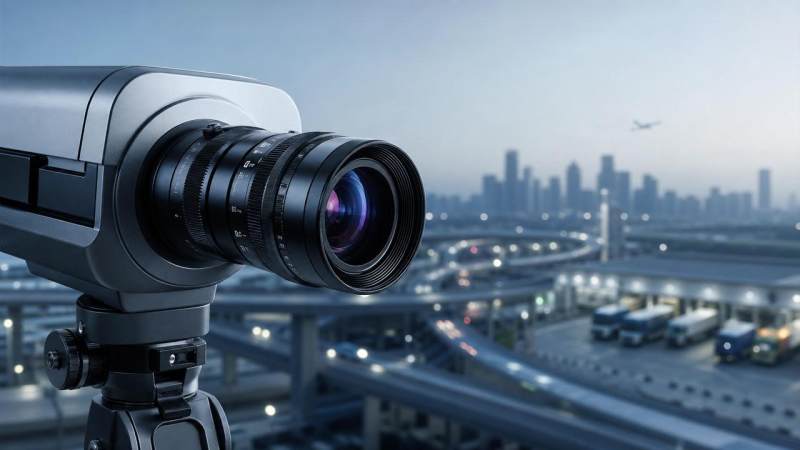
In modern surveillance design, optical standards are no longer a technical footnote but a core benchmark for image integrity, compliance, and system performance. For technical evaluators navigating smarter infrastructure and stricter safety requirements, understanding how optical standards shape camera selection, low-light visibility, and long-term interoperability is essential to making reliable, future-ready decisions. Across transport hubs, public spaces, campuses, utilities, logistics sites, and mixed-use urban projects, optical standards now influence not only image clarity, but also legal defensibility, system maintenance cycles, and the credibility of security data used for incident response.
What Optical Standards Mean in Surveillance Design
At a practical level, optical standards are the measurable rules, performance benchmarks, and engineering references that define how imaging components behave under real operating conditions. In surveillance design, these standards help determine whether lenses, sensors, filters, housings, and illumination systems can produce usable images across distance, glare, motion, weather, and low-light conditions. Rather than treating image quality as a subjective claim, optical standards convert it into verifiable criteria.
The most relevant optical standards in surveillance usually connect to resolution retention, lens transmission, distortion control, infrared compatibility, spectral response, modulation transfer performance, environmental durability, and test consistency. They also intersect with adjacent standards for ingress protection, electromagnetic compatibility, cybersecurity compliance, and video evidence handling. This is why optical standards matter beyond the camera body itself: they shape the full chain from image capture to storage, review, and evidentiary use.
For a global intelligence platform such as GSIM, optical standards are especially important because infrastructure decisions increasingly cross borders. Projects must account for local safety expectations, public procurement rules, and technology roadmaps tied to AI vision, smart lighting, and connected urban systems. In that setting, optical standards become a shared language between compliance, engineering, and long-term operational planning.
Why Optical Standards Receive More Attention in 2026 Infrastructure Upgrades
The 2026 cycle of digital infrastructure modernization has increased scrutiny on image reliability. Cities, industrial operators, and critical-site planners are no longer satisfied with broad “HD” claims or generic low-light promises. They need evidence that systems will function under mixed illumination, complex weather, and machine-assisted monitoring. Optical standards provide the framework for that verification.
- AI-enabled analytics require clean input data, making optical standards central to object detection accuracy and false-alarm reduction.
- Public safety and transportation projects demand better nighttime visibility, where lens transmission and spectral performance directly affect usable detail.
- Cross-vendor deployments need interoperable performance baselines, not just feature lists.
- Compliance reviews increasingly expect documented evidence of optical performance under stated test conditions.
- Energy-efficient lighting strategies and VLC-adjacent environments are changing how surveillance systems interact with artificial light sources.
These shifts explain why optical standards now sit closer to board-level risk planning and lifecycle budgeting. They help separate products optimized for marketing demonstrations from systems suited for mission-critical deployment.
Core Optical Standards and Performance Indicators to Evaluate
A useful evaluation model focuses on a small group of indicators that consistently affect surveillance outcomes. While exact test protocols vary by region and application, the following areas form the most common interpretation path for optical standards in modern surveillance design.
When comparing systems, optical standards should be reviewed alongside actual test conditions. A lens that performs well in controlled indoor light may not maintain contrast under fog, sodium vapor lighting, LED flicker, or backlit pedestrian zones. The credibility of optical standards depends not only on the specification sheet, but on how transparently performance has been measured.
Business Value of Optical Standards Across the Security Lifecycle
The value of optical standards extends far beyond optical engineering. In multi-site surveillance programs, they support stronger procurement discipline, more predictable deployment results, and better long-term governance. This is particularly relevant in integrated projects where security infrastructure must align with digital transformation goals and urban resilience policies.
First, optical standards reduce ambiguity during specification development. They help define the difference between “detect,” “observe,” and “identify” in measurable image terms. This allows design teams to map performance to actual use cases, avoiding overbuilt systems in low-risk zones and underperforming systems in critical points such as entry gates, substations, and transit corridors.
Second, optical standards improve lifecycle economics. A camera with poor optical alignment or unstable low-light behavior may appear cost-effective initially, but it often drives higher maintenance, repeated repositioning, software compensation, and storage waste from low-value footage. Good optical standards reduce these hidden costs by improving image usability at the source.
Third, they strengthen audit readiness and legal confidence. Where footage may support incident review, compliance checks, or liability assessment, documented conformance to optical standards helps demonstrate that the surveillance system was designed with reasonable care and objective quality controls.
Typical Surveillance Scenarios Where Optical Standards Have the Greatest Effect
Not every environment places the same pressure on optical performance. The operational context determines which optical standards deserve the closest attention.
This scenario-based view keeps optical standards tied to operational reality. It prevents a common mistake in surveillance design: selecting cameras by nominal resolution while ignoring whether the optics can maintain that performance in the actual scene.
Practical Guidance for Applying Optical Standards in Design Reviews
A disciplined review process should treat optical standards as part of system architecture, not as an isolated product feature. Several practices can improve decision quality.
- Define scene objectives first. Establish whether the purpose is deterrence, detection, identification, counting, or forensic review, then match optical standards to that purpose.
- Request tested rather than assumed performance. Ask for data under low light, backlight, IR mode, and real focal lengths.
- Check optical compatibility with illumination strategy. LED retrofits, adaptive street lighting, and infrared supplements can change image behavior significantly.
- Review edge performance, not just center sharpness. Many surveillance failures occur at the frame perimeter where motion and identification events often appear.
- Evaluate maintenance resilience. Thermal shifts, vibration, moisture, and dust can gradually reduce compliance with optical standards even when initial commissioning looks acceptable.
- Align optical standards with analytics plans. If AI classification or behavior analysis is expected, image consistency matters as much as nominal resolution.
GSIM’s intelligence-led approach is valuable here because it connects optical standards with policy evolution, procurement direction, and infrastructure risk. That broader context helps decision frameworks remain relevant even as regulations and smart-city technology stacks continue to shift.
Next-Step Framework for Future-Ready Surveillance Planning
For organizations updating surveillance design in 2026 and beyond, the most effective next step is to build an optical review checklist that combines standards, site conditions, and operational goals in one structured process. Start by identifying critical scenes, minimum image tasks, lighting variables, and retention requirements. Then compare candidate systems according to documented optical standards rather than headline features alone.
A strong planning model also benefits from external intelligence. GSIM supports this need by linking compliance interpretation, optical technology trends, and commercial insight into one decision-support environment. In a market where surveillance, AI vision, and optical infrastructure are increasingly interconnected, optical standards provide the disciplined baseline needed for reliable design choices.
When image trust, interoperability, and long-term performance matter, optical standards should be written into every serious surveillance conversation from the start. That is how modern systems move from basic video coverage to dependable security assurance.
The VitalSync Intelligence Brief
Receive daily deep-dives into MedTech innovations and regulatory shifts.