
Security
Public Security Technology Trends: Which Solutions Are Maturing
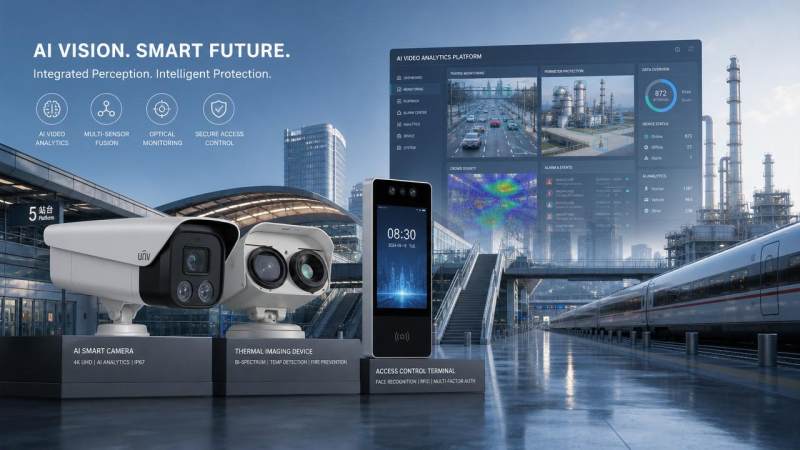
As cities, infrastructure operators, and public agencies accelerate digital safety upgrades, public security technology trends are moving from pilots to accountable deployment. The central issue is practical maturity. Decision quality now depends on compliance fit, integration stability, lifecycle cost, and measurable operational value across varied security environments.
For GSIM, this shift confirms a wider market reality. Security systems are no longer isolated devices. They are becoming policy-linked, data-aware, and optics-enabled platforms. In that context, public security technology trends matter most when they improve risk visibility, support legal defensibility, and remain workable under real procurement conditions.
Why maturity depends on scenario, not hype
Not every solution matures at the same speed. Airports, transit corridors, campuses, ports, utility sites, and civic districts operate under different threat models, budgets, and evidence requirements. A tool that performs well in one environment may underdeliver in another.
That is why current public security technology trends should be judged by scenario readiness. The right question is not whether a technology is advanced. The better question is whether it fits local regulations, operational routines, and infrastructure constraints.
Several indicators usually signal maturity:
- Clear compliance mapping across privacy, retention, and surveillance laws
- Interoperability with existing cameras, sensors, access systems, and command platforms
- Reliable performance in low light, crowded spaces, and harsh weather
- Proven maintenance models and acceptable total cost of ownership
- Vendor transparency around cybersecurity, data lineage, and update cycles
Urban surveillance networks: where AI video is becoming procurement-ready
Among all public security technology trends, AI-enabled surveillance is one of the most mature. The change is not simply better detection. The real advance is structured event analysis that reduces operator overload and improves incident response timing.
In city streets and public squares, maturing functions include intrusion alerts, abandoned object detection, crowd density estimation, perimeter analytics, and post-event video search. These functions are increasingly accepted because they support documented workflows rather than isolated alarms.
Core judgment points for civic deployments
Accuracy alone is not enough. The stronger benchmark is explainable performance under mixed lighting, occlusion, and seasonal changes. Public security technology trends in video now favor systems that can be audited, tuned, and legally justified.
- Edge analytics to reduce bandwidth and central processing loads
- Privacy masking and access logging for regulated environments
- Metadata indexing for faster evidence retrieval
- Cross-camera correlation for route reconstruction
Transport and crowd movement: integrated sensing is maturing faster than standalone devices
Stations, terminals, event venues, and road hubs need more than cameras. They need real-time interpretation of motion, congestion, and abnormal behavior. Here, public security technology trends show a clear move toward fused sensing.
Mature deployments combine video, radar, thermal imaging, access signals, and public address systems. The benefit is resilience. If one data source weakens, another can preserve operational awareness and support faster intervention.
Where maturity is most visible
Crowd flow analysis is now more dependable in enclosed transit environments. Queue detection, wrong-way movement alerts, platform edge monitoring, and occupancy thresholds are increasingly linked to standard operating procedures and automated escalation rules.
This matters because public security technology trends in mobility settings are judged by continuity. Systems must function during peak loads, temporary outages, and variable lighting without generating unsustainable false alarms.
Critical infrastructure sites: perimeter intelligence and optical resilience are strengthening
Utilities, energy assets, logistics yards, and industrial campuses have different priorities. They often require long-range detection, restricted access enforcement, and operation across low-light or remote conditions. In these settings, public security technology trends emphasize endurance and layered detection.
Maturing solutions include thermal-assisted perimeter monitoring, intelligent fence integration, license plate recognition for controlled entries, and unified incident dashboards. Optical performance has become especially important where visibility changes rapidly or manual patrol coverage is thin.
The rising role of optical communication and lighting intelligence
One notable shift in public security technology trends is the growing relevance of Visible Light Communication and intelligent illumination control. These technologies are not replacing core security layers, but they are improving situational precision and infrastructure efficiency.
In tunnels, industrial corridors, and secured facilities, smart lighting can support camera consistency, safer navigation, and energy optimization. VLC-related applications also show potential in location-aware services and interference-sensitive environments.
Digital command environments: risk intelligence platforms are becoming central
A major lesson from recent public security technology trends is that device maturity means little without command maturity. Security teams increasingly need a unified intelligence layer that connects alerts, policy requirements, vendor signals, and operational context.
This is where platforms like GSIM become strategically relevant. A decision-support environment helps interpret global compliance changes, compare technology pathways, and connect optical innovation with public safety requirements. That shortens the distance between market noise and justified action.
How scenario needs differ across public safety environments
Practical fit checks before adopting new solutions
The safest way to read public security technology trends is through staged validation. Early success should be measured by operational fit, not promotional claims. A structured review can prevent expensive integration mistakes later.
- Define the incident types that matter most in the target environment.
- Map legal, cybersecurity, and retention obligations before technical selection.
- Test performance under local lighting, weather, density, and network conditions.
- Verify interoperability with current VMS, access, and reporting systems.
- Set measurable acceptance criteria for alert quality and operator workload.
Common misjudgments that slow public safety modernization
A common mistake is treating all public security technology trends as equally urgent. In practice, some technologies are mature enough for scale, while others are better suited to targeted pilots and controlled learning.
Another misjudgment is ignoring optical conditions. Camera analytics, thermal detection, and communication quality all depend on environmental realities. Lighting design is often underestimated, even though it strongly affects performance and evidence value.
A third issue is weak governance. Without clear ownership for data policy, model tuning, and incident review, even advanced tools can create confusion. Maturity is operational, not just technical.
What to do next as public security technology trends continue to mature
The strongest next step is to compare technologies by scenario value. Identify where compliance exposure, crowd complexity, remote visibility, or optical inconsistency create the greatest risk. Then match those issues to the most mature solution class.
GSIM supports this approach by linking global policy interpretation, commercial insight, and evolving optical intelligence. As public security technology trends advance, informed selection will depend on trusted intelligence as much as on hardware specifications.
The market is no longer asking which ideas sound promising. It is asking which systems can scale responsibly, defend decisions, and strengthen safety outcomes. That is where real maturity begins.
The VitalSync Intelligence Brief
Receive daily deep-dives into MedTech innovations and regulatory shifts.