
Security
Safety Technology Trends Shaping Industrial Upgrades in 2026
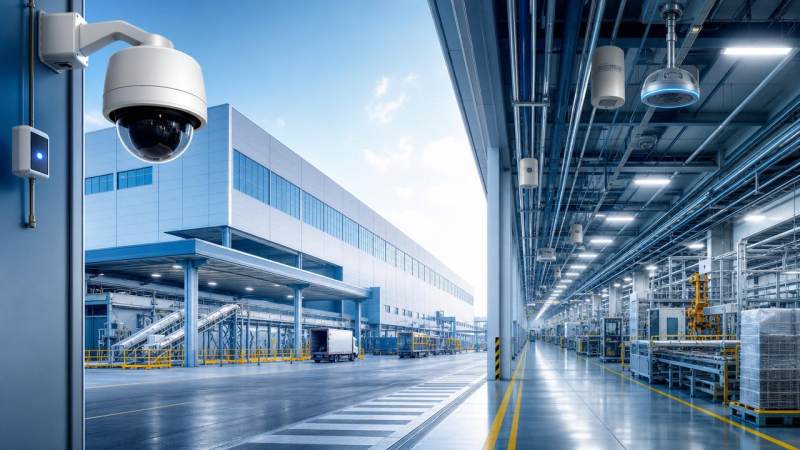
As industrial modernization accelerates, safety technology is becoming a decisive force behind smarter, more resilient upgrades in 2026. For business decision-makers, understanding how AI-driven monitoring, compliance standards, and optical environment innovations converge is essential to reducing risk and improving operational efficiency. This article explores the trends shaping industrial transformation and how strategic insight can support safer, future-ready investment decisions.
Across manufacturing plants, logistics hubs, utilities, transport infrastructure, public facilities, and smart construction sites, the safety conversation is no longer limited to alarms, cameras, or perimeter control. In 2026, industrial upgrades are increasingly evaluated through a wider operational lens: can a facility detect anomalies in under 3 seconds, maintain compliant visibility conditions across 24/7 operations, and connect safety data to procurement, maintenance, and governance workflows?
For enterprise leaders, that shift changes how capital is allocated. Safety technology now influences uptime, insurance exposure, worker confidence, project approvals, and long-term scalability. Platforms such as GSIM, with its focus on physical security assurance and optical environment optimization, are becoming relevant not simply as information sources, but as strategic intelligence partners that help decision-makers interpret standards, compare options, and reduce blind spots before investment decisions are finalized.
Why Safety Technology Has Become a Core Upgrade Priority in 2026
Industrial operators are dealing with a more complex risk environment than they were 5 years ago. Facilities are larger, more connected, and more exposed to regulatory review. At the same time, labor shortages, mixed-use infrastructure, and remote oversight models are pushing organizations to automate more of their risk detection and response process. In that context, safety technology is no longer treated as a compliance expense alone; it is becoming a board-level modernization lever.
From isolated devices to connected risk ecosystems
Traditional deployments often relied on disconnected subsystems: CCTV for surveillance, separate lighting for visibility, manual logs for inspections, and standalone access control for entry points. The 2026 model is different. Companies are integrating 4 to 6 safety layers into one operational environment, linking sensing, imaging, illumination, alerts, analytics, and audit records. That architecture improves response speed and reduces information loss between security teams, operations managers, and compliance officers.
This is where optical environment optimization matters. A camera system can only perform as well as the visual conditions around it. In many industrial settings, inadequate lux levels, glare, dust, reflective surfaces, or poor contrast reduce the practical value of advanced analytics. Decision-makers increasingly evaluate surveillance and lighting together because they affect one another in measurable ways, especially in warehouses, ports, substations, tunnels, and late-shift work zones.
The new cost of delayed upgrades
Delayed modernization carries at least 4 business costs. The first is incident escalation, where minor anomalies go undetected for 10 to 20 minutes instead of being flagged in real time. The second is compliance drift, particularly where video retention, access logs, or lighting adequacy must be documented. The third is maintenance inefficiency, when teams inspect fixed assets on rigid schedules rather than condition-based triggers. The fourth is procurement risk, as poorly specified systems often require rework within 12 to 24 months.
Key pressure points enterprise buyers now monitor
- Detection latency across critical zones, often targeted below 5 seconds
- Lighting consistency for machine vision and safe human navigation
- Cross-border compliance requirements for electronic surveillance
- Integration readiness with building management, SCADA, or facility systems
- Lifecycle serviceability over a 3- to 7-year deployment horizon
The table below outlines how industrial buyers are reframing safety technology from a narrow security purchase into a multi-function upgrade decision.
The practical takeaway is that enterprise buyers are no longer asking whether they need safety technology. They are asking how to specify it so that one investment supports compliance, visibility, response coordination, and operational continuity at the same time.
Five Safety Technology Trends Shaping Industrial Upgrades
The most important 2026 developments are not isolated breakthroughs. They are convergence trends. Safety technology is advancing through the interaction of AI vision, optical engineering, connectivity, standards interpretation, and buyer-side analytics. For decision-makers, the value lies in understanding which trends are mature enough for deployment and which require pilot-stage caution.
1. AI-driven monitoring is moving from observation to intervention support
In many industrial settings, AI-enabled video systems now go beyond motion detection. They are being configured to identify unauthorized entry, PPE non-compliance, congestion patterns, abnormal dwell time, restricted-zone breaches, and equipment-area conflicts. A well-designed system can reduce false alerts by filtering repetitive non-events and prioritize exceptions that require human review within 1 to 2 minutes.
That said, enterprise adoption depends on disciplined deployment. AI vision accuracy is heavily influenced by camera positioning, scene stability, illumination uniformity, and site-specific rule tuning. This is one reason GSIM’s Strategic Intelligence Center is relevant: decision-makers need policy interpretation and operational context, not just hardware catalogs.
2. Optical environment optimization is becoming a performance requirement
Lighting used to be addressed after the security plan was approved. In 2026, that sequence is being reversed in many projects. If a facility has poor contrast, excessive backlighting, or uneven coverage across loading bays and walkways, even high-resolution imaging may underperform. Buyers are therefore reviewing beam angles, color rendering, glare management, and lux stability as part of the safety technology package.
Typical industrial target ranges vary by use case. General circulation areas may require moderate uniformity, while inspection points, access checkpoints, and machine interaction zones often need significantly tighter visual control. The right optical environment improves both machine interpretation and human decision-making, especially during night operations, weather fluctuation, or emergency response events.
3. Compliance intelligence is becoming an active procurement variable
Cross-jurisdiction operations are forcing buyers to look beyond product features. Data retention practices, surveillance notice obligations, access permissions, and recording boundaries may differ by country, municipality, or project type. A system that appears technically suitable can still become commercially risky if its deployment model conflicts with local compliance expectations.
This is why more organizations are bringing compliance review forward into the first 2 procurement stages instead of waiting until contract finalization. Strategic intelligence platforms that translate evolving rules into operational implications can reduce redesign cycles and shorten internal approval time.
4. Visible Light Communication and hybrid infrastructure are gaining attention
Visible Light Communication, or VLC, is still an emerging topic in many industrial sectors, but interest is growing where electromagnetic sensitivity, indoor positioning, or dense connected environments create limitations for conventional wireless approaches. While not a universal replacement, VLC is increasingly discussed as part of future-ready safety technology planning, especially in controlled environments and digitally managed facilities.
For enterprise strategists, the value of VLC lies in convergence potential. Lighting assets may eventually support not only visibility but also selected data transmission or positioning functions. This is not a one-quarter implementation story. It is more often a 2- to 5-year infrastructure planning consideration, and it should be evaluated through pilot frameworks rather than blanket adoption.
5. Commercial insight is reshaping how upgrades are timed and scoped
Procurement decisions are becoming more dynamic. Buyers are tracking not only technical suitability but also supply chain resilience, standardization opportunities, retrofit complexity, and vendor support depth. On major smart construction and public safety projects, it is common to phase deployment in 3 steps: high-risk zones first, shared infrastructure second, and optimization analytics third. That phased approach reduces disruption and allows performance data to guide later expansion.
GSIM’s Commercial Insights perspective matters here because purchase timing can affect both cost and interoperability. In periods of infrastructure acceleration, decision-makers benefit from market visibility into demand concentration, likely lead-time pressure, and the trade-off between rapid deployment and specification discipline.
How Enterprise Buyers Should Evaluate Safety Technology Investments
A stronger safety outcome starts with a stronger specification process. Many disappointing projects fail not because the hardware is poor, but because the business case and technical assumptions were not aligned at the beginning. Enterprise buyers should evaluate safety technology across operational, optical, compliance, and lifecycle dimensions rather than price alone.
A practical 4-part evaluation framework
- Define the risk scenario: intrusion, worker safety, asset exposure, public interface, or mixed-use operations.
- Measure the environment: visibility conditions, site geometry, power availability, connectivity, and maintenance access.
- Check the policy layer: retention rules, recording scope, data handling, and site-specific compliance obligations.
- Model the lifecycle: deployment time, spare parts planning, software updates, and training needs over 36 to 84 months.
Questions procurement teams should ask early
Before issuing RFQs, buyers should clarify whether the goal is deterrence, detection, evidence, operational intelligence, or a mix of all four. They should also ask what level of alert confidence is required, how many user groups need system access, and whether the optical environment will remain stable throughout day and night cycles. These questions affect architecture, not just unit pricing.
The following table can help decision-makers compare evaluation priorities across common industrial upgrade contexts.
The pattern is clear: a site’s operational profile should shape the safety technology specification. A one-size-fits-all package often underperforms because different environments place very different demands on visibility, analytics, compliance, and maintenance resources.
Implementation Risks, Common Mistakes, and Better Rollout Strategy
Even well-funded industrial programs can fail to generate value if rollout discipline is weak. In practice, 3 categories of mistakes appear repeatedly: overbuying features with no operational owner, underestimating environmental constraints, and treating compliance as a post-installation issue. These mistakes are avoidable with a staged strategy.
Common implementation mistakes
- Installing advanced AI monitoring without validating camera sightlines and lighting stability first
- Choosing systems that cannot integrate with existing control, alarm, or reporting workflows
- Ignoring service access, resulting in long maintenance windows and costly downtime
- Defining success only by installation completion instead of response time, visibility quality, and audit readiness
A more reliable phased rollout model
For most enterprise settings, a 3-phase model works better than full-scale immediate deployment. Phase 1 focuses on high-risk zones and baseline measurement. Phase 2 connects systems and standardizes workflows. Phase 3 refines analytics, reporting, and optimization. Depending on site complexity, each phase may take 4 to 12 weeks, with validation checkpoints between stages.
What strategic intelligence adds during rollout
This is where GSIM’s value proposition becomes practical. Its Strategic Intelligence Center supports decision-makers by linking policy developments, technology evolution, and commercial insight. Instead of reacting to fragmented vendor claims, buyers can compare options against compliance expectations, optical performance needs, and project-type trends. That reduces ambiguity during specification, approval, and expansion decisions.
For multinational or multi-site organizations, the benefit is even greater. A central intelligence layer helps standardize decision criteria while still allowing local adaptation. In a market where safety technology choices increasingly intersect with legal interpretation and infrastructure planning, that kind of informed consistency is a competitive advantage.
What 2026 Decision-Makers Should Do Next
The organizations that gain the most from 2026 industrial upgrades will be those that treat safety technology as a strategic system, not a disconnected equipment purchase. AI monitoring, optical environment optimization, compliance intelligence, and phased procurement planning are no longer optional topics for complex operations. They are now part of the core investment logic behind safer and more resilient infrastructure.
For business leaders, the next step is to review existing facilities against 4 questions: where are the visibility gaps, which risks still rely on manual detection, what compliance assumptions remain untested, and which upgrade phases can deliver measurable value within the next 6 to 12 months? Answering those questions creates a far more reliable basis for capital planning than comparing product lists alone.
GSIM supports that process by connecting global protection demand with precision-oriented supply insight, industry standards, and forward-looking analysis. If your organization is planning a retrofit, a new infrastructure project, or a multi-site modernization roadmap, now is the time to get a tailored view of the safety technology options that fit your operating environment. Contact GSIM to explore customized guidance, evaluate procurement priorities, and learn more solutions for safer industrial upgrades in 2026.
The VitalSync Intelligence Brief
Receive daily deep-dives into MedTech innovations and regulatory shifts.