
Security
Security Architecture for Digital Security Trends
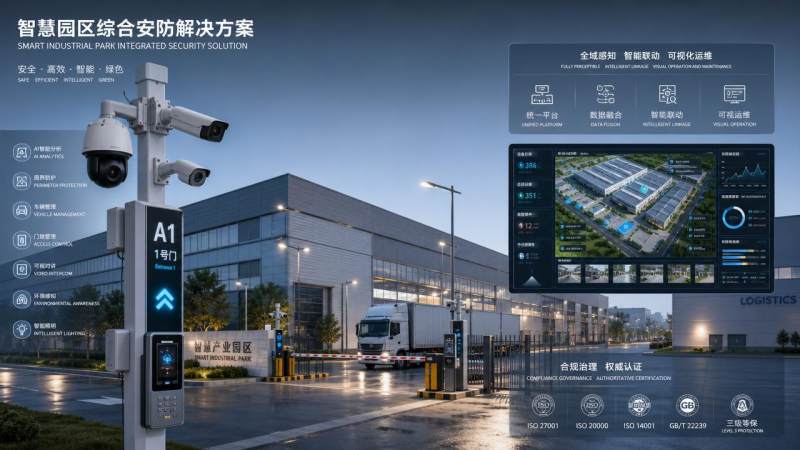
As global infrastructure becomes smarter and risk exposure more complex, security architecture for digital security is no longer a technical option but a strategic priority for enterprise leaders. GSIM helps decision-makers connect compliance, physical protection, AI-enabled surveillance, and optical innovation into a clearer framework, turning fragmented security trends into actionable intelligence for resilient investment and future-ready urban safety planning.
Why security architecture for digital security now demands board-level attention
For enterprise decision-makers, the challenge is no longer whether to invest in protection, but how to structure protection across physical assets, digital systems, public-facing infrastructure, and fast-evolving compliance rules. Security architecture for digital security has become the framework that links surveillance, access control, data governance, lighting conditions, AI analytics, and operational continuity into one coordinated model.
In the broader market, digital transformation is expanding risk surfaces. Smart campuses, logistics parks, construction sites, transport hubs, municipal corridors, and industrial facilities are now connected environments. Every connected camera, edge device, network recorder, lighting controller, and wireless gateway can improve visibility, but each one can also introduce new exposure if architecture decisions are fragmented.
This is where GSIM offers strategic value. Its Strategic Intelligence Center connects global policy interpretation with optical technology evolution, helping enterprises avoid a common failure pattern: buying devices first and defining security architecture later. That sequence often leads to poor interoperability, compliance gaps, duplicated procurement, and expensive retrofits.
- Executive teams need a decision structure that aligns security investment with operational resilience, not isolated technical features.
- Procurement teams need clear comparison criteria across vendors, standards, deployment models, and lifecycle costs.
- Risk and compliance leaders need assurance that surveillance, data retention, and cross-border operations follow applicable legal expectations.
- Facility and project teams need solutions that perform under real-world lighting, weather, occupancy, and infrastructure constraints.
What enterprise leaders are really buying
When leaders discuss security architecture for digital security, they are not simply buying cameras, sensors, or software. They are buying visibility, response speed, auditability, system compatibility, safer environments, and better protection of long-horizon capital projects. In mixed-use or public-facing projects, they are also buying trust from regulators, operators, and end users.
What a practical security architecture for digital security should include
A useful architecture must be modular enough for phased rollout and strong enough for long-term governance. In integrated environments, digital security cannot be separated from physical site conditions, especially where image quality depends on optical performance, ambient light balance, and nighttime visibility.
The table below outlines the core layers that enterprise teams should review before approving an investment roadmap for security architecture for digital security.
The strongest architectures are cross-functional. Security leaders define risk, IT defines digital control boundaries, operations define workflow realities, and procurement evaluates lifecycle viability. GSIM strengthens this process by translating policy trends and technology shifts into decision-ready intelligence rather than isolated product claims.
Why optical conditions matter more than many teams expect
A digital security plan can fail even with premium hardware if lighting conditions are poor. Optical environment optimization affects image clarity, false alarm rates, recognition reliability, and evidence usability. This matters in tunnels, logistics yards, roadside corridors, mixed indoor-outdoor campuses, and urban upgrade projects where light contrast changes throughout the day.
Which scenarios need different architecture choices?
Not every project should be designed the same way. Security architecture for digital security must reflect traffic flow, public exposure, environmental complexity, and legal scrutiny. The next table helps compare common enterprise and infrastructure scenarios.
The takeaway is simple: architecture choices should follow operational context. A procurement team that treats all projects as standard CCTV rollouts will often overspend in some zones and underprotect others. GSIM’s Commercial Insights helps teams benchmark these scenario differences against procurement patterns and project evolution trends.
Scenario-based design questions
- Will the site require remote oversight across multiple regions or operators?
- Are night visibility and glare control as important as daytime image resolution?
- Does the project need temporary mobility now but permanent integration later?
- Will data retention and surveillance rules vary by country, city, or contract type?
How should enterprises compare architecture models before procurement?
Decision-makers often receive proposals that look technically similar on paper. The difference appears when systems are stress-tested against integration, governance, and operating conditions. A solid comparison method for security architecture for digital security should weigh more than upfront device counts.
Three common evaluation models
- Device-led model: starts from hardware specification sheets. It is fast for quoting but weak for long-term governance.
- Platform-led model: prioritizes management, analytics, and integration. It suits multi-site operations but may demand stronger network planning.
- Risk-led architecture model: starts from threat, compliance, and workflow analysis, then maps the right mix of physical, digital, and optical controls.
For high-stakes projects, the risk-led model usually delivers better lifecycle performance. It reduces the chance of buying premium features that do not solve actual exposure. It also helps boards understand why some zones need higher spend while others can be covered through simpler controls.
Procurement red flags to watch
- Proposals that mention analytics but do not explain image quality requirements or lighting assumptions.
- Surveillance plans that ignore jurisdictional rules on retention, access authority, or public notice.
- Vendor comparisons that focus on unit price while avoiding firmware support, interoperability, and update practices.
- Architectures that cannot scale from one pilot site to a regional portfolio without major redesign.
What standards, compliance, and governance issues should be reviewed?
Security architecture for digital security is increasingly shaped by compliance. Even when a project is operationally sound, it can still create legal or reputational friction if governance is weak. For enterprise leaders, compliance review should begin early, not after deployment.
Common governance checkpoints
- Surveillance purpose definition: document why monitoring is necessary and where it is proportionate.
- Data retention logic: set retention periods based on legal, contractual, and operational needs.
- Role-based access: define who can view live feeds, retrieve footage, export evidence, or modify settings.
- Auditability: maintain logs for access, policy changes, and event handling.
- Cross-border awareness: review where data is processed, stored, or remotely accessed.
GSIM’s value is particularly strong here. Through its Latest Sector News and policy interpretation capabilities, it helps enterprise teams track international compliance expectations for electronic surveillance while aligning technical choices with policy reality. This is essential in multinational procurement and public safety programs where rules can shift faster than hardware lifecycles.
How to build a practical implementation roadmap
Many organizations delay architecture upgrades because the rollout seems too large. In practice, security architecture for digital security works best when executed in stages. A phased roadmap protects budgets, reduces operational disruption, and improves internal buy-in.
Recommended implementation sequence
- Baseline assessment: map assets, site conditions, blind spots, regulatory obligations, and current tool limitations.
- Priority zoning: classify spaces by operational criticality, public exposure, and incident consequences.
- Architecture selection: define surveillance, lighting, connectivity, storage, analytics, and governance requirements by zone.
- Pilot deployment: test performance under real occupancy, weather, and lighting conditions rather than laboratory assumptions.
- Scale and govern: extend the model with standardized review processes, update routines, and compliance checks.
This roadmap also helps finance teams. Instead of approving one large undifferentiated spend, they can review phased value: immediate risk reduction, operational visibility, future scalability, and policy readiness. GSIM supports this by connecting implementation decisions to procurement trends and the evolution of AI vision and VLC-enabled environments.
FAQ: common executive questions about security architecture for digital security
How do we know if our current architecture is outdated?
If your system cannot maintain visibility across changing light conditions, lacks clear access logs, depends on isolated tools, or requires manual review for most events, it is likely outdated. Another warning sign is when compliance review happens outside the system design process instead of being built into it.
What should procurement focus on first: hardware quality or architecture design?
Architecture design should come first. Hardware quality matters, but without the right placement logic, optical planning, network segmentation, and governance model, even good equipment will underperform. Procurement should request scenario-based design assumptions before comparing unit prices.
Is AI surveillance enough to improve security outcomes?
No. AI can improve event prioritization and reduce manual workload, but it depends on image quality, environmental stability, appropriate model settings, and lawful operating policies. Enterprises should treat AI as one layer within security architecture for digital security, not a standalone answer.
How does optical environment optimization affect investment value?
It improves the practical output of surveillance systems. Better lighting balance, reduced glare, and scene-aware optical planning can increase footage usability, lower false alerts, and strengthen evidence quality. In many public and industrial environments, this directly affects whether digital monitoring produces actionable results.
When should we consult an intelligence platform like GSIM?
The best time is before finalizing architecture assumptions or issuing large procurement packages. GSIM is especially useful when projects span multiple jurisdictions, include public-facing infrastructure, require interpretation of surveillance compliance, or depend on future-facing decisions around AI vision and VLC convergence.
Why many 2026 projects will be judged by architecture, not equipment lists
As cities, campuses, and industrial assets become more connected, the market will reward organizations that can unify security, compliance, visibility, and optical intelligence. The next wave of investment will not favor simple equipment accumulation. It will favor decision frameworks that adapt to regulation, scale across environments, and deliver measurable operating confidence.
That is why security architecture for digital security matters at leadership level. It helps enterprises move from reactive procurement to structured resilience. It turns fragmented devices into governed systems and turns scattered risk signals into manageable priorities.
Why choose GSIM for decision support and what to discuss with us
GSIM is built for organizations that need more than product exposure. We connect global protection demand, precision supply understanding, optical environment insight, and policy interpretation into one decision-support structure. For enterprise leaders evaluating security architecture for digital security, this means clearer investment logic and fewer blind spots between compliance, procurement, and deployment.
You can consult GSIM on practical issues that directly affect project outcomes:
- Architecture planning for smart construction sites, public safety programs, logistics facilities, and urban upgrade projects.
- Parameter confirmation for surveillance coverage, optical conditions, AI vision suitability, and integration boundaries.
- Product and solution selection aligned with compliance needs, operating scenarios, and phased investment goals.
- Delivery cycle discussions, pilot scope design, and rollout sequencing for multi-site or cross-region programs.
- Certification and standards mapping where procurement requires documented alignment with common international expectations.
- Quotation planning, sample support discussions, and evaluation criteria for comparing competing proposals.
If your team is preparing a new investment, reassessing an older surveillance estate, or trying to align AI-enabled monitoring with real compliance and optical performance requirements, GSIM can help you frame the decision before costly commitments are made. Visioning Risks, Illuminating the Future starts with better architecture choices today.
- optical environment optimization
- strategic intelligence center
- optical technology
- electronic surveillance
- AI vision
- procurement trends
- smart construction sites
- digital security
- sector news
- commercial insights
- digital transformation
- optical innovation
- security architecture
- security architecture for digital security
- security trends
- optical intelligence
The VitalSync Intelligence Brief
Receive daily deep-dives into MedTech innovations and regulatory shifts.