
Security
Security Innovation Trends That Are Reshaping Facility Planning
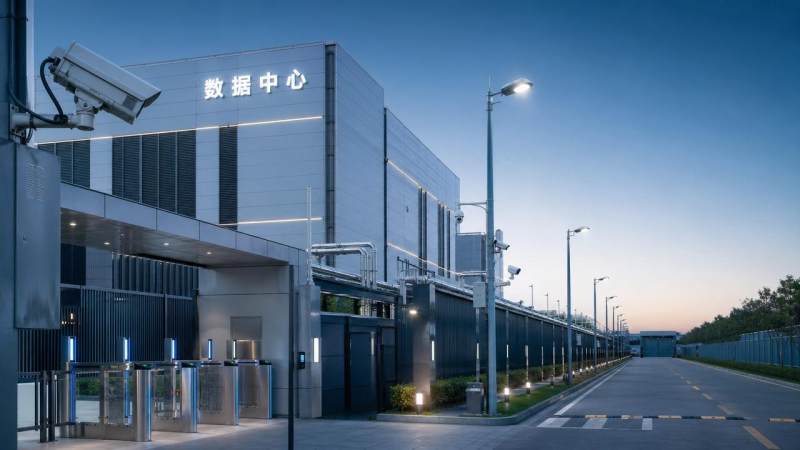
As digital infrastructure and urban safety standards evolve, security innovation is becoming a decisive force in modern facility planning. For project managers and engineering leaders, understanding how AI vision, smart surveillance, and optical environment optimization are converging is essential to reducing risk, improving compliance, and building future-ready sites. This article explores the trends reshaping decisions across security, lighting, and integrated infrastructure planning.
Why scenario-based planning matters in today’s security innovation cycle
For project leaders, security innovation is no longer a single procurement topic handled late in construction. It now influences early-stage planning, power allocation, cable routing, lighting layout, data governance, and long-term maintenance strategy. In many projects, decisions made 6 to 12 months before commissioning determine whether a facility can later support AI-enabled surveillance, adaptive lighting, and multi-layer compliance controls without costly redesign.
The challenge is that not every site needs the same level of security intelligence. A logistics hub, a smart public building, and a digital infrastructure campus may all use cameras, perimeter controls, and optical systems, but their risk profiles differ sharply. Some environments need fast incident verification within 10 to 30 seconds, while others prioritize evidence retention for 30 to 90 days, visitor throughput, or low-light accuracy across large outdoor zones.
This is where scenario-based judgment becomes valuable. Instead of asking whether a technology is advanced, project teams should ask where it fits, which risk it reduces, and how it affects delivery milestones. GSIM’s strategic perspective is especially relevant here because modern facility planning increasingly depends on aligning physical security assurance with optical environment optimization, regulatory expectations, and procurement timing.
Why project managers are reassessing traditional security packages
Conventional packages often separate surveillance, access control, and lighting into different workstreams. In practice, this separation creates blind spots. AI vision performance depends on scene contrast, mounting height, illuminance uniformity, and network reliability. A camera specified without optical planning may perform below expectations, especially in mixed indoor-outdoor transitions, backlit gates, loading areas, or parking zones where visibility changes several times in a 24-hour cycle.
At the same time, compliance complexity is rising. Electronic surveillance in cross-border or multinational projects may trigger rules related to data retention, privacy notice, zone restrictions, and audit logs. Engineering leaders must therefore evaluate security innovation as an integrated planning discipline rather than a list of devices. The earlier this happens in design development, the lower the risk of rework during commissioning.
- Early coordination reduces retrofit risk in power, conduit, and network topology.
- Optical environment planning improves detection accuracy in low-light and glare-prone zones.
- Scenario-based security innovation helps control lifecycle cost over 3 to 7 years rather than only installation budget.
Three facility scenarios where security innovation is changing planning decisions
The impact of security innovation becomes clearer when viewed by application scenario. The following comparison helps project managers identify which technologies matter most in each environment and what to confirm before final design freeze. These scenarios are common across mixed-use construction, digital infrastructure upgrades, and public or commercial facilities.
The table shows that security innovation does not apply uniformly. In outdoor and semi-temporary environments, durability and rapid redeployment may matter more than deep analytics. In public buildings, the same innovation must support both safety and user flow. In digital infrastructure, traceability and access segmentation often matter more than broad visual coverage alone. That distinction helps teams avoid overdesign in one area and underdesign in another.
Scenario 1: Smart construction sites and logistics zones
These sites are dynamic by nature. Temporary fencing changes, vehicle routes shift weekly, and lighting conditions can vary by season, weather, and shift pattern. In this setting, security innovation is most useful when it improves real-time awareness without creating a fragile system. Project managers should prioritize adaptable camera positions, edge analytics for intrusion alerts, and lighting plans that maintain usable image quality across 30 to 80 meter outdoor spans.
A common mistake is specifying surveillance before understanding logistics behavior. If loading occurs overnight or at multiple gates, optical environment optimization becomes as important as the camera itself. Excess glare, sharp contrast, and insufficient vertical illumination can reduce recognition accuracy even when high-resolution equipment is installed. For sites with phased delivery, modular deployment in 2 to 4 coverage zones often works better than one static design.
Another practical consideration is resilience. Construction and logistics zones often tolerate short repositioning cycles but not long blind periods. Teams should assess backup power duration, wireless versus wired backhaul, and maintenance access for dusty or vibration-prone areas. Security innovation here should support fast correction and low downtime, not just advanced feature lists.
What to confirm first
- Expected operating hours, including whether night work exceeds 20% to 40% of site activity.
- Temporary versus permanent mounting structures and how often layouts may change per quarter.
- Required incident verification time and whether alerts must trigger within seconds or can be operator-reviewed.
Scenario 2: Public buildings, transport nodes, and civic campuses
In these environments, security innovation must protect people without disrupting movement, access fairness, or public comfort. Unlike industrial zones, these sites often deal with mixed occupancy, public-facing entrances, and multiple stakeholder groups. Project managers need to coordinate security objectives with architectural visibility, emergency egress, and privacy expectations. The planning question is less about maximum coverage and more about intelligent zoning.
AI-supported video analytics can help with queue monitoring, restricted-area alerts, and unusual behavior detection, but performance depends heavily on scene consistency. Entry halls with glass façades, escalator transitions, and day-night light variation require more than standard fixture placement. In many public projects, a 15 to 25 percent improvement in visual uniformity can make monitoring outputs significantly more reliable, especially during dawn, dusk, or weather transitions.
Project leaders should also plan for operating continuity. Public sites usually require higher uptime expectations and clearer escalation procedures. That means storage architecture, monitoring handoff, and maintenance windows should be mapped before handover. Security innovation is valuable only when the operational team can sustain it after commissioning, often with limited staffing during weekends or overnight shifts.
Scenario 3: Data centers and digital infrastructure facilities
These facilities represent one of the strongest use cases for integrated security innovation because physical access, evidence integrity, and operational continuity are tightly linked. Here, surveillance is not just about deterrence. It supports audit trails, contractor supervision, restricted-room access, and layered incident review. Engineering teams should think in security layers: perimeter, building entry, internal circulation, equipment rooms, and critical racks or cages.
Optical environment optimization is particularly important indoors where teams may assume conditions are stable. In reality, reflective surfaces, narrow aisles, equipment indicators, and varying service lighting can create image quality issues. A camera that performs well in a corridor may not perform equally in a high-density room. Design reviews should therefore include mounting angle, aisle depth, and the interaction between general illumination and monitoring visibility.
Retention and traceability also matter more in this scenario. Depending on operating policy, footage retention may range from 30 to 180 days, and event-linked storage may need stronger indexing. Security innovation should be evaluated with redundancy, access logs, and governance in mind, especially when contractors, visitors, and multiple operating teams use the same site over a long lifecycle.
How requirements differ by scenario, budget, and delivery model
Even when two projects use similar devices, their actual requirements can differ because of handover model, staffing assumptions, and procurement constraints. Some facilities need a scalable baseline that can be expanded in phases. Others require a fully integrated system on day one because disruption after opening is not acceptable. This is why security innovation must be judged not only by technical ambition, but also by delivery timing and operational maturity.
The next table helps compare common requirement differences that influence selection, integration effort, and total project risk. It is especially useful for engineering leaders balancing CAPEX, commissioning deadlines, and long-term support obligations.
This comparison highlights a key lesson: the value of security innovation rises when systems must coordinate across functions. A simple site may not need deep automation, while a phased campus project often benefits from standard-setting at the planning stage. For mixed portfolios, a modular framework usually works best, where baseline coverage can be deployed first and AI or advanced optical functions added as risks and budgets evolve.
Budget is not only about equipment cost
Project managers often compare devices line by line, but lifecycle cost is shaped by storage volume, maintenance access, lighting correction, network reliability, and change management. A lower-cost camera may become expensive if its performance requires fixture rework or if footage quality fails the intended use case. In many projects, the real budget exposure appears 3 to 9 months after installation, not during procurement.
That is why integrated planning matters. Security innovation should be reviewed alongside power loads, environmental conditions, and support capacity. A site with limited technical staff may prefer simpler analytics with dependable alert quality. A larger campus with central monitoring may justify more advanced functions if incident prioritization and evidence management are critical.
Useful selection filters for engineering teams
- Define the top 3 operational risks before choosing features.
- Estimate retention, uptime, and support effort over at least 36 months.
- Confirm whether optical conditions support the claimed surveillance objective.
Common planning mistakes when applying security innovation
One frequent error is treating security innovation as a late-stage enhancement. When design teams wait until construction documents are nearly complete, they may discover missing pathways, poor sightlines, incompatible mounting points, or insufficient electrical distribution. Correcting those issues late can delay handover by several weeks and increase coordination pressure across multiple trades.
A second mistake is overemphasizing resolution while underestimating scene quality. Better sensors do not compensate for harsh backlight, inconsistent illumination, or poor camera placement. For example, entrances with strong daylight contrast may need zone-specific optical adjustments, shading strategy, or revised mounting height. Without that planning, high-end equipment may still deliver weak identification outcomes during peak transition periods.
A third issue is governance misalignment. Security innovation often introduces more data, more alerts, and more interdepartmental visibility. If roles, permissions, and escalation paths are unclear, operational teams can become overloaded. In practical terms, that means alarm logic, storage rules, and review responsibility should be set early, ideally before FAT or SAT stages, rather than after live operation begins.
Warning signs that a project needs a revised approach
- Security and lighting packages are being designed by separate teams with no shared performance criteria.
- The site has multiple risk zones, but the specification assumes one uniform camera and lighting strategy.
- Retention periods, privacy zones, or access permissions remain undefined within 60 days of deployment.
When these signals appear, decision-makers should pause and validate the scenario fit. In many cases, a targeted redesign of the highest-risk zones is more effective than a full-system overhaul. Security innovation delivers the strongest value when it is linked to actual site behavior, not generic specification language.
A practical roadmap for selecting the right scenario-fit solution
For project managers and engineering leads, the most reliable path is a structured review process that connects business scenario, technical constraints, and compliance expectations. This is especially relevant in the 2026 upgrade wave, where digital infrastructure and urban safety programs are moving faster, and procurement teams need clearer decision support before locking design scope.
GSIM’s value in this context lies in combining strategic intelligence with planning relevance. The platform helps teams interpret global security policies, track the evolution of AI vision and Visible Light Communication, and understand procurement direction across smart construction, public safety, and infrastructure projects. For decision-makers, this shortens the distance between trend awareness and implementation judgment.
A practical roadmap usually begins with scenario mapping, then moves to optical assessment, integration planning, and governance review. In early project phases, even a 2 to 3 hour technical alignment session can prevent major downstream confusion by clarifying where advanced security innovation is justified and where a simpler architecture is more suitable.
Recommended decision sequence
- Map the facility into risk and usage zones such as public access, restricted service areas, logistics routes, and critical assets.
- Define target outcomes for each zone, including detection, deterrence, verification, or audit support.
- Review optical conditions, expected lighting range, and environmental constraints before finalizing device selection.
- Confirm retention, permissions, and integration scope based on operational ownership and applicable policies.
Why choose us
GSIM supports project managers and engineering leaders who need more than product catalogs. We help bridge security innovation trends with real planning decisions across physical security assurance, optical environment optimization, and cross-border compliance awareness. Whether your project involves a construction site, a public facility, or a digital infrastructure asset, we focus on scenario fit, not generic recommendations.
You can contact us for practical consultation on parameter confirmation, solution direction, integration priorities, delivery cycle planning, certification-related questions, sample support, and quotation communication. If you are currently comparing options for surveillance layout, lighting coordination, AI vision readiness, or phased deployment strategy, GSIM can help you narrow the right path based on your facility scenario and project timeline.
The VitalSync Intelligence Brief
Receive daily deep-dives into MedTech innovations and regulatory shifts.