
Security
Security Standards Updates Affecting Fire Suppression Integration
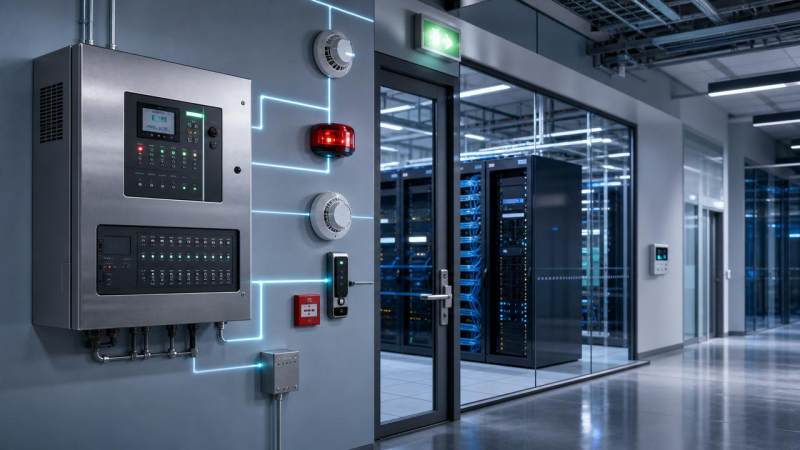
As security standards evolve, fire suppression integration is becoming a critical issue for technical evaluators balancing compliance, system interoperability, and risk control. From updated code requirements to smarter coordination between detection, lighting, and suppression systems, these changes are reshaping project decisions worldwide. GSIM helps professionals interpret the latest security standards and assess how regulatory updates affect integrated safety infrastructure.
Why a checklist-first approach works better for technical evaluation
When security standards change, the immediate challenge is not simply understanding new wording in a code book. The real task is identifying which changes affect system architecture, testing scope, device coordination, and ongoing liability. For technical evaluators, a checklist-based method reduces blind spots and creates a repeatable path from regulation review to design validation. This is especially important where fire suppression systems interact with access control, video surveillance, emergency lighting, alarm notification, building management platforms, and remote monitoring tools.
In mixed-use buildings, transport hubs, data centers, industrial plants, and smart public infrastructure, updated security standards rarely impact one subsystem alone. A seemingly narrow revision in signal priority, event logging, response timing, or fail-safe behavior can change how suppression release logic is approved. That is why technical teams should evaluate updates through practical checks rather than broad theory. GSIM’s intelligence-driven approach supports this by connecting policy shifts, optical environment considerations, and field-level system decisions.
Start here: the first five checks before reviewing any integrated design
Before comparing vendors or validating drawings, technical evaluators should confirm five foundational items. These checks help determine whether updated security standards will affect only documentation, or whether they require redesign, reprogramming, retraining, or re-certification.
- Identify the governing standards set. Confirm whether the project is driven by local fire code, international standards, insurer requirements, transport authority rules, data center standards, or client-specific security standards. Conflicts between these layers are common.
- Define the integration boundary. Check exactly which systems exchange signals with the suppression platform: fire detection, smoke control, emergency lighting, access control, CCTV, mass notification, HVAC shutdown, and command center software.
- Verify life-safety signal priority. Updated security standards often reinforce that life-safety commands override convenience or security lockdown logic. This affects doors, elevators, ventilation, and monitoring interfaces.
- Review release authorization logic. Determine whether the suppression sequence depends on single-event activation, cross-zoning, dual confirmation, human intervention, or remote approval. Revised standards may narrow acceptable logic paths.
- Check evidence requirements. New compliance expectations often extend beyond installation. Inspect whether witness testing, software revision records, cybersecurity controls, and maintenance traceability are now mandatory.
Core checklist for assessing how security standards affect fire suppression integration
The following checklist is the practical center of evaluation. It is designed for technical teams that need to judge compliance impact, system fit, and operational risk without losing time in non-critical detail.
1. Interface logic and interoperability
- Confirm whether all interface protocols are approved for life-safety use, not just for convenience monitoring.
- Check if gateway devices introduce latency, single points of failure, or unsupported signal translation.
- Verify whether event priorities are preserved when alarms pass through integrated security management platforms.
- Assess whether firmware dependencies could invalidate compliance after updates.
2. Cause-and-effect programming
- Validate the release sequence from detection to notification, delay, abort, discharge, lock release, and system feedback.
- Check whether revised security standards require clearer separation between supervisory, trouble, pre-alarm, and discharge signals.
- Review time delays and manual override functions to ensure they remain code-compliant in occupied and unoccupied modes.
3. Optical warning, illumination, and visibility conditions
This area is increasingly important and often underestimated. Updated security standards are not limited to control panels and release valves. They also influence how occupants and operators perceive alarms, status, and escape conditions.
- Check visual notification performance in smoke, low-light, and high-glare conditions.
- Confirm emergency lighting behavior when suppression or smoke control events are triggered.
- Review whether camera-based situational awareness remains usable during discharge or pre-discharge events.
- For advanced sites, assess whether AI vision or VLC-enabled infrastructure introduces dependencies that need validation under emergency conditions.
4. Cybersecurity and remote access
- Determine whether remote diagnostics can alter life-safety configuration or only observe it.
- Check access control to engineering workstations, mobile maintenance tools, and cloud dashboards.
- Review logging requirements for configuration changes, acknowledgments, and alarm resets.
- Ensure cybersecurity controls do not block urgent emergency signaling between integrated systems.
5. Testing, maintenance, and auditability
- Inspect whether every integrated function can be tested end to end, not only device by device.
- Check if updated security standards require digital test records, video evidence, or cross-discipline sign-off.
- Confirm whether maintenance intervals differ once suppression interfaces with security and lighting systems.
Quick evaluation table for priority decisions
Use this table to decide where updated security standards are most likely to change project effort, budget, and approval risk.
What changes by project type: scenario-based checks
Not all facilities absorb updated security standards in the same way. Technical evaluators should adapt their checklist to the site profile and operational dependency.
Data centers and digital infrastructure
Focus on clean agent release logic, very early warning detection, compartment integrity, remote monitoring, and strict change control. In these environments, integration with access control and video verification is common, but any convenience feature must not interfere with release certainty or post-event forensic records.
Commercial buildings and smart campuses
Check the interaction between suppression, occupant notification, emergency lighting, elevator recall, and public-address systems. Updated security standards may also affect how centralized platforms display alarms and whether operators can acknowledge events from non-dedicated consoles.
Industrial and hazardous sites
Prioritize zoning logic, environmental durability, hazardous area certification, shutdown sequences, and manual release protections. Optical visibility under harsh process conditions becomes a major factor, particularly where smoke, dust, vibration, or glare reduce operator awareness.
Common omissions that create compliance and performance risk
- Assuming old approvals still apply. Even if hardware is unchanged, new security standards may require fresh documentation, interface verification, or revised testing methods.
- Treating integration software as neutral. Middleware can alter timing, alarm presentation, and operator response paths.
- Overlooking visual performance. Alarm audibility is not enough; suppression integration also depends on clear optical signaling and usable emergency illumination.
- Ignoring maintenance realities. A compliant design can become non-compliant if technicians lack controlled procedures for updates and testing.
- Separating security review from fire review. Updated security standards increasingly affect life-safety pathways, so siloed evaluation leads to missed conflicts.
Execution advice: how to prepare an effective technical review
To move from awareness to action, technical evaluators should prepare a structured review package. This saves time with consultants, authorities, and internal stakeholders while improving decision quality.
- Collect the current matrix of applicable security standards, fire codes, insurance rules, and client-specific obligations.
- Map every integrated input and output, including doors, ventilation, cameras, lighting, and command software.
- Request cause-and-effect documentation in a testable format rather than narrative text only.
- Ask vendors to disclose protocol limitations, firmware dependencies, and remote access methods.
- Define witness testing scenarios around failure modes, not only normal event sequences.
- Document who owns compliance after handover, especially where integrated software can be modified later.
Practical questions to raise with suppliers, consultants, or platform partners
If an organization wants to evaluate readiness under evolving security standards, the fastest progress usually comes from asking better technical questions early. These include:
- Which recent security standards updates directly change this integration design?
- What functions are certified, and what functions are only technically possible but not formally approved?
- How does the system behave during network loss, controller reboot, or partial subsystem failure?
- What evidence package will support inspection, commissioning, and future audits?
- How do lighting, visibility, and operator interfaces perform during pre-discharge and discharge conditions?
Conclusion: turn standards updates into a clearer decision process
For technical evaluators, the impact of updated security standards on fire suppression integration is best managed through disciplined checks, not assumptions. The most reliable review process starts with governing codes, then moves through interface logic, optical conditions, cybersecurity, testing, and lifecycle control. This approach helps teams avoid expensive redesigns, failed approvals, and hidden interoperability gaps.
GSIM supports this work by translating global security standards into practical evaluation signals for integrated safety infrastructure. If you need to confirm compatibility, compliance pathways, optical environment considerations, implementation timelines, budget implications, or supplier coordination, the next step is to gather your applicable standards set, system architecture, and testing expectations before engaging design or procurement partners.
The VitalSync Intelligence Brief
Receive daily deep-dives into MedTech innovations and regulatory shifts.