
Security
Five Ministries Launch EV Battery Recycling Enforcement Action
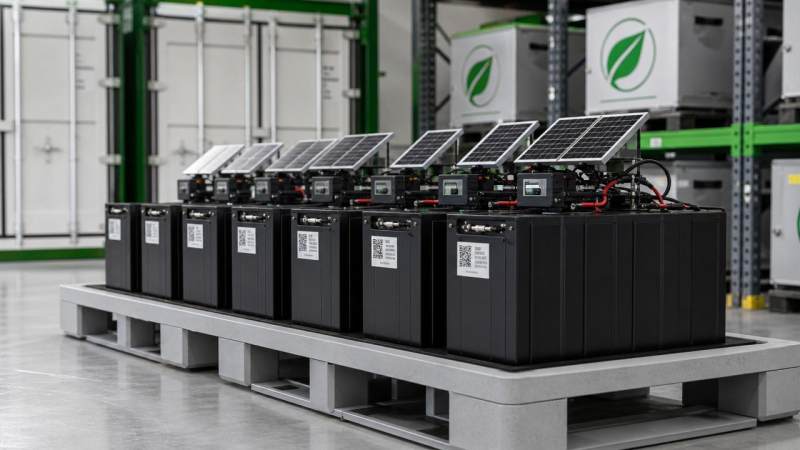
On April 27, 2026, five Chinese government departments—including the Ministry of Industry and Information Technology (MIIT) and the Ministry of Ecology and Environment—jointly launched a nationwide enforcement campaign targeting the recycling and utilization of spent power batteries. The action directly affects exporters of new energy security and energy storage equipment, particularly those shipping solar lighting systems, fire alarm integration devices, and intelligent node units containing lithium iron phosphate (LFP) battery modules.
Event Overview
On April 27, 2026, MIIT, the Ministry of Ecology and Environment, the Ministry of Commerce, the General Administration of Customs, and the State Administration for Market Regulation jointly issued a notice initiating a joint law enforcement专项行动 (special enforcement action) on the recycling and utilization of spent power batteries. The notice mandates that export enterprises must ensure complete upload of battery traceability information and full compliance throughout transportation and handover processes.
Industries Affected
Direct Exporters
Enterprises exporting finished products containing spent or reusable power batteries—including solar-powered lighting systems, fire联动 (fire alarm integration) systems, and intelligent sensor nodes—are directly subject to the new requirements. Compliance now hinges on verifiable battery origin data and documented chain-of-custody records, affecting export documentation preparation and customs clearance timelines.
Manufacturers of Energy Storage Modules
Firms assembling LFP-based energy storage modules for integration into safety or off-grid applications face upstream accountability. Even if not themselves exporters, they must supply traceable battery cells and maintain auditable records of sourcing, testing, and handover—potentially triggering internal process reviews and supplier qualification updates.
Supply Chain Service Providers
Logistics operators, customs brokers, and third-party certification bodies supporting battery-integrated exports must now verify and retain evidence of traceability compliance. This includes validating whether battery serial numbers, health status, and disposal-handover logs align with national traceability platform submissions prior to shipment.
Key Focus Areas and Immediate Response Measures
Monitor official guidance on traceability platform integration
Analysis shows that the enforcement action references existing national battery traceability platforms but does not yet specify technical thresholds (e.g., minimum data fields, required API integration level). Exporters should track subsequent notices from MIIT or the China Electronics Standardization Institute regarding mandatory data submission formats and deadlines.
Identify high-risk product categories and destination markets
Observably, solar lighting and fire safety systems exported to EU, ASEAN, and Latin American markets face heightened scrutiny—not due to local regulations alone, but because their battery content triggers both Chinese outbound compliance and foreign import controls. Prioritize review of shipments containing >1 kWh LFP modules or integrated battery packs with non-removable designs.
Distinguish policy signal from operational mandate
Current enforcement is structured as a time-bound ‘special action’, not a permanent regulatory framework. From industry perspective, this signals growing institutional attention—not immediate full-scale audit readiness across all exporters. However, pilot inspections may begin in Q3 2026; firms should treat the notice as a formal warning to align documentation practices ahead of potential spot checks.
Update internal handover protocols and supplier agreements
Exporters should immediately revise procurement terms with module suppliers to require certified battery origin statements and written commitments to traceability data sharing. Internally, assign responsibility for uploading battery batch records to a designated compliance officer—and test data flows against the public-facing National Power Battery Traceability Management Platform before first shipment under the new regime.
Editorial Perspective / Industry Observation
This action is best understood as a coordinated inter-departmental signal—not yet a fully scaled enforcement outcome. Analysis shows it reflects tightening alignment between industrial policy (battery circular economy goals), environmental governance (hazardous waste control), and trade compliance (customs risk management). Observably, the focus on ‘export enterprises’—rather than domestic recyclers alone—marks a strategic pivot toward managing cross-border battery material flows as a unified regulatory domain. From industry angle, sustained attention is warranted not only for near-term documentation adjustments, but also for anticipating future harmonization with international frameworks such as the EU Battery Regulation’s due diligence obligations.
Conclusion: This enforcement initiative underscores an evolving regulatory expectation: battery traceability is no longer solely a domestic environmental requirement, but a prerequisite for market access in global new energy equipment trade. It is more accurately interpreted as a procedural calibration phase—where clarity on implementation remains pending—rather than an immediate compliance cliff. Current preparedness should center on documentation discipline, supplier coordination, and platform familiarity—not wholesale system overhauls.
Information Sources: Official notice jointly issued by MIIT, Ministry of Ecology and Environment, Ministry of Commerce, General Administration of Customs, and State Administration for Market Regulation on April 27, 2026. Pending further details on platform technical specifications, inspection scope, and timeline extension—these elements remain under observation.
The VitalSync Intelligence Brief
Receive daily deep-dives into MedTech innovations and regulatory shifts.