
Security
GCC Tightens Fire Electronics Import Compliance
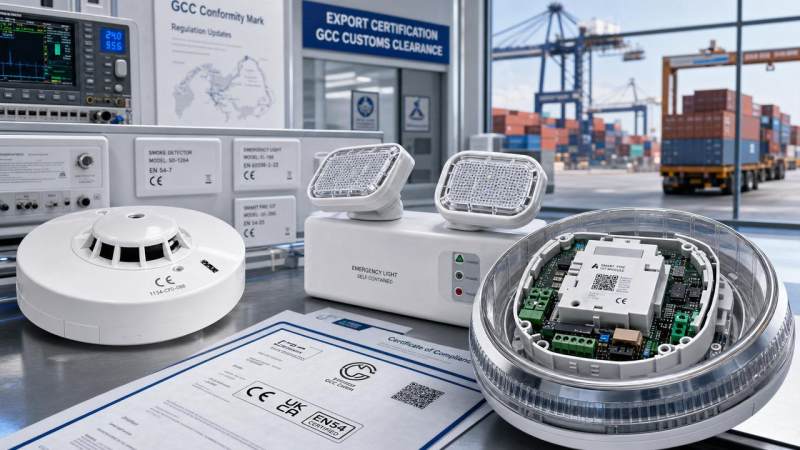
On June 1, 2026, a new compliance requirement issued jointly by Saudi SASO and the UAE’s NOMA raised the market entry threshold for imported smoke detectors, emergency lighting products, and smart fire-linked lighting systems across GCC countries. For exporters, manufacturers, certification teams, and supply chain operators, the key issue is not only the addition of dual certification, but also the fact that product design, testing, and customs clearance now become more tightly connected.
What the new requirement now covers
According to the information provided, from June 1, 2026, all smoke detectors, emergency lighting products, and smart fire-linked lighting systems imported into GCC countries must obtain both SASO EMC+Safety certification and the NOMA digital compliance mark.
The new rule also requires products to include an IoT security chip that can be remotely verified. In addition, products must undergo scenario-based smoke response testing through locally authorized laboratories.
The policy directly affects more than 320 Chinese exporters of security lighting products. Non-compliant products may be detained at ports and face high rectification costs.
Where the pressure is likely to appear first
Export shipments face a stricter customs threshold
From an industry perspective, direct trading companies are likely to feel the impact first at the shipment and customs stage. The reason is clear in the policy itself: products that do not meet the new requirements may be held at port. What deserves closer attention is whether existing product files, certification status, and shipment schedules are aligned with the new dual-mark requirement before cargo is dispatched.
Manufacturing must connect compliance with product design
For manufacturers, the impact is not limited to paperwork. Analysis shows the requirement for a remotely verifiable IoT security chip means compliance now reaches into the product architecture itself. The additional requirement for scenario-based smoke response testing also means testing readiness is tied more closely to product functionality, not only to standard certification workflows.
Testing and supply chain coordination become more time-sensitive
For compliance service teams and supply chain operators, the new rule adds coordination pressure across laboratories, technical documents, and delivery planning. Observably, when local authorized laboratory testing becomes mandatory, scheduling, sample preparation, and certification sequencing can become critical operational points, especially for products already close to delivery.
What companies should watch now
Check whether affected product lines are already within scope
Companies selling smoke detectors, emergency lighting, and smart fire-linked lighting systems into GCC markets should first verify which active SKUs fall directly under the new rule. The practical focus is whether any products now in production, in transit, or awaiting shipment need updated certification or technical modification.
Separate formal compliance from actual shipment readiness
Analysis shows dual certification is only one part of the issue. Businesses also need to confirm whether the required IoT security chip and local laboratory smoke-response testing have been fully incorporated into the delivery process. A certificate pathway and a shippable product may no longer be the same thing under this rule.
Review supplier documentation and delivery risk
For procurement and supply chain teams, what deserves closer attention is whether upstream suppliers can support the required chip integration, technical documentation, and testing cooperation. If those links are incomplete, the commercial risk may show up later as delayed delivery, port detention, or additional rectification expense.
Prepare customer communication and contract follow-up
For sales and account teams, the immediate issue is expectation management with GCC customers. Companies may need to clarify compliance status, shipment timing, and any product transition arrangements based on the June 1, 2026 implementation point, especially where orders depend on specific import windows.
How this news is best understood at this stage
As an editorial observation, this development is more appropriate to understand as a concrete compliance tightening rather than a vague policy signal. The requirements named in the provided information are specific: dual certification, a remotely verifiable IoT security chip, and local scenario-based testing. At the same time, it is still a dynamic area worth watching, because the operational burden will depend on how companies, laboratories, and import processes adapt in practice.
A practical reading for the market
The immediate significance of this update lies in how it connects product compliance, technical configuration, and border clearance into one chain of responsibility. For companies serving GCC markets, it is more appropriate to understand this as a near-term operational change with longer-term implications for product access discipline. The message is not simply that standards are becoming stricter, but that compliance execution now matters earlier in the export process.
Basis of this article and follow-up verification
This article is based on the user-provided news title, event date, and event summary. For this type of industry development, commonly relevant source categories may include official notices, company announcements, industry association updates, authoritative media coverage, and standards-related documents. No specific official source link was provided in the input, so the exact official documentation still needs continued verification. Follow-up attention should remain on any further official wording, implementation details, and practical enforcement developments related to the new GCC import compliance requirements.
The VitalSync Intelligence Brief
Receive daily deep-dives into MedTech innovations and regulatory shifts.