
Security
SE Asia Tightens Smoke Detector准入新规
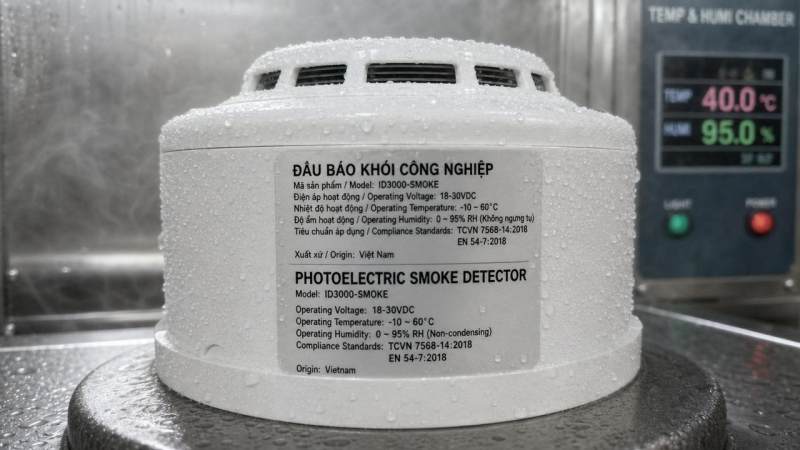
On May 17, 2026, Vietnam’s Standardization, Metrology and Quality Authority (STAMEQ) and Indonesia’s National Standardization Agency (BSN) jointly issued a regulatory notice mandating local environmental adaptability testing for imported smoke detectors — effective September 2026. The move targets manufacturers and exporters across the fire safety equipment supply chain, particularly those based in China, and reflects a broader regional shift toward localized conformity assessment.
Event Overview
STAMEQ and BSN announced on May 17, 2026 that, starting September 2026, all imported smoke detectors — including photoelectric, ionization, and smart networked models — must undergo mandatory local environmental adaptability testing at designated laboratories in Vietnam and Indonesia. Testing requirements include exposure to high-temperature, high-humidity conditions combined with cyclic dust loading. In addition, products must bear bilingual compliance labels (Vietnamese–English and Indonesian–English, respectively). No exemptions are specified for low-risk or legacy models.
Industries Affected
Direct trading enterprises face extended lead times and higher certification overhead: average delivery cycles will lengthen by 12–18 days per batch, and per-batch certification costs are projected to rise approximately 23%. These firms — often acting as importers or brand owners without in-country technical capacity — must now coordinate logistics, lab scheduling, and label rework across two jurisdictions simultaneously.
Raw material procurement enterprises may experience upstream ripple effects. While not directly subject to testing, suppliers of critical components (e.g., optical sensors, battery modules, PCB substrates) could see revised qualification demands from downstream manufacturers seeking to pre-validate subassemblies for local test readiness. Some buyers may begin requesting humidity- and dust-resilience data sheets earlier in sourcing discussions.
Contract manufacturing and OEM enterprises bear heightened technical accountability. As final product responsibility remains with the manufacturer (even if branded by overseas clients), they must allocate internal resources for test preparation — including sample adaptation, documentation translation, and liaison with STAMEQ/BSN-accredited labs. Notably, neither authority recognizes third-country test reports, even if conducted to IEC 60335-2-29 or UL 217 equivalents.
Supply chain service providers, including customs brokers, certification consultants, and labeling vendors, will need to update compliance checklists and client advisories. Demand is expected to rise for bilingual labeling support and cross-border lab coordination services — especially those with established partnerships in Hanoi and Jakarta.
Key Considerations and Recommended Actions
Verify lab accreditation status before submission
Only laboratories explicitly listed by STAMEQ and BSN — updated quarterly — are authorized to conduct the required tests. Firms should confirm lab eligibility prior to sample dispatch; unaccredited results will not be accepted, triggering retesting delays.
Factor in dual-labeling timelines early in production planning
Bilingual labels must be physically affixed prior to customs clearance — not added post-import. This requires alignment between packaging design, printing vendors, and quality control teams well ahead of shipment dates.
Assess whether modular certification strategies apply
While the regulation applies to finished devices, some manufacturers are exploring whether certified subcomponents (e.g., dust-sealed sensor housings) can reduce full-unit retesting frequency. Neither STAMEQ nor BSN has published guidance on component-level recognition — making this approach currently speculative and requiring direct consultation.
Editorial Perspective / Industry Observation
Observably, this is not an isolated tightening but part of a coordinated regional pattern: Thailand and Malaysia have signaled similar intent in recent ASEAN Technical Barriers to Trade (TBT) notifications. Analysis shows that unlike past safety standards focused on electrical performance, these new requirements emphasize real-world environmental resilience — suggesting a longer-term pivot toward climate-informed conformity frameworks. From an industry perspective, this signals diminishing returns on ‘one-test-fits-all’ global certification strategies. Current more relevant framing may be ‘test where you sell’ — not just ‘test where you build’.
Conclusion
This regulatory development underscores how localized environmental validation is evolving from a market-access differentiator into a baseline requirement across Southeast Asia’s fire safety sector. For exporters, the implication is structural: compliance is no longer a final-step administrative task, but a design-phase consideration embedded in R&D, sourcing, and labeling workflows. A rational interpretation is that regional harmonization remains aspirational — while de facto fragmentation in implementation continues to raise operational complexity for global suppliers.
Source Attribution
Official notices issued by STAMEQ (Circular No. STAMEQ-2026/047) and BSN (BSN Regulation No. 12/2026), both dated May 17, 2026. Both documents are publicly available via their respective agency portals (stameq.gov.vn and bsn.go.id). Pending clarification: acceptance criteria for test pass/fail thresholds, appeals process for rejected batches, and potential phased rollout for small-volume or humanitarian shipments — all under active monitoring.
The VitalSync Intelligence Brief
Receive daily deep-dives into MedTech innovations and regulatory shifts.