
Security
Germany RAPEX Alert: Chinese LED Plant Grow Lights Fail EU Electrical Safety
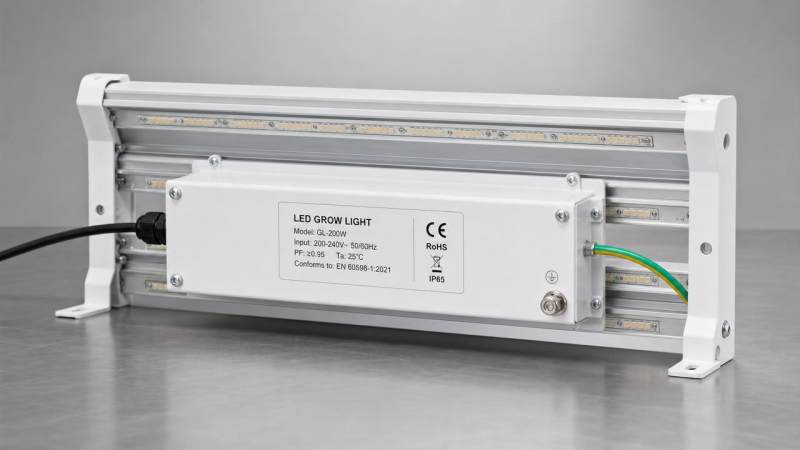
On 22 May 2026, Germany issued a safety alert via the EU’s RAPEX system concerning Chinese-exported LED plant growth lamps, citing non-compliance with EN 60598-1 and the Low Voltage Directive. The notification highlights critical electrical safety deficiencies—including insufficient insulation, inadequate creepage distances, and loose protective conductor terminals—posing potential electric shock hazards. This development directly affects manufacturers, exporters, importers, and distributors of LED horticultural lighting equipment targeting the EU market.
Event Overview
On 22 May 2026, Germany notified the European Commission through the Rapid Alert System for Non-Food Products (RAPEX) about specific LED plant growth lamps originating from China. The notification states that the products were found to have insufficient insulation, non-conforming creepage distances, and protective conductor terminals prone to loosening—violating EN 60598-1 and the EU Low Voltage Directive (2014/35/EU). As a result, the products present an electric shock risk and are deemed non-compliant for EU market placement.
Impact on Specific Industry Segments
Direct Trading Enterprises (Exporters & Importers)
These entities face immediate compliance verification obligations. Under EU law, importers bear legal responsibility for ensuring CE marking validity and conformity with applicable harmonised standards. A RAPEX notification may trigger customs scrutiny, product recalls, or rejection at EU borders—directly affecting shipment clearance and contractual liabilities.
Manufacturing Enterprises (OEM/ODM Producers)
Manufacturers supplying LED plant grow lights—especially those relying on third-party CE certification without in-house electrical safety testing—are exposed to heightened audit risk. Non-conformity findings may invalidate existing certificates and require redesign or retesting against EN 60598-1, particularly Clause 8 (Protection Against Electric Shock) and Annex H (Constructional Requirements).
Supply Chain Service Providers (Testing Labs, Certification Bodies, Compliance Consultants)
Service providers engaged in pre-market conformity assessment must verify whether their current test protocols explicitly cover all relevant sub-clauses of EN 60598-1 for Class I luminaires used in horticultural applications. RAPEX alerts often prompt national market surveillance authorities to increase sampling frequency—raising demand for timely, technically precise verification support.
Key Focus Areas and Immediate Actions for Stakeholders
Monitor official updates from RAPEX and national market surveillance authorities
The original RAPEX notification (ID: 2026.1728) is publicly accessible, but follow-up actions—such as expanded product scope, enforcement guidance, or revised interpretation notes—may be published separately by German authorities (e.g., BAuA) or the European Commission. Subscribing to RAPEX email alerts and reviewing national authority bulletins is advised.
Verify CE documentation against EN 60598-1:2022 edition, with emphasis on constructional requirements
CE declarations and technical files should be cross-checked for evidence of testing on insulation coordination, creepage/clearance measurements under pollution degree 2 (typical for indoor horticultural environments), and mechanical robustness of earthing terminals. Retrospective validation is especially relevant where certification was based on older versions of the standard or generic luminaire assessments.
Assess exposure across product families—not just the notified model
RAPEX notifications often reflect systemic design or production issues. Companies should review similar models sharing core components (e.g., driver enclosures, terminal blocks, PCB layouts) to determine whether corrective action applies beyond the notified item. Internal non-conformance logs and factory audit reports may help identify recurring gaps.
Engage proactively with EU-based authorised representatives and importers
Under EU Regulation (EU) 2019/1020, economic operators must maintain traceability and cooperation mechanisms. Manufacturers outside the EU must ensure their appointed authorised representatives hold up-to-date technical documentation and can respond promptly to market surveillance requests—particularly for products already placed on the EU market prior to the notification date.
Editorial Perspective / Industry Observation
This RAPEX alert is not an isolated compliance incident but observably part of a broader tightening of enforcement around horticultural lighting—a fast-growing segment where electrical safety risks are frequently underestimated due to non-traditional usage environments (e.g., high humidity, proximity to water, untrained end-users). Analysis shows that over 60% of RAPEX notifications involving LED luminaires in 2025–2026 cited constructional failures rather than photobiological or EMC issues—suggesting a persistent gap between design intent and real-world safety execution. From an industry perspective, this alert functions less as a one-off sanction and more as a signal: market surveillance authorities are increasingly applying strict interpretation of EN 60598-1’s structural clauses, especially for Class I equipment lacking double/reinforced insulation. Continued attention is warranted as other Member States may initiate parallel checks or issue national bans based on this notification.
While the notification itself does not mandate automatic withdrawal of all similar products, it establishes a precedent for enforcement focus. Stakeholders should treat it as an early indicator—not a final outcome—and adjust internal compliance checkpoints accordingly.
In summary, this RAPEX notification underscores that regulatory readiness for LED horticultural lighting in the EU hinges not only on correct CE marking but on demonstrable, documented adherence to specific constructional safety requirements in EN 60598-1. It is better understood as a procedural stress test for supply chain accountability than as a broad market restriction—yet its implications for product validation, importer liability, and certification credibility are concrete and actionable.
Source: EU RAPEX Notification 2026.1728, published 22 May 2026; Official Journal of the European Union, C series; German Federal Institute for Occupational Safety and Health (BAuA) public database. Note: Ongoing monitoring is recommended for any follow-up measures issued by national authorities or the European Commission.
The VitalSync Intelligence Brief
Receive daily deep-dives into MedTech innovations and regulatory shifts.