
Security
Secutech Shanghai 2026 Postponed to October: Focus on AI Vision–VLC Integration
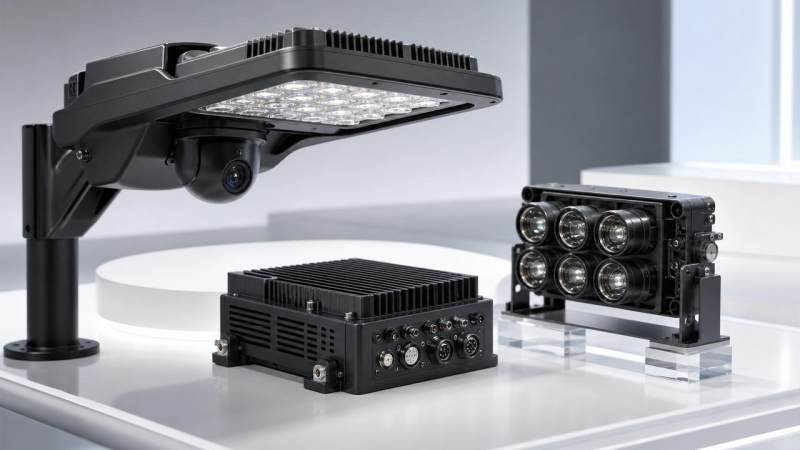
On May 29, 2026, the organizing committee of Secutech Shanghai announced the postponement of the 2026 edition—from its original June schedule—to October 15–17. The shift coincides with a strategic repositioning of the exhibition around the convergence of artificial intelligence-powered computer vision and visible light communication (VLC), signaling an industry-wide pivot toward intelligent, light-based security infrastructure.
Confirmed Event Update and Thematic Refocus
The Secutech Shanghai 2026 exhibition has been officially rescheduled to October 15–17, 2026. The announcement was issued by the event’s organizing committee on May 29, 2026. The new theme—‘Vision + VLC: Secure Light Intelligence’—introduces three dedicated exhibition zones: ‘Integrated Smart Security Lighting Systems’, ‘VLC-Based Emergency Broadcasting and Indoor Positioning’, and ‘AI Vision–Driven Industrial Light Environment Control’. Confirmed exhibitors include global leaders in security and lighting technology: Hikvision, Dahua, Signify (formerly Philips Lighting), and OSRAM.
Impact Across Supply Chain Roles
Direct Trading Enterprises
Trading firms engaged in cross-border distribution of security or lighting systems face revised timelines for market entry planning, partner briefings, and regional launch coordination. With the event now held in mid-October, pre-show procurement cycles, sample dispatches, and compliance documentation submissions must be realigned—particularly for markets requiring local certification prior to exhibition display.
Raw Material Procurement Enterprises
Suppliers of optical components, LED drivers, photodetectors, and embedded vision modules may experience adjusted order forecasts. The emphasis on VLC-enabled lighting and AI vision integration suggests increased demand for high-precision, low-latency optoelectronic subsystems—potentially shifting procurement priorities toward suppliers capable of supporting secure light modulation protocols and real-time image processing interfaces.
Manufacturing Enterprises
Contract manufacturers and OEMs producing integrated lighting-security devices must adapt production schedules to accommodate updated product demonstration deadlines. The focus on ‘AI vision–driven light environment control’ implies tighter integration requirements between imaging sensors, illumination control firmware, and edge inference engines—raising technical alignment needs across hardware, software, and thermal design teams.
Supply Chain Service Providers
Logistics, testing, and certification support providers must recalibrate service windows for pre-event validation. Testing laboratories specializing in EMC, optical safety (IEC 62471), and wireless coexistence (e.g., VLC–Wi-Fi interference) may see heightened demand for joint validation reports aligned with the new thematic zones—especially for products combining illumination, sensing, and data transmission functions.
Key Considerations and Strategic Adjustments for Enterprises
Revised Timeline Alignment for Product Certification and Documentation
Enterprises preparing for exhibition participation should verify whether existing certifications—including CE marking, CCC (for domestic China sales), and IEC 62368-1—cover the newly emphasized functional integrations (e.g., VLC-based positioning + AI analytics). Where dual-use functionality introduces novel risk profiles, supplementary conformity assessments may be necessary before October.
Technical Specification Readiness for Integrated System Demonstrations
Exhibitors targeting the ‘Integrated Smart Security Lighting Systems’ or ‘VLC-Based Emergency Broadcasting’ zones must ensure interoperability documentation is complete—including API specifications, VLC modulation schemes (e.g., OFDM-based VLC), and synchronization latency metrics between vision capture and light-based actuation. Bid-ready technical dossiers should reflect these interface-level details.
Supplier Qualification and Component Traceability
Given the convergence of imaging, illumination, and communication subsystems, enterprises should review supplier qualification criteria—particularly for photonic ICs, high-speed LED drivers, and vision processors. Enhanced traceability requirements (e.g., component-level RoHS/REACH declarations, firmware version logs) are advisable to support post-exhibition tender responses and regulatory inquiries.
Industry Observation: Beyond Timing—A Signal of Convergent Standards Development
Analysis shows that the thematic upgrade to ‘Vision + VLC: Secure Light Intelligence’ reflects more than a marketing pivot—it signals accelerating standardization efforts at the intersection of lighting, security, and short-range optical wireless communication. From an industry perspective, this convergence is likely to intensify scrutiny around electromagnetic compatibility between VLC emitters and adjacent RF systems, as well as cybersecurity requirements for light-based data channels. What deserves closer attention is how national and regional regulators—such as China’s MIIT and CQC—may begin aligning test protocols for hybrid devices that simultaneously emit light, sense motion, and transmit data. It is more appropriate to understand this as an early indicator of evolving type-approval expectations, rather than merely a trade show calendar adjustment.
Strategic Takeaway for Industry Stakeholders
The postponement and thematic evolution of Secutech Shanghai 2026 underscores a broader transition: from discrete security hardware toward unified, light-integrated intelligent infrastructure. For stakeholders, this means evaluating not only product readiness for October, but also long-term capability development in multi-domain system integration, cross-functional compliance, and interoperable architecture design. The event serves less as a standalone showcase—and more as a benchmark for convergent innovation maturity across the security and lighting value chains.
Source Attribution and Verification Guidance
This article is generated exclusively from the provided information: title, event date (May 29, 2026), and summary. Specific official source links were not provided in the input and should be verified continuously. Stakeholders are advised to monitor updates from the official Secutech Shanghai organizers, relevant national standardization bodies (e.g., SAC/TC 100), and certification authorities (e.g., CQC, TÜV Rheinland) for forthcoming technical guidelines, certification interpretations, and tender specification revisions related to VLC–AI integration.
The VitalSync Intelligence Brief
Receive daily deep-dives into MedTech innovations and regulatory shifts.