
Security
Jubail PPO Outage Lifts PPE Material Prices 12%
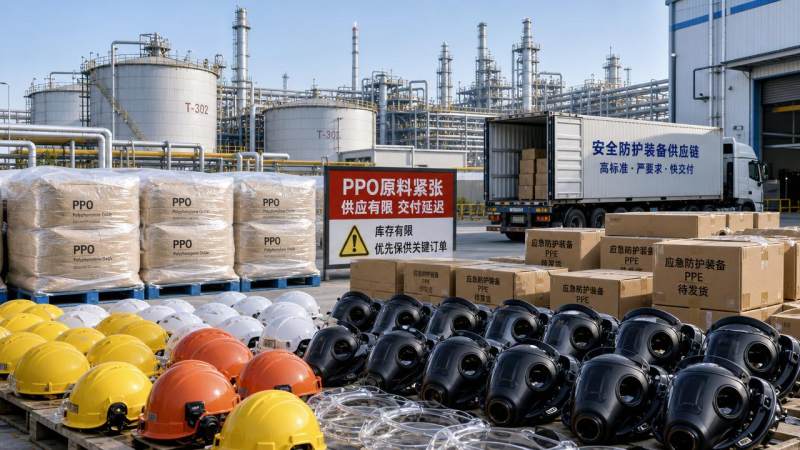
The timing of the event is not explicitly stated in the source input, but the latest disclosed market signal is clear: a continued shutdown of a high-purity polyphenylene oxide (PPO) resin line in SABIC’s Jubail industrial area has tightened a key input used in PPE gear, pushing Asian PPO prices to US$4,850 per ton on June 10, up 12% week on week. This matters most to manufacturers, procurement teams, traders, and downstream users tied to safety helmets and fire-service respirator housings, because the disruption is already affecting material costs and delivery cycles rather than remaining an upstream supply issue only.
What has been confirmed so far
According to the provided information, the disruption is linked to escalating geopolitical tensions in the Middle East. A high-purity PPO resin production line under SABIC in the Jubail industrial area has remained offline since late March. The resulting supply tightness has affected core raw materials used in PPE gear.
As of June 10, the Asian market quotation for PPO reached US$4,850 per ton, representing a 12% increase from the previous week. The price move has already been passed through to downstream products, with bill-of-materials costs for items such as safety helmets and firefighter breathing apparatus housings rising by 8% to 10%. Lead times have also generally extended to 12 to 16 weeks.
Where the pressure is showing across the chain
Procurement risk is moving closer to finished-goods production
From an industry perspective, raw-material buyers and sourcing teams are likely to feel the impact first through tighter availability and faster price movement. The key issue is not only the higher PPO quote itself, but also the fact that the increase has already translated into downstream BOM pressure. What deserves closer attention is whether buyers can still secure material volumes that match production schedules for PPE-related product lines.
Manufacturers face a combined cost-and-delivery squeeze
For processors and finished-product manufacturers, the pressure is visible in two linked areas: input cost and lead time. Safety helmet producers and manufacturers of fire-respirator housings may need to manage margin pressure if customer pricing cannot be adjusted quickly, while longer material cycles can disrupt production planning, shipment commitments, and order sequencing.
Trade and distribution participants may see higher fulfillment uncertainty
Direct trading companies, distributors, and supply-chain intermediaries may be affected through quotation volatility and delivery reliability. Observably, when upstream outages persist and weekly price changes are this pronounced, the commercial challenge shifts toward contract execution, inventory allocation, and communication around revised delivery windows rather than simple price updates alone.
End users and institutional buyers may need to watch specification-sensitive categories
Downstream purchasing parties, especially those buying safety helmets or respiratory protection components, may be affected through longer replenishment cycles and revised product pricing. The practical concern is whether procurement calendars, tender schedules, or maintenance replacement plans can absorb a 12- to 16-week lead-time environment without creating operational gaps.
What companies should monitor now
Track supplier updates against actual shipment capability
Analysis shows that companies should pay close attention to any formal supplier communication regarding production status, allocation, and confirmed delivery timing. In a market where outage conditions have already translated into downstream cost increases, the distinction between a quoted lead time and a realistically deliverable lead time becomes especially important.
Review exposure in helmet and respirator-related product lines
Businesses with concentrated demand in safety helmets, firefighter breathing apparatus housings, or similar PPE categories should identify where PPO-linked components sit inside their BOM structures. The immediate operational value lies in knowing which SKUs, customer orders, or production batches are most sensitive to price changes and delayed input arrivals.
Prepare for contract and customer communication adjustments
What deserves closer attention is how companies document price validity, delivery assumptions, and possible schedule revisions in ongoing transactions. For sales, procurement, and account teams, this is less about broad strategy language and more about whether updated lead times, material surcharges, or revised fulfillment expectations are being communicated clearly and consistently.
Check documentation and execution readiness across the supply chain
For trading and manufacturing businesses alike, practical readiness includes confirming supplier qualification status, order documents, and timing commitments tied to current purchases. Where material tightness is already visible, execution risk can rise if paperwork, order confirmation, or customer approval processes lag behind changing supply conditions.
Why this matters beyond a single weekly price move
This section is an editorial observation. It is more appropriate to understand this development as an active supply-chain warning signal rather than a fully settled long-term market conclusion. The confirmed facts show that the outage has lasted since late March, PPO prices in Asia have risen sharply on a weekly basis, and downstream PPE-related costs and lead times have already moved.
At the same time, the available input does not establish how long the disruption will continue or whether broader supply normalization is imminent. For that reason, the industry should treat this as a development that requires continued monitoring: it has already produced tangible commercial effects, but its longer-term significance still depends on how persistent the outage and supply tightness prove to be.
How this update is best understood today
In summary, the current information points to a real and already transmitted supply shock in a specific PPE-related material chain. The most immediate significance is not abstract market sentiment, but the direct effect on PPO pricing, finished-product BOMs, and delivery timelines for safety-related equipment components.
From a neutral industry reading, this is best understood as a short-term disruption with meaningful downstream consequences that may also become a broader signal if the shutdown continues. For now, the prudent stance is close monitoring rather than definitive long-range conclusions.
Basis of this article and points for follow-up verification
This article is generated based on the user-provided news title, event timing note, and event summary. The specific official source link was not provided in the input, so the details should continue to be verified against source types commonly relevant to this kind of development, such as official company statements, corporate announcements, industry association updates, authoritative media reporting, and technical or standards-related documents where applicable.
For continued follow-up, the most important points to verify are whether there is any updated statement on the production-line shutdown, whether PPO quotations remain elevated or volatile, and whether downstream lead times and BOM pressure in PPE-related products continue to widen or begin to stabilize.
The VitalSync Intelligence Brief
Receive daily deep-dives into MedTech innovations and regulatory shifts.