
Security
Vietnam Tightens PPE Import Labels With QR Traceability
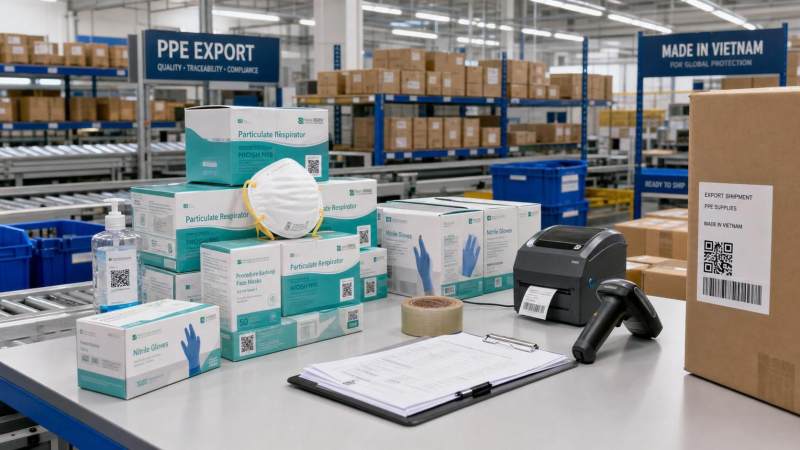
On September 1, 2026, a new labeling requirement for imported personal protective equipment (PPE) takes effect in Vietnam, shifting the issue from basic language compliance to product-level traceability. Based on a notice issued by the Ministry of Health (MOH), imported PPE must carry not only the existing Vietnamese-language label but also a unique QR code on the smallest sales unit, linked to the designated SISCON-VN traceability platform. For exporters, importers, packaging suppliers, and supply chain operators handling PPE shipments into Vietnam, this is worth close attention because non-compliant goods may be held by customs and sent back for rework, directly affecting packaging execution, shipment readiness, and delivery timing.
What the new requirement clearly changes
The confirmed change is tied to MOH Notice No. 178/QD-BYT, issued on July 13, 2026. Under that notice, all imported PPE must meet a dual-label requirement from September 1, 2026 onward. In addition to the existing Vietnamese-language label, each smallest sales unit must bear a unique QR code. That QR code must link to the SISCON-VN traceability platform designated by the MOH. The event summary also makes clear that products failing to meet this requirement may be detained by customs and required to undergo rework.
The confirmed impact identified in the provided information is operational rather than theoretical: the change directly affects packaging design, label printing, and supply chain response cycles for Chinese PPE exporters.
Where the pressure is likely to appear across the trade chain
Export packaging moves closer to a compliance checkpoint
From an industry perspective, exporters of PPE to Vietnam are likely to be affected first because the new rule applies at the smallest sales unit level. That means compliance is no longer limited to outer cartons or accompanying documents. The practical pressure point is packaging execution: label layout, print sequencing, and item-level QR integration may now become part of shipment release readiness. What deserves closer attention is whether existing packaging workflows can absorb this requirement without delaying dispatch.
Import and distribution teams may face tighter receiving risk
Importers and downstream distribution operators may be exposed to immediate clearance risk if inbound products do not carry both the Vietnamese-language label and the required QR code. The stated customs detention and rework consequence suggests that receiving, warehousing, and onward distribution plans could be disrupted when packaging is not aligned before shipment. For these parties, attention is likely to center on pre-shipment verification, supplier coordination, and whether goods arrive with compliant unit-level labels already in place.
Label printers and supply chain service providers become part of delivery timing
Analysis shows that the rule also reaches service providers supporting PPE trade, especially those involved in packaging design, label printing, and shipment preparation. Because the requirement concerns a unique QR code linked to a designated platform, execution may depend on tighter coordination between product owners, printing vendors, and logistics scheduling. Even without additional official detail in the input, the confirmed rework risk means that timing, version control, and packaging change management are likely to matter more than before.
What companies should watch in the near term
Review whether current unit packaging can carry the added traceability element
Companies shipping PPE into Vietnam should examine whether the smallest sales unit currently has enough space and process control to accommodate both the Vietnamese-language label and a unique QR code. Analysis shows that this is not only a design question but also a production control issue, because the rule points to item-level or unit-level execution rather than a general shipment declaration.
Check document and product consistency before shipment
Observably, the commercial risk in this update is tied to customs handling and rework rather than to a purely administrative filing issue. That makes consistency between product labeling, packaging output, and shipment preparation an immediate concern. Businesses should therefore pay close attention to whether internal compliance review, supplier sign-off, and pre-export inspection steps are sufficient for the new requirement.
Track follow-up clarification on implementation practice
The provided information confirms the mandatory QR code requirement and the customs consequence for non-compliance, but it does not provide additional implementation detail beyond the link to the MOH-designated SISCON-VN platform. It is therefore more appropriate to treat certain operational questions as still requiring confirmation, including how companies will align platform linkage, labeling workflow, and practical execution across different PPE product lines.
Reassess lead times and order commitments
From an industry perspective, the rule deserves attention not only from compliance teams but also from sales, procurement, and delivery planners. Because the confirmed impact includes packaging design, label printing, and supply chain response cycles, companies may need to reassess production lead times and shipment commitments where Vietnam-bound PPE is involved. This should be understood as a planning consideration rather than a confirmed market outcome.
How this signal should be read
Analysis shows that this update is best understood as an enforcement-oriented trade compliance change rather than a general policy statement. The requirement is specific, time-bound, and tied to customs consequences, which gives it practical weight for any business still relying on conventional labeling workflows for PPE exports to Vietnam.
At the same time, observably, this remains a rule change whose day-to-day execution still needs market verification. The provided information confirms the mandate and the risk of detention and rework, but it does not settle every operational detail that businesses may need in practice. That is why continued attention to implementation wording, compliance interpretation, and on-the-ground customs handling remains necessary.
A practical reading of the current change
The immediate significance of this development is that PPE labeling for Vietnam is moving beyond language presentation into mandatory digital traceability at the smallest sales unit level. For affected companies, the main issue is not whether the rule matters, but where it enters the workflow: packaging approval, label production, shipment readiness, and delivery scheduling.
It is more appropriate to understand this event as a landed compliance change with direct execution implications, while still recognizing that parts of the implementation environment may need continued observation. That makes early operational review more relevant than broad market speculation.
Basis of this article and what still needs verification
This article is based on the user-provided news title, event date, and event summary. For developments of this kind, relevant source categories would typically include official notices, regulatory authority releases, customs or trade administration updates, industry association communications, standard-setting documents, and reporting by established professional media.
No specific official source link was provided in the input, so the exact official publication path still requires further verification. Observably, the areas that still merit follow-up include any additional implementation detail, compliance interpretation, changes in procurement or tender documentation, market feedback, and how affected companies ultimately execute the new labeling and traceability requirement in practice.
The VitalSync Intelligence Brief
Receive daily deep-dives into MedTech innovations and regulatory shifts.