
Security
2026 Security Automation Trends Reshaping Access Control
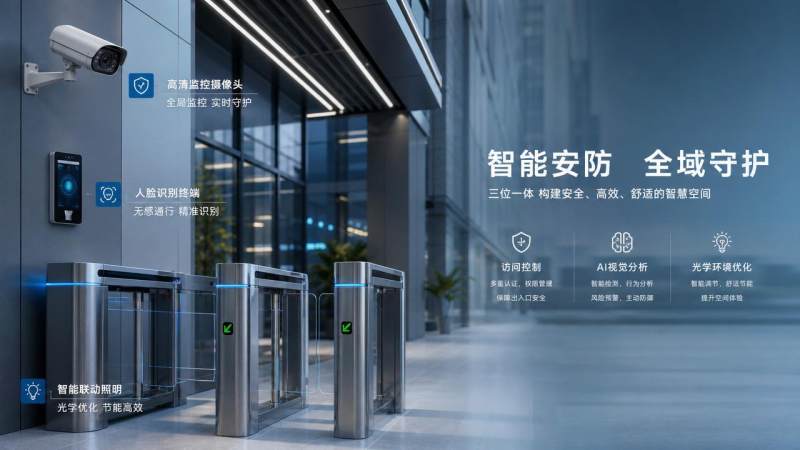
As digital infrastructure expands and urban safety standards rise, security automation is becoming a defining force in modern access control. For enterprise decision-makers, the 2026 landscape brings more than operational efficiency—it signals a shift toward intelligent compliance, predictive risk management, and integrated optical-security ecosystems. Understanding these trends is essential for building resilient, future-ready security strategies.
For large facilities, transport hubs, campuses, smart construction sites, and public safety projects, access control is no longer a stand-alone door management function. It is now part of a broader operational layer that connects identity, surveillance, lighting, environmental data, compliance rules, and incident response within one decision framework.
This shift matters because enterprise leaders are being asked to balance 4 competing pressures at once: stronger protection, faster throughput, stricter legal accountability, and lower long-term operating cost. In that context, security automation becomes a strategic investment rather than a simple hardware upgrade.
GSIM’s market perspective is especially relevant here. By connecting physical security assurance with optical environment optimization, the platform helps buyers interpret global policy changes, evaluate technology convergence, and make procurement decisions with clearer visibility across 12- to 36-month planning cycles.
Why 2026 Marks a Turning Point for Security Automation in Access Control
The 2026 cycle stands out because three technology layers are maturing at the same time: AI-assisted identity verification, policy-driven orchestration, and sensor-rich optical infrastructure. Together, they push access control beyond credentials and into continuous security decision-making.
In practical terms, this means a badge reader no longer acts alone. A modern entry point may combine 5 inputs within 2 seconds: credential status, face match confidence, tailgating detection, zone occupancy, and local illumination quality. That multi-input process reduces blind spots that traditional systems often leave unresolved.
From Isolated Devices to Coordinated Security Logic
Older deployments often rely on fragmented subsystems purchased over 5 to 10 years. One vendor handles card readers, another manages CCTV, while building controls and lighting remain separate. The result is delayed response, inconsistent logs, and high dependence on manual verification.
Security automation changes that model by linking devices to rules. When an anomaly appears, the system can trigger 3 to 6 predefined actions automatically, such as locking secondary doors, increasing corridor illumination, pushing alerts to the security desk, and preserving video clips for review.
What Enterprise Buyers Are Prioritizing
- Unified access events across doors, gates, elevators, and restricted zones
- Automated audit trails retained for 90 to 365 days, depending on site policy
- Faster decision latency, ideally below 1 second for standard access requests
- Lower false rejection rates during shift changes and peak visitor periods
- Interoperability with surveillance, lighting, and building management systems
The next table outlines how the access control model is evolving as security automation becomes central to enterprise planning.
The key takeaway is that security automation is not replacing access control; it is redefining its scope. Buyers who continue to evaluate doors, readers, and software as separate line items may miss the larger value in workflow integration and risk reduction.
The Most Important Security Automation Trends Reshaping Access Decisions
Several trends are moving from pilot programs into procurement requirements. For enterprise teams planning upgrades in 2026, these trends directly affect architecture decisions, implementation sequencing, and total cost across 3- to 7-year lifecycle horizons.
1. Context-Aware Identity Verification
Static access rights are giving way to dynamic decisions. Security automation platforms increasingly assess not only who the user is, but also when they arrive, where they are moving, whether their route is typical, and whether surrounding conditions suggest elevated risk.
A contractor with valid credentials may still face step-up verification if access occurs outside approved hours, if occupancy exceeds threshold levels, or if an adjacent restricted zone has been flagged. In many environments, that conditional control can cut unnecessary security escalations by separating routine exceptions from real threats.
2. AI Vision and Access Control Fusion
The integration of AI vision with security automation is accelerating. Instead of treating cameras as passive recording tools, enterprises are using visual analytics to verify passage direction, detect tailgating, confirm PPE compliance on industrial sites, and validate entry behavior before unlocking downstream doors.
This has strong value in logistics yards, critical infrastructure, and multi-tenant campuses where throughput matters. During high-volume periods, AI-supported screening can help maintain flow while reducing the need for 1-to-1 human supervision at every checkpoint.
3. Optical Environment Integration
One of the less discussed but increasingly important shifts is the role of illumination in automated access decisions. Camera performance, face match quality, and incident visibility all depend on optical conditions. Poor lighting can degrade verification quality even when software and credentials are configured correctly.
For this reason, advanced security automation strategies now include lux-level planning, adaptive lighting triggers, and optical optimization around doors, loading bays, and perimeter transition zones. In some facilities, improving lighting consistency across 3 to 4 key entry points delivers stronger verification reliability than replacing readers alone.
4. Policy Automation for Compliance Workflows
Regulatory pressure is also reshaping procurement. Enterprises operating across regions face different retention, consent, surveillance, and reporting requirements. Security automation helps by converting compliance needs into repeatable rule sets, reducing the chance of ad hoc operator decisions that create audit risk.
A mature workflow may include 4 automated controls: role-based access provisioning, event retention scheduling, exception escalation, and evidence export controls. This is especially useful for organizations running more than 10 sites or coordinating security functions across multiple legal jurisdictions.
How Decision-Makers Should Evaluate Security Automation Investments
Not every automation claim translates into measurable operational value. Enterprise buyers need an evaluation model that connects technology features to site risk, user volume, compliance exposure, and service practicality. A disciplined selection process reduces overbuying and helps avoid integration dead ends.
Four Core Evaluation Dimensions
- Risk fit: Does the solution address tailgating, credential abuse, after-hours access, and perimeter exceptions?
- Integration depth: Can it connect with video, visitor management, lighting, alarms, and building systems through open interfaces?
- Operational resilience: What happens during network delay, camera obstruction, or temporary power disruption?
- Governance support: Can the platform produce usable audit logs, approval records, and segmented access policies?
The table below can help procurement teams compare deployment readiness across common investment criteria.
These benchmarks are not universal specifications, but they help turn vague automation promises into decision criteria. For many buyers, the real differentiator is not the number of features, but how quickly those features support predictable, documented operations.
Common Procurement Mistakes
A frequent mistake is buying high-end analytics without addressing the optical environment. If entry zones have inconsistent illumination, glare, or obstructed camera angles, automation accuracy suffers. Another issue is failing to define escalation rules before deployment, which leaves operators handling exceptions manually despite major software investment.
Decision-makers should also avoid locking strategy to a single point solution. A better path is to document 6 to 8 critical workflows first, then verify whether the shortlisted system can support them through configuration rather than custom coding.
Implementation Roadmap: Turning Strategy into a Working Security Automation Program
A successful rollout usually happens in stages. Enterprises that try to automate every access point at once often face higher disruption, slower user adoption, and unclear performance baselines. A phased model allows faster validation and better budget control.
Recommended 5-Step Rollout Sequence
- Map high-risk zones, user categories, and critical movement paths.
- Audit existing readers, cameras, locks, lighting, and network conditions.
- Define automated rules for routine access, exception handling, and incident escalation.
- Run a pilot over 30 to 90 days at 1 or 2 priority locations.
- Expand by site cluster after validating event quality, user flow, and service response.
Where GSIM Adds Decision Support
For enterprise leaders, the hardest part is often not selecting hardware but interpreting change across policy, technology, and procurement markets. GSIM’s Strategic Intelligence Center is valuable because it combines sector news, compliance interpretation, and trend forecasting in one reference structure.
That helps teams compare not just devices, but deployment logic. When evaluating security automation, access control, AI vision, and visible light communication trends together, buyers gain a clearer picture of which investments will remain adaptable over the next 24 to 36 months.
Maintenance and Governance After Go-Live
Automation must be reviewed continuously. Access roles change, lighting conditions shift, construction alters traffic flow, and regulations evolve. A practical governance routine includes monthly exception review, quarterly rules validation, and annual infrastructure assessment for critical sites.
Enterprises should define at least 3 acceptance measures after deployment: access accuracy, incident response time, and audit completeness. Without those indicators, even a technically advanced system may fail to demonstrate business value to operations, security, and compliance teams.
Strategic Outlook for Enterprise Leaders
In 2026, security automation will increasingly determine how access control performs under real-world pressure. The strongest programs will combine identity intelligence, optical reliability, policy automation, and multi-system coordination rather than relying on stand-alone devices.
For enterprise decision-makers, the opportunity is not only to harden entry points, but to build a more transparent and governable security environment across sites, assets, and teams. That is where informed planning creates durable value: lower friction, better evidence, faster response, and stronger operational confidence.
If you are reviewing access control strategy, planning a multi-site upgrade, or assessing the convergence of AI vision and optical infrastructure, now is the right time to build a more structured roadmap. Connect with GSIM to get tailored insight, compare solution paths, and explore security automation approaches aligned with future-ready access control goals.
The VitalSync Intelligence Brief
Receive daily deep-dives into MedTech innovations and regulatory shifts.