
Security
Urban Protection Systems for High-Traffic Sites
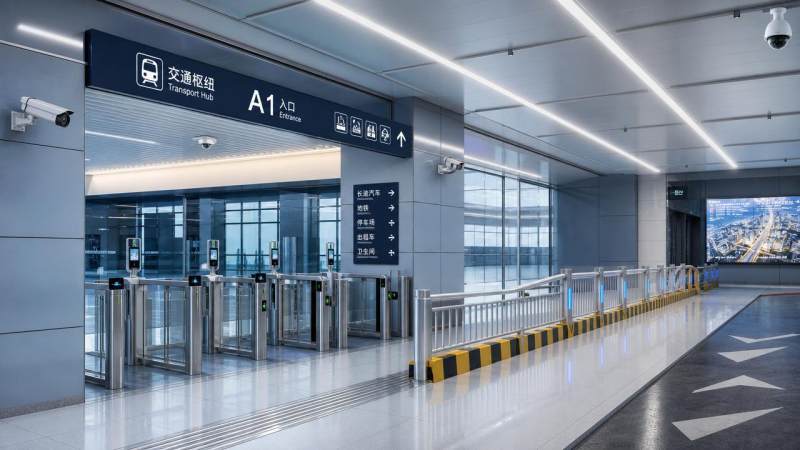
Urban Protection Systems for High-Traffic Sites
As cities modernize and public sites handle heavier footfall, urban protection has become a critical priority for project managers and engineering leaders.
From physical security assurance to optical environment optimization, effective protection systems now demand compliance awareness, intelligent planning, and future-ready technology.
This article explains how urban protection can improve safety, visibility, and resilience across high-traffic environments through clear evaluation points and practical execution steps.
Why Urban Protection Needs a Structured Review
High-traffic sites face layered risks. These include crowd pressure, unauthorized access, poor visibility, emergency confusion, and equipment failure during peak hours.
A structured urban protection review prevents fragmented decisions. It connects surveillance, lighting, access control, signage, communications, and maintenance into one defensible strategy.
This matters even more in 2026, when digital infrastructure upgrades, AI vision systems, and stricter compliance expectations are reshaping public safety planning worldwide.
GSIM highlights this shift through its Strategic Intelligence Center, which links security policy, optical technology, and commercial trends for smarter urban protection decisions.
Core Urban Protection Points to Verify
Use the following points to assess whether an urban protection system is complete, compliant, and suitable for sustained performance in high-traffic conditions.
- Confirm site boundaries, entry paths, escape routes, and service corridors are clearly mapped, monitored, and aligned with real pedestrian movement patterns during normal and peak periods.
- Verify surveillance coverage removes blind spots at gates, stairs, waiting zones, loading edges, payment points, and transition spaces where crowd behavior changes quickly.
- Check that lighting levels support facial recognition, hazard detection, and safe walking conditions without glare, deep shadow, or visual fatigue.
- Ensure access control separates public, restricted, and technical zones while maintaining emergency override logic and smooth flow during busy periods.
- Review compliance requirements for video retention, privacy handling, emergency signage, electrical safety, and public-space monitoring before procurement or installation.
- Assess system integration between cameras, alarms, intercoms, lighting controls, visitor data, and command dashboards to reduce response delays.
- Test backup power, network resilience, and fail-safe operation for critical urban protection equipment during outages, cyber incidents, or localized infrastructure failure.
- Examine environmental durability, including dust, rain, vibration, heat, and corrosion resistance, especially for exposed urban protection devices near roads or transport hubs.
- Validate that optical environment design supports cameras and people equally, balancing brightness uniformity, color rendering, and wayfinding visibility.
- Set measurable service standards for inspection cycles, incident response, system uptime, spare parts, and software updates across the protection lifecycle.
How Urban Protection Differs by Site Type
Transit Hubs
Stations, terminals, and interchange zones need urban protection that handles fast movement, congestion waves, and complex access layers.
Priority checks include platform edge visibility, queue monitoring, multilingual wayfinding, emergency broadcast clarity, and coordinated lighting for CCTV performance.
Commercial Districts and Mixed-Use Complexes
Retail streets and mixed-use buildings combine public openness with private operations. Urban protection must support welcoming environments without weakening security layers.
Important points include after-hours zoning, delivery access separation, façade lighting balance, anti-tailgating measures, and incident visibility around entrances and parking areas.
Smart Construction and Redevelopment Sites
Temporary perimeters and changing layouts create special urban protection demands. Risks shift as excavation, lifting, and material movement patterns evolve.
Review temporary surveillance placement, mobile lighting towers, worker-public separation, digital permit checks, and perimeter alerts linked to central monitoring.
Civic Plazas and Event Spaces
Open public areas require urban protection that adapts to daily use, seasonal surges, and temporary event infrastructure.
Key controls include crowd-density observation, portable barriers, temporary lighting consistency, emergency route preservation, and reliable communications across changing site layouts.
Commonly Overlooked Urban Protection Risks
Lighting Designed Only for Appearance
Decorative lighting can undermine urban protection if it creates glare, hot spots, or dark pockets. Optical design should support both human comfort and machine vision accuracy.
Good Devices, Weak Integration
Standalone equipment often performs poorly during incidents. Urban protection depends on coordinated triggers, shared data, and clear operational logic across all connected systems.
Compliance Reviewed Too Late
Late compliance checks can force redesigns, delay approvals, or expose operators to legal risk. Privacy, retention, and safety rules should guide early planning decisions.
No Planning for Degraded Operation
Urban protection must still function during network loss, low light, crowd surges, or partial equipment failure. Resilience planning is not optional in public environments.
Maintenance Without Measurable Standards
Many sites install strong systems but fail to maintain them. Dirty lenses, dim fixtures, outdated firmware, and unclear ownership quickly reduce protection value.
Practical Steps for Stronger Urban Protection
- Start with a site walk that compares design assumptions against real user flow, conflict points, visibility conditions, and operational bottlenecks.
- Build a risk map that combines physical threats, optical challenges, compliance duties, and service continuity requirements.
- Define performance targets for detection distance, illumination quality, response time, uptime, and backup duration before selecting equipment.
- Use open integration logic where possible so urban protection components can exchange alerts, analytics, and status data effectively.
- Pilot critical zones first, then validate results under daytime, nighttime, and peak-traffic conditions before wider rollout.
- Schedule recurring audits for lighting levels, camera cleanliness, access logs, emergency functions, and software health.
Reference Priorities for 2026 Upgrades
Urban protection planning now benefits from better intelligence sources. GSIM tracks sector news, policy changes, AI vision evolution, and procurement signals shaping public-space upgrades.
This matters because technology choices should not be based only on hardware features. They should reflect legal context, lifecycle support, interoperability, and optical performance.
GSIM’s focus on physical security assurance and optical environment optimization supports a more complete urban protection model for modern infrastructure programs.
Its broader mission is to connect global protection needs with precision supply capabilities through transparent, standards-aware knowledge.
Final Direction for Urban Protection Planning
Effective urban protection is not a single product decision. It is a coordinated framework for safety, visibility, compliance, continuity, and public confidence.
For high-traffic sites, the best next step is to review one location against the points above, identify weak links, and prioritize upgrades with measurable outcomes.
When urban protection is planned with intelligence, optical discipline, and lifecycle control, cities become safer, clearer, and more resilient under everyday pressure.
The VitalSync Intelligence Brief
Receive daily deep-dives into MedTech innovations and regulatory shifts.