
Security
Critical Infrastructure Protection Solutions: Key Features Worth Comparing
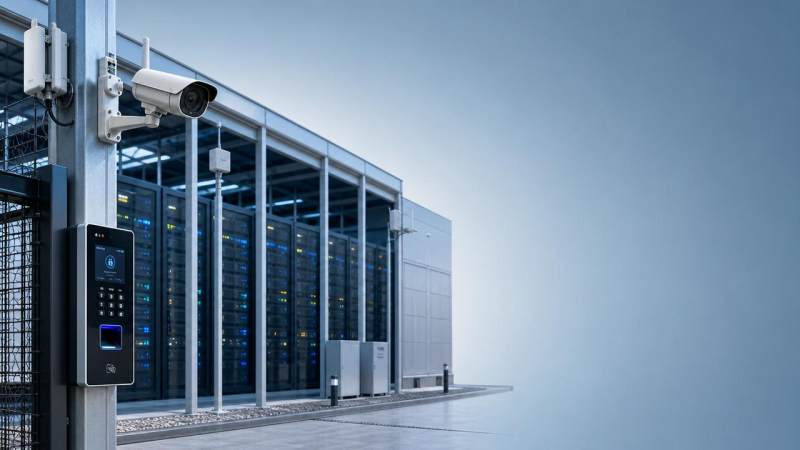
As digital infrastructure and urban safety investments accelerate, buyers need a sharper framework for evaluating critical infrastructure protection solutions. From compliance readiness and system interoperability to AI-enabled surveillance and optical performance, the right comparison points can reduce risk and improve long-term value. This guide highlights the key features procurement teams should examine before making strategic security decisions.
Why a checklist-based approach works better for procurement
For procurement teams, comparing critical infrastructure protection solutions is rarely about a single device, software feature, or price line. Most projects involve layered systems: perimeter surveillance, access control, networked sensors, lighting performance, evidence management, analytics, maintenance obligations, and regulatory requirements. A checklist approach helps buyers avoid being distracted by marketing claims and instead focus on operational fit, compliance risk, and total lifecycle value.
This is especially relevant in public safety, smart construction, utilities, transport hubs, logistics campuses, and municipal digital infrastructure, where decisions affect resilience, liability exposure, and long-term service continuity. A structured review also aligns well with the way GSIM supports buyers: connecting global security assurance priorities with optical environment optimization, standards awareness, and forward-looking intelligence on AI vision and urban protection upgrades.
First checks before you compare vendors
Before requesting quotations, procurement should confirm several basic inputs. These early checks prevent scope confusion and make supplier comparison more meaningful.
- Define the asset type: Are you protecting data centers, substations, telecom nodes, public venues, transport corridors, industrial parks, or mixed-use city infrastructure? Different assets require different detection ranges, access policies, and lighting strategies.
- Clarify the threat profile: Confirm whether the main concern is intrusion, vandalism, theft, sabotage, insider misuse, traffic disruption, or unauthorized access after hours.
- Identify regulatory exposure: Projects in airports, ports, utilities, government facilities, and smart cities may need stronger audit trails, privacy controls, retention settings, and cyber hardening.
- Map existing systems: Buyers should know what already exists, including cameras, VMS platforms, command centers, lighting systems, fiber links, and third-party monitoring tools.
- Set operational priorities: Decide whether uptime, fast deployment, lower false alarms, forensic clarity, or multi-site scalability is the top evaluation factor.
Core feature checklist for critical infrastructure protection solutions
The most useful way to compare critical infrastructure protection solutions is to score them against a consistent set of decision criteria. The following checklist covers the features most buyers should prioritize.
1. Compliance readiness and standards alignment
A strong solution should support documentation, logging, evidence preservation, and access governance that align with local and international compliance expectations. Buyers should ask whether the solution can support audit requirements, user permission controls, incident traceability, and data retention policies. If the deployment spans borders, regulatory adaptability becomes even more important.
2. System interoperability
Interoperability is one of the most important comparison points in critical infrastructure protection solutions. Confirm whether the platform integrates with existing VMS, PSIM, access control, intrusion alarms, intercoms, emergency broadcast systems, and smart lighting controls. Open protocols, API availability, and practical integration references matter more than broad compatibility claims.
3. Detection accuracy and AI analytics value
AI-enabled surveillance should be assessed by measurable operational outcomes. Buyers should compare object classification reliability, false alarm reduction, line crossing accuracy, loitering detection, vehicle recognition, and rule customization. Ask vendors for performance examples in weather variation, low-light conditions, and crowded scenes rather than demo-room averages.
4. Optical performance and illumination quality
Because many security events happen in visually challenging environments, optical performance deserves direct procurement attention. Evaluate low-light imaging, glare resistance, infrared effectiveness, scene contrast, dynamic range, and how the system performs with supplementary lighting. GSIM’s focus on optical environment optimization is especially relevant here: security outcomes improve when cameras, lenses, lighting, and site geometry are evaluated together.
5. Reliability, redundancy, and uptime resilience
For infrastructure sites, resilience is not optional. Confirm failover design, local storage backup, network redundancy support, power protection options, and alert continuity during outages. Procurement should also check environmental durability ratings for heat, moisture, dust, vibration, and corrosion where relevant.
6. Cybersecurity controls
Modern critical infrastructure protection solutions sit at the intersection of physical and digital risk. Review secure boot, firmware signing, encryption, patch management, authentication controls, network segmentation support, vulnerability response process, and role-based administration. A physically strong system with weak cyber hygiene creates procurement risk.
7. Operational usability
A feature-rich platform can still fail if operators cannot use it efficiently. Assess dashboard clarity, alarm prioritization, incident search speed, mobile access, map-based visualization, multilingual support, and workflow simplicity for routine tasks. Procurement should include end-user feedback, not just engineering review.
8. Scalability and lifecycle support
Good solutions should support phased expansion across multiple facilities without forcing expensive platform replacement. Check licensing structure, storage scalability, analytics expansion, edge-to-cloud options, upgrade path, spare parts availability, and regional service capability. Long-term support quality often separates a low bid from a low-risk investment.
Quick comparison table for buyer evaluation
Use the table below as a practical scoring guide when shortlisting critical infrastructure protection solutions.
How priorities change by scenario
Not all critical infrastructure protection solutions should be judged the same way. Procurement should adjust weighting by deployment context.
Utilities and energy sites
Emphasize perimeter detection range, substation-grade durability, remote health monitoring, and resilient communications. Evidence retention and cyber controls are usually high priority because disruption consequences are severe.
Transport hubs and public facilities
Focus on crowd analytics, high-throughput monitoring, rapid incident retrieval, integrated public address response, and strong low-light performance across mixed indoor and outdoor areas.
Smart construction and temporary infrastructure
Mobility, quick deployment, remote access, flexible power options, and changing-zone coverage become more important. Buyers should also compare how easily the system can be relocated or reconfigured as projects evolve.
Data centers and telecom facilities
Access control depth, tamper alerts, audit-grade logging, environmental sensor integration, and cybersecurity posture usually outweigh broad public-area analytics features.
Common blind spots that buyers should not ignore
- Overvaluing headline AI features: A long analytics list means little if false alarms remain high in rain, dust, shadows, or glare.
- Ignoring lighting conditions: Many system failures are actually optical environment failures. Cameras alone cannot solve poor illumination planning.
- Underestimating integration labor: A low equipment price can hide expensive middleware, custom API work, and long commissioning cycles.
- Focusing only on CapEx: Licensing, maintenance, firmware management, training, and replacement cycles must be included in cost comparison.
- Missing legal and privacy review: Especially in urban or public-facing deployments, data handling and surveillance boundaries need early validation.
Practical execution steps for procurement teams
- Build a weighted scorecard using the eight core evaluation areas above.
- Separate mandatory requirements from preferred features before issuing the RFI or RFP.
- Request scenario-based demonstrations, not generic presentations.
- Ask for site-comparable references in climate, asset type, and regulatory setting.
- Include operations, IT, compliance, and facility stakeholders in evaluation workshops.
- Run a pilot where possible, with measurable success criteria such as alarm accuracy, incident search time, and low-light image usability.
FAQ for comparing critical infrastructure protection solutions
What should buyers compare first?
Start with site risk, compliance obligations, and integration constraints. These three factors usually eliminate unsuitable options faster than feature brochures do.
Is AI the main differentiator?
AI is valuable, but only when supported by reliable optics, stable infrastructure, and usable workflows. In many projects, integration quality and low-light performance have greater long-term impact.
How can buyers reduce long-term risk?
Choose critical infrastructure protection solutions with documented support models, open integration pathways, clear cybersecurity maintenance practices, and proven deployment references in similar operating environments.
What to prepare before the next supplier discussion
If your organization is moving toward supplier engagement, prepare a concise information pack: asset map, risk priorities, existing system inventory, compliance constraints, desired response workflow, environmental conditions, budget range, and deployment timeline. This allows vendors to propose critical infrastructure protection solutions that are realistically aligned with your site instead of offering generic packages.
For teams that need deeper market intelligence, evolving standards context, or guidance on how security technologies intersect with optical environment performance, it is worth starting the conversation around parameters, compatibility, rollout phases, service coverage, and lifecycle costs first. That is the most efficient path to a defensible procurement decision and a stronger long-term protection strategy.
The VitalSync Intelligence Brief
Receive daily deep-dives into MedTech innovations and regulatory shifts.