
Security
Security Order Issues That Disrupt Daily Site Operations
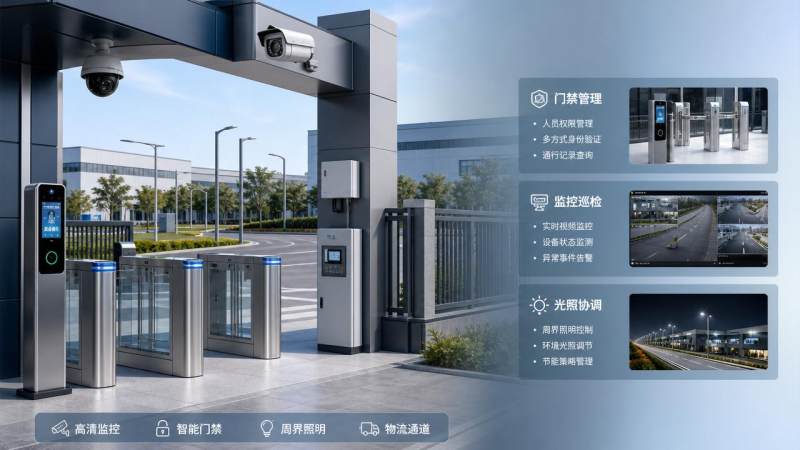
When security order starts to break down, daily site operations can quickly become slower, riskier, and more expensive. From access control gaps to poor lighting coordination and compliance confusion, small disruptions often trigger larger operational failures. This article explores the most common security order issues affecting frontline users and operators, while offering practical insight to help teams maintain safer, more efficient, and more reliable site performance.
Why security order failures create daily operational friction
For users and operators, security order is not an abstract policy concept. It is the working condition that keeps people, equipment, routes, records, alarms, and lighting responses aligned in real time. When that order weakens, the result is rarely one dramatic breakdown. More often, it appears as repeated delays, blind spots, false alarms, unclear responsibilities, and rising rework.
In mixed-use facilities, smart construction environments, logistics zones, campuses, public access sites, and industrial support areas, daily operations depend on orderly coordination between physical security assurance and optical environment control. A camera can be installed correctly and still underperform if glare, low contrast, or poor night illumination prevents reliable image capture. An access system can be compliant on paper and still fail operators if visitor routing is inconsistent.
This is why security order should be assessed as an operational system rather than a device list. GSIM approaches this challenge through intelligence-led decision support, connecting policy interpretation, surveillance practice, lighting conditions, and procurement signals so teams can identify where disruption starts before it spreads across the site.
- Entry and exit points are controlled, but user identity verification rules are applied inconsistently across shifts.
- Surveillance devices are online, yet optical conditions reduce recognition quality during low-light or high-reflection periods.
- Incident logs exist, but escalation paths are unclear, causing delayed intervention and repeated safety exposure.
- Compliance obligations are known in general, but operators lack site-level guidance for daily execution.
What security order issues appear most often on active sites?
The most disruptive security order issues are usually practical rather than theoretical. They affect the frontline first. Operators notice them during shift handover, visitor screening, alarm handling, perimeter review, and lighting checks. The table below maps frequent site issues to their direct operational impact and the early warning signs teams should not ignore.
These patterns show why security order must be monitored as a live operational condition. A site may seem adequately equipped, yet still suffer avoidable risk because devices, procedures, and optical conditions are not aligned. For frontline teams, the practical question is not whether a system exists, but whether it works coherently under real workload and real visibility conditions.
Where users and operators feel the pressure first
The first pressure point is usually decision fatigue. Operators are forced to compensate for unclear workflows with judgment calls. That may solve the moment, but it weakens security order over time because each workaround becomes an informal rule. A second pressure point is visibility inconsistency. Teams often trust cameras and sensors, but if optical quality changes across weather, traffic density, or night cycles, confidence erodes quickly.
The third pressure point is handover integrity. If one shift logs an issue casually and the next shift interprets it differently, site control becomes uneven. In busy sites, this can affect access approval, patrol timing, loading area observation, and emergency readiness.
Which site scenarios are most vulnerable to security order disruption?
Not every site fails in the same way. Security order issues vary by traffic pattern, asset sensitivity, visibility demands, and regulatory exposure. For procurement teams and operators, scenario-based evaluation is more useful than generic feature comparison. The following table helps connect security order priorities to different site conditions.
This comparison shows that security order is never only about equipment quantity. It depends on whether access logic, surveillance performance, and optical conditions are matched to actual site behavior. GSIM’s Strategic Intelligence Center is especially useful here because it helps teams interpret how evolving policies, AI vision capabilities, and procurement trends affect scenario-based choices rather than one-size-fits-all purchases.
- Sites with temporary layouts need reconfigurable rules more than fixed assumptions.
- Sites with strong daylight variation need optical planning, not just more luminaires.
- Sites handling public traffic need lawful surveillance communication and clear access boundaries.
How to diagnose weak security order before it turns into costly failure
Start with the operator journey, not the hardware list
A practical audit begins by following daily actions: arrival screening, badge validation, loading area checks, alarm review, incident logging, route patrols, and shift handover. If operators need repeated exceptions, duplicate entries, or verbal clarifications to complete these actions, security order is already compromised.
Check optical performance as part of security discipline
Many teams separate lighting from security, but frontline performance proves they are linked. A well-positioned camera still fails if contrast collapses at dusk, if reflective surfaces trigger overexposure, or if walkway illumination causes facial shadowing near gates. In high-activity zones, optical environment optimization can reduce false interpretation, improve evidence quality, and make response timing more confident.
Review compliance execution, not just compliance documents
Policies matter, but execution matters more. Operators should know what can be recorded, how long records are retained, who can access them, and how incidents are escalated. International and local expectations may differ across regions, especially for electronic surveillance and public-facing monitoring. GSIM’s intelligence-led approach helps teams translate broad compliance language into site-level operating choices.
- Map each critical zone by access type, user group, and visibility condition.
- Test surveillance output during day, dusk, and night instead of relying on installation acceptance alone.
- Measure the frequency of manual overrides, false alarms, and incomplete logs.
- Confirm whether contractors, visitors, and staff are governed by the same operational logic or by conflicting exceptions.
What should buyers and site managers compare before selecting a solution?
Buying for security order is different from buying single devices. The core objective is operational coherence. Users and operators need systems that reduce ambiguity, support evidence quality, and remain manageable under routine pressure. The table below outlines key selection dimensions that matter in procurement discussions.
This kind of evaluation helps shift procurement away from isolated specifications and toward site performance. GSIM adds value by connecting these decisions with current sector news, compliance interpretation, and market insight. That is especially useful when buyers must justify selections across security, facilities, operations, and finance teams.
Common buying mistakes that weaken security order
- Choosing hardware based only on resolution or brand familiarity while ignoring real optical conditions at the site.
- Treating access control as an IT setting instead of a live operational workflow with human exceptions.
- Assuming one compliance interpretation applies equally across all regions and facility types.
- Underestimating training needs for operators who must interpret alerts, logs, and lighting-related visibility changes.
How do standards, compliance, and emerging technology affect security order?
Security order is increasingly shaped by regulatory scrutiny and technology convergence. Electronic surveillance practices are being examined more closely, especially where personal data, public access areas, and cross-border infrastructure projects are involved. At the same time, AI vision tools and Visible Light Communication-related developments are changing how sites think about perception, communication, and environmental intelligence.
For operators, this does not mean every site must adopt the latest technology immediately. It means selection decisions should account for upgrade paths, lawful data handling, and future interoperability. A system that cannot adapt to stricter evidence expectations or smarter visual workflows may create hidden replacement costs later.
Practical compliance points worth reviewing
- Whether surveillance coverage is proportionate to the operational purpose of each zone.
- Whether image retention periods, access rights, and incident extraction procedures are documented clearly.
- Whether lighting changes alter the evidentiary quality of recorded events in critical areas.
- Whether contractors and temporary staff receive the same rule clarity as permanent personnel.
GSIM’s Strategic Intelligence Center is valuable in this context because it bridges policy interpretation with technical and commercial reality. Instead of forcing users to read disconnected legal updates, product claims, and market signals separately, it provides a structured path for understanding how compliance, AI vision, and optical environment strategy interact on the ground.
FAQ: practical questions users ask about security order
How can I tell if a security order problem is operational or technical?
Start by reviewing repeated symptoms. If equipment is functioning but teams rely on verbal fixes, manual exceptions, or inconsistent logging, the issue is operational. If rules are clear but image quality, detection reliability, or alert transmission fail under normal conditions, the issue is more technical. In many sites, both are linked, especially where poor lighting causes misinterpretation and extra manual intervention.
What should operators prioritize first when security order starts slipping?
Focus first on high-risk zones where access, visibility, and response time intersect. Entry gates, perimeter transitions, loading points, and low-light pedestrian routes are common priorities. Then review alarm relevance and handover consistency. These two areas often reveal whether the site is becoming dependent on informal workarounds.
Is better lighting always enough to improve security order?
No. More light can sometimes make surveillance worse if it introduces glare, high contrast, reflective hotspots, or facial shadowing. The goal is coordinated illumination, not just higher brightness. Optical environment optimization should support recognition, routing, and safe movement while matching the camera view and the user task.
How long does it take to improve security order on an existing site?
The timeline depends on whether the problem is procedural, technical, or structural. Basic improvements such as rule clarification, shift checklists, and alert cleanup can start quickly. Lighting redesign, access reconfiguration, or broader compliance review may take longer. A phased approach is often most effective because it lets teams fix immediate friction while planning deeper upgrades with less operational disruption.
Why choose us when security order needs clearer direction?
GSIM supports organizations that need more than product exposure. We help users, operators, and decision-makers connect security order challenges with current policy interpretation, optical environment strategy, and procurement intelligence. This is especially important when a project involves multiple stakeholders, tight schedules, changing site layouts, or uncertainty about compliance and upgrade direction.
You can consult GSIM for practical decision support across key topics that directly affect daily operations and purchasing confidence.
- Parameter confirmation for surveillance and lighting coordination in difficult visibility zones.
- Product and solution selection guidance for access control, site monitoring, and optical environment optimization.
- Delivery timeline discussion for phased deployment, temporary site conditions, or urgent operational upgrades.
- Custom solution planning based on contractor traffic, public access pressure, or critical asset protection needs.
- Certification and compliance review support for surveillance-related procurement and cross-region project alignment.
- Sample evaluation, quotation communication, and commercial insight for informed budget decisions.
If your team is dealing with recurring security order issues, uncertain selection criteria, or pressure to improve site reliability without wasting budget, a structured consultation can shorten the path to action. GSIM helps turn scattered concerns into a decision-ready framework so your site can operate with stronger control, clearer visibility, and more resilient daily performance.
The VitalSync Intelligence Brief
Receive daily deep-dives into MedTech innovations and regulatory shifts.