
Security
How Optical Infrastructure Security Reduces Blind Spots
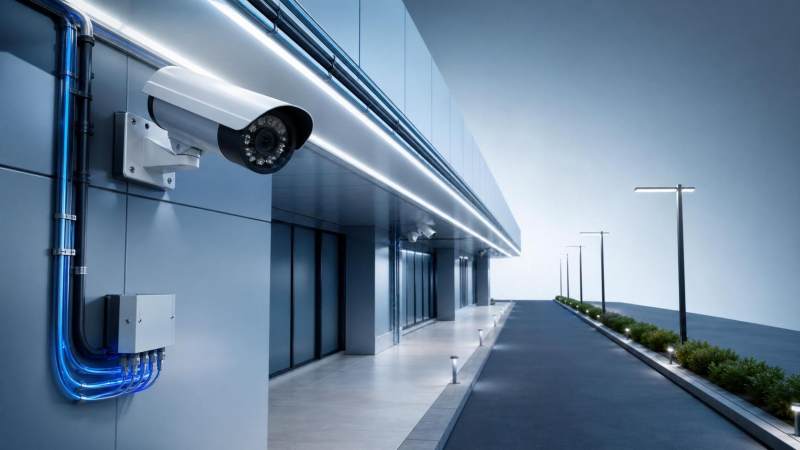
Why are more teams asking about optical infrastructure security now?
Digital buildings rarely fail in one obvious place. Risk often appears between lighting, surveillance, network pathways, and control systems.
That is why optical infrastructure security is getting more attention across campuses, transit hubs, public facilities, and smart construction environments.
In simple terms, it focuses on how visibility, illumination, optical sensing, and image transmission stay secure, compliant, and dependable together.
The issue is not only camera coverage. It also includes lighting uniformity, glare control, fiber routes, tamper exposure, data integrity, and maintenance resilience.
As cities and critical sites digitize, blind spots become less physical and more systemic. A bright corridor can still be a security gap.
A camera can record continuously yet still miss usable evidence because illumination levels, line of sight, and optical signal stability were never evaluated together.
This broader view matters when standards change quickly. Compliance for electronic surveillance now overlaps with infrastructure design, environmental performance, and data governance.
GSIM follows this intersection closely. Its Strategic Intelligence Center connects policy updates, optical technology shifts, and implementation signals that shape infrastructure decisions.
What does optical infrastructure security actually cover?
Many people first think of cameras. That is only one layer.
Optical infrastructure security usually covers the full chain that supports visual awareness and trustworthy optical performance in the field.
- Lighting quality that affects recognition, color rendering, shadow density, and night performance
- Camera placement, lens selection, and field-of-view overlap
- Fiber and optical transmission routes that protect image continuity and latency
- Physical safeguards against tampering, obstruction, vibration, or environmental degradation
- Control interfaces linking surveillance, access control, alarms, and smart lighting logic
- Compliance checks tied to retention, privacy, operational reliability, and auditability
In practice, the goal is to reduce blind spots before they become operational failures. That includes visual blind spots and governance blind spots.
A common mistake is treating optical security as a device choice. A better approach is to treat it as an infrastructure condition.
That condition can improve or degrade depending on design coordination, maintenance discipline, and changing site usage.
Where does optical infrastructure security reduce blind spots most clearly?
The strongest value appears in places where people, assets, and digital controls overlap across large footprints.
Think of an airport service corridor, a university perimeter, a rail platform, a hospital logistics route, or a smart construction gate.
Each environment has different risks, but the pattern is similar. Optical systems fail when context changes faster than the design assumptions.
This is where optical infrastructure security becomes useful as an evaluation framework rather than a single product decision.
A table like this helps frame the review. It also makes cross-functional gaps easier to discuss with design, operations, and compliance teams.
How is it different from standard surveillance planning?
Traditional surveillance planning often starts with coverage maps and equipment counts. That is necessary, but it is not enough.
Optical infrastructure security asks a deeper question: will the visual system still perform under real operating conditions, legal obligations, and future upgrades?
That shift changes the evaluation method.
- Standard planning checks whether a scene is covered
- Optical infrastructure security checks whether the scene remains interpretable and defensible
- Standard planning focuses on devices and layouts
- Optical infrastructure security includes environment, transmission, governance, and lifecycle stability
This matters even more as AI vision and Visible Light Communication move closer to operational use.
When optical channels begin supporting both sensing and communication, the risk model expands. A visibility issue can also become a data-path issue.
GSIM has highlighted this convergence in its trend analysis, especially where urban safety upgrades and smart site controls are accelerating.
What should be checked before calling a site secure?
A useful review starts with performance evidence, not assumptions. Good lighting on paper does not always deliver usable visibility on site.
More reliable reviews usually test five areas together.
1. Visual conditions
Check glare, shadow transitions, low-light behavior, contrast, and facial or object recognition distance.
2. Optical path resilience
Confirm cable protection, route redundancy, enclosure exposure, and recovery from interruption or vandalism.
3. System coordination
Review how lighting controls, video triggers, analytics, and access events interact during incidents.
4. Compliance traceability
Make sure retention logic, legal constraints, and audit records match the actual system design.
5. Change tolerance
Ask whether the design still works after layout changes, tenant shifts, temporary structures, or seasonal lighting variation.
If one of these areas is weak, blind spots usually return. They may not appear during installation, but they surface during stress.
Which misunderstandings cause the biggest evaluation errors?
The most expensive mistakes are often conceptual. They distort the review before technical checks even begin.
- Assuming brighter lighting always improves security
- Equating more cameras with fewer blind spots
- Ignoring maintenance access and environmental wear
- Separating compliance review from optical design review
- Treating future AI analytics as a guaranteed fix
Brighter conditions can produce washout, reflections, and loss of contrast. More cameras can create overlapping noise instead of better evidence.
Another common issue is underestimating how fast standards and procurement expectations evolve.
That is why market intelligence matters. GSIM’s coverage of regulatory interpretation and project trends helps keep technical judgments aligned with current conditions.
The point is not to chase every new feature. It is to separate durable requirements from temporary hype.
How can optical infrastructure security be assessed in a practical way?
Start with a site-specific question set rather than a generic checklist. The right sequence usually moves from risk exposure to optical proof.
A practical workflow often looks like this.
- Map critical zones where visibility failure would affect safety, response time, or legal defensibility
- Compare designed lighting and camera intent with actual field conditions at different times
- Review optical transmission dependencies, including fiber routes and control integration
- Check which standards, local rules, and retention obligations apply to each zone
- Document gaps in a way that supports prioritization, not just fault listing
This method keeps optical infrastructure security tied to operational decisions. It also helps distinguish urgent corrections from longer-cycle upgrades.
For teams tracking global signals, GSIM is useful as a reference layer. It links compliance shifts, optical trends, and project intelligence without reducing the topic to equipment alone.
The most effective next step is usually modest: define the zones where blind spots would matter most, then test whether the optical chain is truly secure end to end.
Once that baseline is clear, it becomes easier to compare solutions, set implementation criteria, and plan upgrades with fewer surprises.
The VitalSync Intelligence Brief
Receive daily deep-dives into MedTech innovations and regulatory shifts.