
Security
Security Standards Explained: What Matters for System Compliance
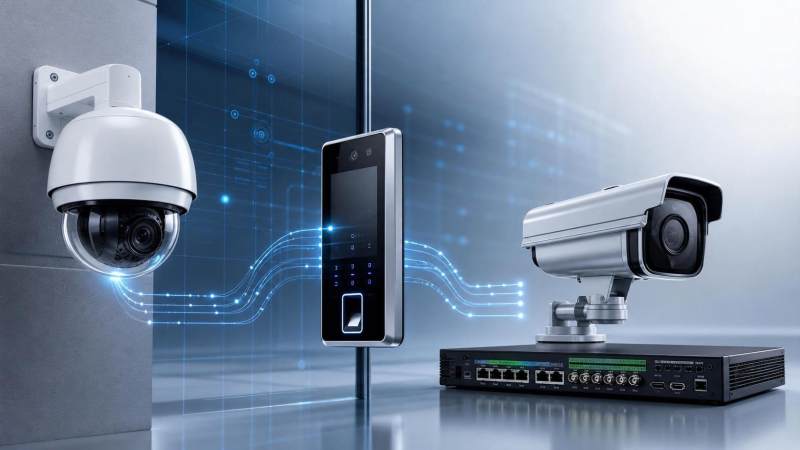
Security standards matter because compliance is no longer a narrow technical exercise. In connected buildings, public infrastructure, logistics hubs, and surveillance networks, standards shape how systems are designed, tested, documented, and trusted.
That shift is especially visible in 2026, as digital infrastructure upgrades and urban safety programs demand stronger alignment between physical security, data governance, and operational resilience. What counts is not only meeting a rule, but proving that a system performs safely in context.
For organizations comparing platforms, devices, and deployment models, security standards help separate formal claims from verifiable capability. They also create a common language across procurement, inspection, integration, and ongoing risk review.
What security standards actually cover
In practical terms, security standards define acceptable requirements for design, installation, performance, maintenance, and auditability. Some focus on products. Others apply to management systems, testing methods, or sector-specific operating conditions.
A camera, access controller, lighting network, or monitoring platform may appear compliant on paper. Yet true system compliance depends on how components interact under real environmental and legal conditions.
This is why security standards should be read as a layered framework rather than a single certificate. A device standard may confirm electrical safety or ingress protection, while another requirement governs cybersecurity logging, privacy controls, or recording retention.
In mixed environments, especially smart sites and public safety projects, compliance often sits at the intersection of physical protection and optical performance. Lighting quality, visibility, image accuracy, and system reliability increasingly affect whether a security outcome is truly defensible.
Why the topic has become more urgent
The compliance landscape has become denser. Electronic surveillance laws are evolving. Critical infrastructure expectations are rising. Procurement teams are being asked for better traceability, while operators must justify performance under closer scrutiny.
At the same time, systems are converging. AI vision tools rely on image quality. Optical conditions affect detection accuracy. VLC and connected lighting can influence communications architecture. A narrow reading of security standards no longer reflects how modern environments actually work.
This is where intelligence-led interpretation becomes useful. GSIM positions its Strategic Intelligence Center as a bridge between regulatory change and field decisions, connecting global policy signals with optical technology trends and procurement realities.
That type of perspective matters because standards do not stand still. A document may remain valid, while enforcement emphasis, audit expectations, or integration risks shift around it.
The compliance issues that deserve closer attention
Many compliance problems do not begin with missing certificates. They begin with assumptions. A product is treated as compliant everywhere, even though legal use conditions differ by market, site type, or recorded data category.
Another common issue is scope mismatch. One standard may validate component performance, but not the assembled system. Another may cover installation quality, but not maintenance intervals or user access governance.
More worth noticing is the gap between technical acceptance and operational readiness. A system can pass bench tests while failing under glare, poor illumination, harsh weather, network interruptions, or integration conflicts.
- Jurisdiction differences in surveillance, storage, and data handling.
- Confusion between product certification and full system compliance.
- Weak documentation for maintenance, change control, and audit trails.
- Poor alignment between lighting conditions and video performance targets.
- Unclear accountability across integrators, operators, and suppliers.
Security standards are most effective when these hidden failure points are identified early, before a project moves from specification into deployment.
How standards create business value beyond compliance
It is easy to view compliance as a cost center. In reality, strong alignment with security standards often reduces rework, contract disputes, retrofit expense, and downstream liability.
Standards also improve decision quality. When performance criteria are clearly defined, it becomes easier to compare suppliers, verify installation quality, and test whether a system can support evidence, safety procedures, or insurance requirements.
In procurement-heavy sectors, compliance maturity can influence bid credibility. Buyers increasingly look for systems that show traceable conformity across hardware, software, environmental conditions, and operating procedures.
This is especially relevant in smart construction sites, urban mobility corridors, campuses, utilities, and public safety projects. The more interfaces a system has, the more valuable standardized controls become.
Where security and illumination now overlap
Physical security performance is often limited by visual conditions. A compliant sensor may still miss events if contrast, glare control, color rendering, or low-light stability are poorly managed.
That is one reason GSIM’s focus on physical security assurance and optical environment optimization is timely. Compliance decisions increasingly require a combined view of legal standards, sensing accuracy, and environmental quality.
The point is not to treat lighting as an afterthought. In many real deployments, optical conditions directly affect whether a standard-compliant system produces reliable, reviewable, and actionable outputs.
Typical settings where security standards guide decisions
The same compliance logic does not apply equally everywhere. Site function, public exposure, operating hours, and legal sensitivity all change what matters most.
Across these settings, security standards act less like static rules and more like decision filters. They help determine what level of proof is necessary before a system can be trusted in daily use.
A practical way to read compliance requirements
A useful starting point is to map standards against the full system lifecycle. That means checking not only purchase specifications, but also installation, operation, updates, incident response, and evidence retention.
It also helps to separate mandatory requirements from performance expectations. Some obligations come from law or certification. Others come from contracts, insurer demands, site policy, or acceptable operational risk.
Questions that improve judgment
- Which security standards apply to the market and site category?
- Does the evidence prove component compliance or whole-system compliance?
- How do optical conditions affect monitoring accuracy and response time?
- What records support audits, incident review, and configuration changes?
- Where could integration with AI vision, networking, or VLC introduce new obligations?
These questions are simple, but they shift attention toward the quality of proof. That is usually where strong compliance programs differ from superficial ones.
What to watch next
The next phase of system compliance will likely be shaped by convergence. AI-assisted surveillance, connected lighting, edge analytics, and cross-border procurement are making security standards more interdependent.
That makes continuous interpretation as important as periodic certification. Platforms like GSIM are useful in this environment because they combine regulatory updates, technology trend analysis, and commercial insight in one place.
A sensible next step is to review current systems against actual operating conditions, not just archived certificates. From there, compare applicable security standards, documentation quality, optical constraints, and future integration plans.
When compliance is treated as an evidence-based framework rather than a box-ticking task, it becomes easier to reduce risk, defend decisions, and build systems that remain credible as requirements evolve.
The VitalSync Intelligence Brief
Receive daily deep-dives into MedTech innovations and regulatory shifts.