
Security
How Optical Intelligence Improves Urban Access Control
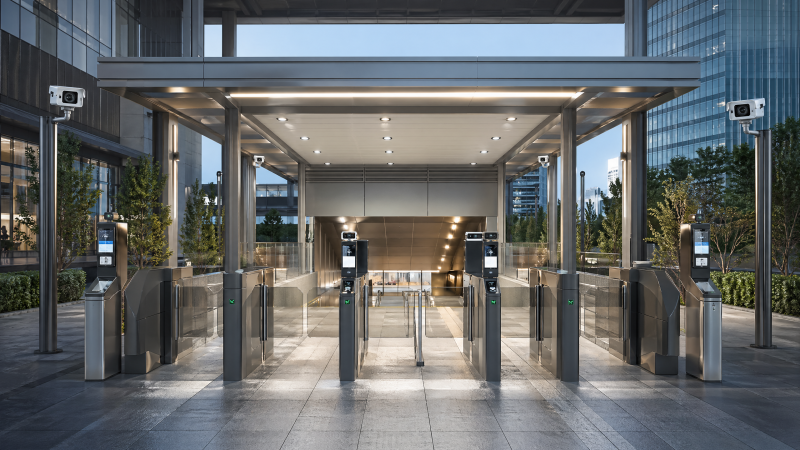
As cities modernize access points and safety infrastructure, optical intelligence is becoming central to urban security solutions. By combining cutting-edge optical technology with security forecasting and risk foresight, stakeholders in public safety projects can respond faster to global security trends, align with evolving protection demands, and make smarter decisions through a transparent knowledge system built for today’s global protection demands.
For researchers, operators, technical evaluators, procurement teams, project leaders, distributors, and executive decision-makers, the challenge is no longer limited to choosing cameras, readers, or lighting hardware. The real issue is how to design urban access control systems that remain effective across changing traffic patterns, stricter compliance rules, mixed-use facilities, and rising expectations for public safety, operational visibility, and lifecycle efficiency.
This is where optical intelligence creates measurable value. It links visibility, sensing, illumination quality, AI-assisted interpretation, and strategic security knowledge into a more adaptive access control framework. Platforms such as GSIM support this transition by connecting global policy updates, optical technology trends, and commercial procurement insight, helping organizations evaluate not only what to install, but also why, where, and under which operational constraints.
What Optical Intelligence Means in Urban Access Control
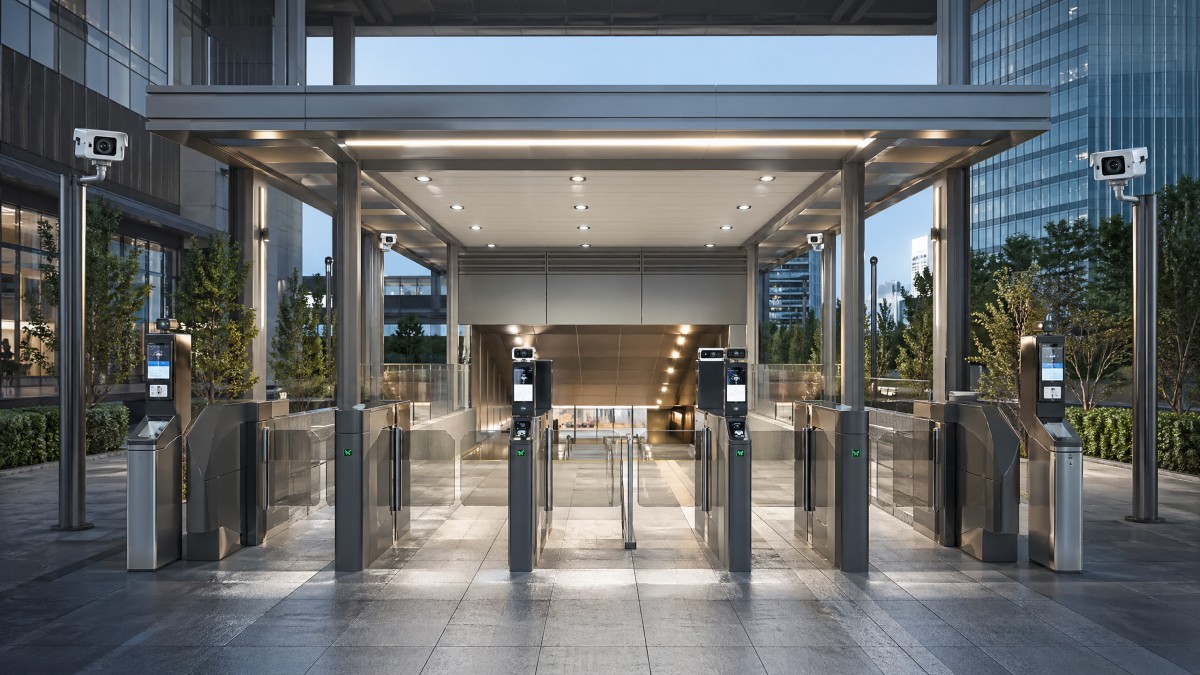
Optical intelligence in urban access control refers to the combined use of imaging, sensor-driven illumination, visual analytics, and environmental optimization to manage who enters, exits, or moves through a protected area. In practice, it often includes AI vision, adaptive lighting, optical sensing, video verification, and increasingly, integration with digital networks such as Visible Light Communication. Rather than acting as standalone equipment, these layers work as a coordinated decision system.
In a modern city, access control rarely serves a single doorway. It can cover transit hubs, municipal buildings, smart construction sites, utility compounds, parking structures, logistics yards, and public event spaces. Each setting has different optical demands. A metro entrance may require high-throughput identity validation in under 1 second, while a construction gate may prioritize PPE detection, vehicle recognition, and after-hours intrusion alerts within a 10–30 meter observation zone.
Traditional access control often fails when environmental conditions change. Low contrast, glare, shadow transitions, poor nighttime visibility, and weather interference can all reduce detection accuracy. Optical intelligence addresses these weak points by improving scene readability before analytics even begin. Better illumination uniformity, targeted beam control, and calibrated imaging conditions can reduce false triggers and improve verification reliability across 24/7 operations.
Core functional layers
A practical optical intelligence framework typically combines 4 layers: scene illumination, image capture, algorithmic analysis, and policy-driven response. Illumination ensures the scene can be read clearly. Image capture translates conditions into usable data. Algorithms identify patterns such as tailgating, unauthorized entry, loitering, or vehicle mismatch. Response rules then trigger alerts, record evidence, or activate barriers based on site-specific risk thresholds.
- Illumination layer: balances brightness, contrast, glare control, and coverage angles.
- Capture layer: uses cameras or optical sensors configured for entry lanes, facial zones, plates, or perimeter edges.
- Analytics layer: interprets behavior, validates identity markers, and flags anomalies in near real time.
- Response layer: links visual events to access credentials, alarms, intercoms, doors, or security workflows.
GSIM’s relevance is especially strong at this stage because access control decisions now depend on more than product specifications. Security teams increasingly need policy interpretation, trend forecasting, and procurement alignment. A decision made today may affect operating compliance for 5–10 years, so strategic visibility matters as much as device-level performance.
Why Cities Are Moving from Isolated Devices to Optical Intelligence Systems
Urban access points have become more complex in the 2026 upgrade cycle. Mixed traffic is one reason: pedestrians, contractors, service vehicles, residents, and emergency responders may all share overlapping pathways. A single-site deployment may need to process 3 to 6 access categories with different schedules, permissions, and verification requirements. Isolated devices can authorize credentials, but they often cannot interpret context or changing risk conditions.
Another driver is the rising cost of operational blind spots. A barrier that opens correctly but records unusable images under backlight conditions still creates exposure. Likewise, a camera with high nominal resolution can underperform if lighting uniformity drops below acceptable levels at dawn, in tunnels, or under reflective surfaces. Optical intelligence improves the decision chain by reducing low-quality visual input before it becomes an access control error.
Public safety projects also face stronger requirements for auditability and response speed. In many deployments, operators are expected to validate alarms within 30–90 seconds, keep evidence logs for defined retention periods, and coordinate across security, facility, and project teams. Optical intelligence supports this by delivering cleaner event context, more reliable images, and better prioritization of incidents that actually require intervention.
Common upgrade pressures across sectors
Although the use cases vary, the pressure points are surprisingly consistent. Security managers want fewer false alarms. Procurement teams need systems that scale without excessive retrofit costs. Technical evaluators need interoperability and maintainability. Executive teams want resilience, compliance readiness, and a clearer return from infrastructure investment over a 3–7 year planning horizon.
The table below outlines how urban access control priorities shift when organizations move from conventional device procurement to optical intelligence planning.
The key conclusion is that optical intelligence does not simply add more technology. It improves the quality of security decisions at the access point. For cities and contractors working on long-term infrastructure programs, that shift reduces the risk of underperforming installations and fragmented upgrades.
Operational benefits that matter to buyers and users
- More stable verification performance across day, night, rain, and transitional light conditions.
- Lower burden on operators by filtering repetitive or low-confidence visual events.
- Improved incident review because access records are paired with stronger contextual imagery.
- Better planning confidence when policy trends, technology evolution, and procurement data are reviewed together.
Key Selection Standards for Smart Urban Access Projects
Choosing an optical intelligence solution requires more than checking camera resolution or reader type. Urban projects should evaluate at least 6 dimensions: environmental fit, illumination quality, analytics relevance, system integration, compliance alignment, and lifecycle support. If one of these areas is weak, overall access control performance can degrade even when individual devices appear technically strong on paper.
Environmental fit is often underestimated. Entry points with reflective metal, glass façades, dust, fog, or narrow lane geometry require different optical treatment than indoor government corridors or campus gates. A well-designed access point may use multiple lighting angles, camera mounting heights within a practical range such as 2.5–4.5 meters, and carefully defined zones for face, credential, and vehicle capture rather than a single generalized field of view.
Integration is equally critical. Technical evaluators should confirm whether optical events can be mapped to access control logs, visitor systems, video management, intercoms, and alarm workflows without heavy customization. Project managers should also ask how many stages are required for deployment, whether firmware and policy updates can be managed efficiently, and what service model supports post-installation tuning in the first 30–90 days.
A practical procurement checklist
The following comparison table can help procurement and evaluation teams build a more structured tender or pre-qualification process.
The most important lesson for buyers is that access control should be specified as a site-performance outcome, not as a shopping list of isolated components. GSIM’s intelligence-led approach is valuable here because it helps teams compare standards, track technology direction, and spot commercial patterns that may influence sourcing, deployment timing, and long-term viability.
Minimum questions to raise before approval
- What are the 3 most difficult lighting conditions at the site, and how will the design address each one?
- Which access events need visual verification in under 60 seconds, and which can be reviewed later?
- What retention, privacy, or cross-border compliance issues could affect deployment?
- How will system performance be tested during the first 2–4 weeks after commissioning?
Implementation Path: From Site Assessment to Continuous Optimization
An effective optical intelligence deployment usually follows a staged path rather than a one-time installation. For most urban access projects, 5 implementation phases provide a workable structure: site survey, optical design, system integration, commissioning, and ongoing optimization. Depending on project scale, this process may take 3–12 weeks for a focused site package, while multi-gate infrastructure programs can extend longer due to civil works, network approvals, and interdepartmental coordination.
The site survey should document traffic types, light variability, observation angles, risk periods, and environmental constraints. This is also the right moment to distinguish critical zones from general visibility zones. For example, a vehicle lane may need separate optical treatment for license plate capture, driver-side validation, and barrier movement safety. A pedestrian entrance may require a different balance between throughput, identity confidence, and anti-tailgating detection.
Commissioning should include both daytime and nighttime validation. A practical test plan often covers at least 2 light conditions, 2 access categories, and several exception cases such as group entry, umbrellas, reflective clothing, or delivery carts. Without this stage, the system may pass installation checks while still underperforming in real-world use. Post-launch reviews in the first 14–30 days are particularly useful for tuning alert thresholds and operator workflows.
Recommended rollout steps
- Phase 1: map access flows, risk windows, and optical barriers such as glare, dark zones, or weather exposure.
- Phase 2: define lighting strategy, sensor placement, and evidence requirements by entry type.
- Phase 3: connect optical events to software, barriers, records, and escalation rules.
- Phase 4: run acceptance tests with normal traffic plus exception scenarios.
- Phase 5: review incidents, false alarms, and service needs over the first 30–60 days.
GSIM can support decision-making throughout this lifecycle because implementation is increasingly influenced by external variables. International surveillance rules, AI vision policy shifts, and public-sector procurement trends all affect how systems should be configured and justified. In that sense, optical intelligence is not only a field technology issue; it is also a planning and governance issue.
Common mistakes to avoid
A frequent mistake is overemphasizing sensor capability while underinvesting in the optical environment. Another is assuming that one access design can be copied across all city sites without adjusting for lane width, user behavior, or lighting geometry. Teams should also avoid accepting installations without scenario-based verification, because compliance on a checklist does not always equal operational reliability at peak hours or low-visibility periods.
Risk Control, Maintenance, and Strategic Outlook
Urban access control is never static. Lighting conditions change with seasons, user behavior evolves, and threat patterns shift over time. That is why maintenance and strategic review are essential parts of any optical intelligence program. A sensible maintenance plan may include monthly visual checks, quarterly performance reviews, and annual policy alignment assessments, especially for public safety projects or critical infrastructure where access rules can tighten with little notice.
Operational teams should track a compact set of indicators rather than relying only on incident counts. Useful measures include false alarm frequency, low-confidence verification events, average response time, image usability under low light, and maintenance closures per quarter. Even simple trend monitoring across 3 or 4 indicators can reveal whether the optical environment is degrading or whether workflow rules need adjustment.
Looking ahead, the fusion of AI vision and VLC will likely expand the role of optical infrastructure beyond passive visibility. Access points may increasingly act as communication and sensing nodes, supporting richer positioning, contextual signaling, or smarter event correlation. For buyers and project planners, the implication is clear: current procurement should consider upgrade pathways, not just present-day functionality.
FAQ for buyers, evaluators, and operators
How do we know if a site really needs optical intelligence rather than standard access control?
If the site has variable lighting, mixed traffic, high audit requirements, or frequent disputes over access events, optical intelligence is usually worth evaluating. It is especially relevant when operators must verify incidents quickly, when visibility changes across the day, or when evidence quality affects compliance, claims, or public accountability.
What deployment period is typical for a mid-scale project?
A mid-scale deployment with several gates or entry zones often takes 3–8 weeks from survey to commissioning, assuming civil work is limited and integrations are known. More complex sites may require additional time for network approval, after-dark testing, software mapping, or policy review.
Which teams should be involved in evaluation?
At minimum, involve security operations, technical evaluation, project management, procurement, and compliance stakeholders. For public-facing or high-risk sites, facilities management and executive decision-makers should also participate because optical intelligence affects both daily usability and strategic risk posture.
What is the biggest procurement mistake?
The biggest mistake is selecting based only on headline specifications such as resolution or nominal detection range. Access control success depends on scene design, integration quality, maintenance planning, and governance fit. Projects that ignore these factors often face rework, unstable performance, or disappointing operator adoption after launch.
How optical intelligence improves urban access control is ultimately a question of better decisions at every layer: better visibility, better verification, better system coordination, and better strategic planning. For organizations navigating public safety upgrades, smart construction programs, or critical access modernization, GSIM offers a practical bridge between global security policy, optical innovation, and commercial insight.
Whether you are researching trends, comparing solutions, validating technical fit, or planning procurement, a knowledge-driven approach reduces risk and improves long-term outcomes. To explore tailored guidance for your project, evaluate deployment pathways, or review emerging optical security trends, contact GSIM, request a customized solution, or learn more about the next generation of security and illumination intelligence.
- optical technology
- AI vision
- Visible Light Communication
- procurement trends
- smart construction sites
- public safety projects
- knowledge system
- security solutions
- urban security
- cutting-edge optical technology
- global protection demands
- optical innovation
- global security trends
- optical security
- security knowledge
- optical design
- risk foresight
- urban security solutions
- optical sensing
- transparent knowledge system
- protection demands
- global security
- security trends
- security forecasting
- optical intelligence
The VitalSync Intelligence Brief
Receive daily deep-dives into MedTech innovations and regulatory shifts.