
Security
What security solutions miss in mixed-use facilities
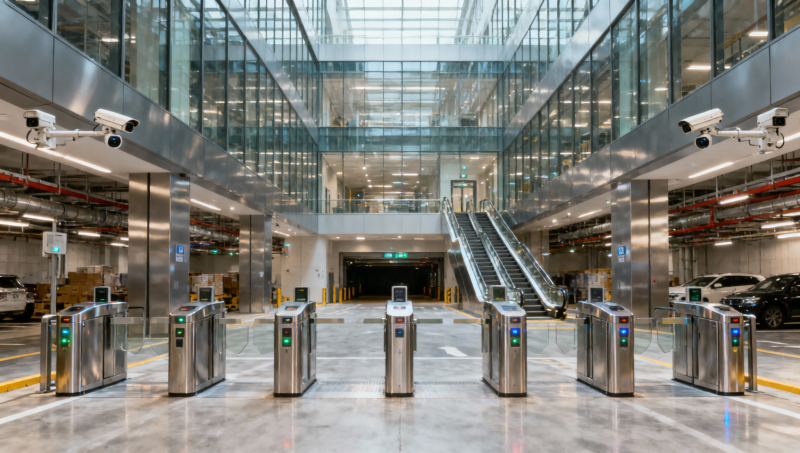
Mixed-use facilities expose a critical gap in many security solutions: they treat shared spaces, tenant operations, and public access as separate risks instead of one connected system. As digital transformation accelerates, effective security architecture must combine risk assessment, security systems, digital security, and optical sensing under evolving security policies. For leaders focused on critical infrastructure protection, this integrated view is now essential.
That gap is not theoretical. A mixed-use tower, logistics-linked campus, hospital-retail complex, transit hub, or education-commercial district can contain 3 to 10 different operating models under one roof or across one site. Each model creates distinct access rules, occupancy patterns, incident thresholds, and service hours. When security teams deploy isolated systems for each zone, blind spots usually appear at the boundaries: loading bays, shared parking, vertical circulation, reception areas, and digital control points.
For operators, project managers, technical evaluators, procurement teams, and enterprise decision-makers, the real question is no longer whether to add more devices. It is how to build a security architecture that connects physical protection, optical environment optimization, policy compliance, and response workflows into one operational framework. This is exactly where intelligence-led platforms such as GSIM support better planning, better specification, and better long-term decision quality.
Why Mixed-Use Facilities Break Traditional Security Models
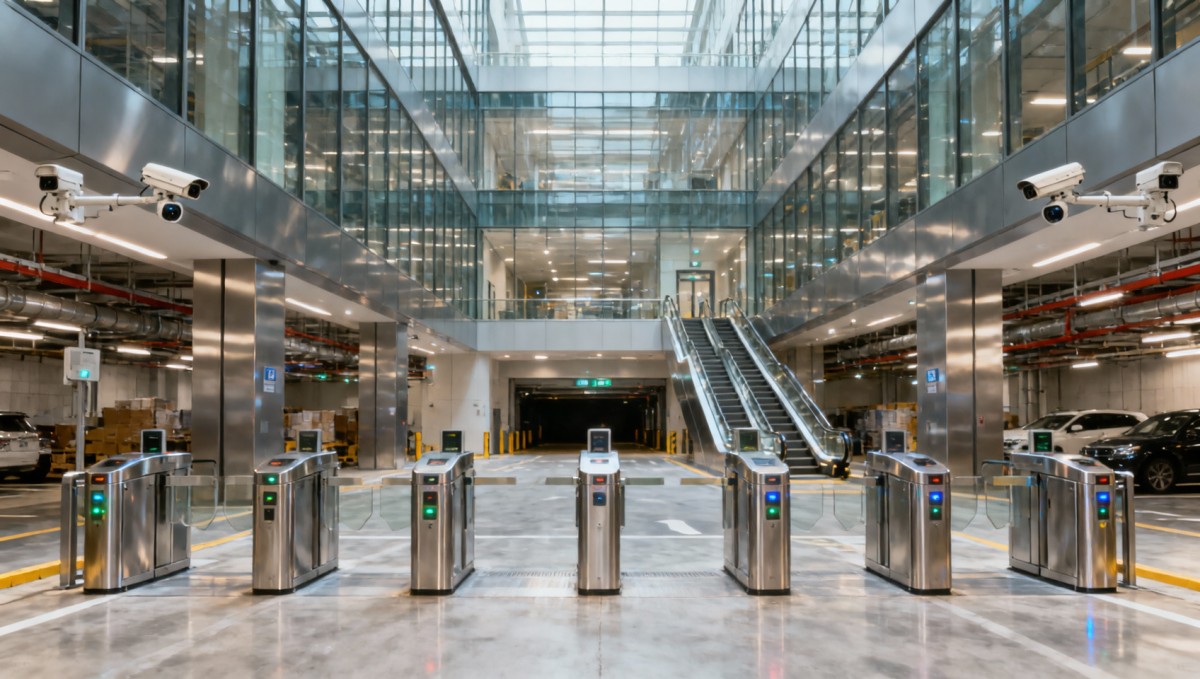
Traditional security design often starts with a single-purpose assumption: one operator, one access logic, one risk profile, and one surveillance strategy. Mixed-use facilities rarely behave that way. A property may host public-facing retail from 08:00 to 22:00, offices from 07:00 to 19:00, residential occupancy 24/7, and service deliveries between 05:00 and 11:00. These overlapping patterns compress risk into transition periods rather than static zones.
The first issue most solutions miss is interdependency. A camera system that works well for an office lobby may fail in a shared concourse with changing light levels, reflective surfaces, and high pedestrian density. Likewise, access control rules designed for 2 user groups can become unstable when a site actually needs 6 to 8 user categories, including tenants, contractors, visitors, delivery teams, cleaning crews, emergency personnel, and after-hours operators.
The second issue is fragmented accountability. In many mixed-use deployments, the landlord owns the core infrastructure, tenants manage internal controls, and third-party vendors maintain technical systems. Without a unified security governance model, incident response can stretch from 3 minutes to 15 minutes simply because no one has a shared escalation map. That delay matters in crowd events, elevator incidents, perimeter breaches, and unattended package alerts.
Three recurring design failures
Across sectors, three failures appear repeatedly in mixed-use environments. First, shared spaces are treated as neutral zones even though they often carry the highest risk density. Second, digital security is separated from physical controls, leaving building management systems, visitor platforms, and remote video access exposed. Third, optical conditions are underestimated, reducing the performance of AI analytics, face matching, object detection, and evidence capture.
- Shared entry points are monitored, but not behaviorally segmented by time, crowd type, or destination.
- Tenant-level systems are procured independently, creating 2 to 5 separate credential databases or video retention policies.
- Lighting design supports visibility for people, yet fails to support machine vision accuracy in corridors, ramps, and outdoor thresholds.
A connected model must therefore evaluate the site as one operational ecosystem. That means every security layer should be tested against occupancy peaks, directional flow, digital exposure, handoff latency, and optical performance under day, night, and mixed artificial lighting conditions. In practical terms, this changes both technical specifications and procurement priorities.
The Missing Layer: Integrated Risk, Optical Sensing, and Policy Alignment
Many buyers compare systems by device count, camera resolution, or access control features alone. In mixed-use facilities, that is too narrow. A usable architecture links 4 layers: risk assessment, physical security systems, digital security controls, and optical sensing quality. If one layer is weak, the whole system underperforms. A 4K camera cannot compensate for poor lighting uniformity, and a strong access platform cannot solve for inconsistent policy enforcement across tenants.
Optical sensing deserves more attention because it affects both operational awareness and evidence quality. In shared atriums, car parks, service corridors, and outdoor transitions, illumination can vary by 30% to 60% within the same field of view. That variability increases false alarms, reduces analytic confidence, and weakens incident reconstruction. Facilities that expect AI-assisted monitoring need more than nominal visibility; they need stable optical conditions that support detection thresholds and recognition tasks.
Policy alignment is equally important. Electronic surveillance laws, retention limits, visitor data practices, and cross-border data handling can differ by jurisdiction and by use case. A mixed-use facility that combines commercial, residential, healthcare-adjacent, or public service functions may face multiple compliance expectations at once. Decision-makers should review not only hardware capability, but also governance workflows, permission logic, audit trails, and operator accountability.
What an integrated assessment should cover
Before specifying technology, teams should build a unified assessment model. The matrix below shows how connected planning differs from siloed security design and where the highest-value corrections usually occur during early project planning.
The core takeaway is simple: mixed-use protection is not a device problem alone. It is a systems coordination problem. Platforms like GSIM add value here by connecting procurement intelligence, policy interpretation, technology trends, and optical planning into one decision support process instead of forcing teams to gather fragmented inputs from multiple sources.
A practical 4-step evaluation sequence
- Document operational layers, including 24/7 areas, public access paths, service routes, and restricted zones.
- Test security workflows across 3 scenarios: routine traffic, exception handling, and emergency escalation.
- Measure optical conditions during at least 2 time periods, typically daylight and evening peak usage.
- Align retention, permissions, and incident reporting with site governance and applicable surveillance policies.
How to Choose Security Solutions for Complex Shared Environments
Procurement in mixed-use facilities should focus on operational fit, not only feature lists. The strongest solution is usually not the one with the most modules. It is the one that can maintain consistent performance across multiple user groups, variable occupancy, changing optical conditions, and multi-party governance. For most projects, evaluation should cover at least 6 dimensions: access logic, surveillance adaptability, digital resilience, interoperability, maintainability, and compliance readiness.
Buyers should also avoid the lowest-cost trap at the specification stage. A system that saves 8% to 12% upfront can create higher operating costs if it requires duplicate credentials, manual video retrieval, separate tenant reporting, or frequent false-alarm review. In mixed-use properties, total cost of operation over 3 to 5 years is often a more reliable benchmark than initial hardware pricing alone.
For technical evaluators, interoperability matters more than branding consistency. The site may need to connect video surveillance, access control, visitor management, intercoms, analytics, emergency communication, lighting controls, and in some cases building automation interfaces. If these elements cannot exchange status data or trigger coordinated responses, operators lose time and incident visibility.
Procurement criteria that reduce long-term friction
The table below can be used as a screening tool during vendor shortlisting, design review, or project tendering. It helps align project managers, procurement teams, operators, and executive stakeholders on what should be measured before award.
A disciplined procurement process reduces hidden risk. It also prevents common misalignment between the operating team that needs daily usability and the commercial team that needs budget discipline. The best tenders therefore combine technical requirements, optical conditions, response logic, service expectations, and governance constraints in a single scope document.
Questions buyers should ask before final selection
- Can the solution handle shared spaces that change function across 2 or more daily operating windows?
- How are tenant-level permissions separated without creating duplicate administration overhead?
- What response workflows exist for elevator lobby incidents, loading area events, and after-hours visitor exceptions?
- How is evidence quality maintained when illumination, glare, or reflection changes across the same scene?
Implementation Priorities: From Design Review to Daily Operations
Even well-selected security solutions can fail if implementation is fragmented. Mixed-use facilities need a phased rollout that connects design validation, stakeholder alignment, system commissioning, and operational training. For medium and large sites, a realistic deployment cycle is often 6 to 16 weeks depending on retrofit complexity, cabling conditions, approval workflow, and integration scope. Rushed implementation usually creates the very gaps the project set out to fix.
The design review stage should prioritize boundary conditions. These include shared entrances, parking transitions, lift cores, rooftop service access, management offices, delivery points, and control rooms. Each of these areas should be tested for 3 conditions: who enters, when they enter, and what evidence or action is required if a rule is broken. This approach is much more effective than reviewing drawings as static zones only.
Operational readiness also depends on people. A mixed-use site may involve in-house security, tenant reception teams, facility managers, IT administrators, and external response providers. If these groups do not train against the same playbooks, even advanced systems become reactive instead of preventive. At minimum, operators should rehearse 4 to 6 scenario types every quarter, including tailgating, credential misuse, package events, equipment faults, and emergency access overrides.
Recommended rollout structure
A practical rollout framework balances technical installation with governance and user adoption. The sequence below is widely applicable across mixed-use developments, whether the site is new-build, partial retrofit, or operational modernization.
- Baseline assessment for 7 to 10 days, covering access patterns, lighting conditions, and current incident logs.
- System design and policy mapping for 2 to 4 weeks, including retention rules, user roles, and escalation paths.
- Installation and commissioning for 2 to 6 weeks, depending on network readiness and retrofit constraints.
- Operator training and live validation for 5 to 10 business days with scenario testing and adjustment.
- Post-launch review at 30, 60, and 90 days to tune permissions, camera views, analytics thresholds, and reporting logic.
GSIM’s role in this stage is strategic rather than purely technical. By combining sector news, policy interpretation, trend analysis, and commercial procurement insight, the platform helps teams translate broad market signals into project-level action. That is especially useful when a facility must balance compliance, technology evolution, and commercial timing under one capital plan.
Common implementation mistakes
The most frequent mistakes are predictable: over-focusing on device count, under-specifying optical conditions, leaving tenant onboarding to the final week, and ignoring cyber hygiene for remote system access. Another recurring error is assuming that one operating manual can serve all user groups. In reality, site teams often need at least 3 instruction layers: operator procedures, supervisor escalation rules, and tenant-facing usage guidance.
FAQ: What Decision-Makers and Evaluators Ask Most Often
Mixed-use security projects attract questions from different stakeholders because success is measured differently across operations, procurement, compliance, and commercial management. The answers below address recurring issues that influence system selection, budgeting, implementation timing, and long-term service planning.
How do you know whether a facility needs an integrated security architecture?
If a site has 2 or more occupancy models, shared circulation, public access areas, or multiple management responsibilities, integrated architecture is usually justified. The need becomes stronger when separate systems create duplicate credentials, delayed incident escalation, inconsistent video retention, or poor visibility across parking, lobbies, and loading areas. In many cases, the tipping point appears once 4 or more stakeholder groups rely on the same core infrastructure.
What metrics matter most during evaluation?
Useful metrics include access rule granularity, operator acknowledgment time, evidence retrieval time, low-light performance, maintenance interval, and audit traceability. A good benchmark set may include 5 to 7 key indicators tracked monthly. Rather than asking only whether the system works, buyers should ask whether it performs consistently across peak traffic, after-hours operation, and exception events.
How long should buyers plan for implementation and stabilization?
For most mixed-use environments, implementation and stabilization combined take 8 to 20 weeks. Smaller retrofits may move faster, while occupied sites with phased handover often need more time. The stabilization period matters because permissions, camera tuning, alert thresholds, and tenant workflows usually need 30 to 90 days of live adjustment before performance becomes reliable.
What is the biggest mistake in procurement?
The biggest mistake is buying components as separate categories rather than buying outcomes. Cameras, access readers, visitor systems, and lighting controls may all be specified correctly on paper, yet still fail operationally if they are not aligned to the same risk map and governance model. Mixed-use security succeeds when system design matches how the site actually behaves every hour of the day.
What many security solutions miss in mixed-use facilities is not one feature, but one mindset. These sites must be managed as connected ecosystems where physical protection, digital security, optical performance, compliance, and operating workflows reinforce one another. That requires better assessment, tighter procurement logic, and clearer implementation discipline than single-purpose properties usually need.
For researchers, operators, technical evaluators, procurement leaders, project managers, and enterprise decision-makers, the advantage of an intelligence-led approach is clarity. GSIM helps organizations connect global policy shifts, optical technology trends, and commercial decision factors into a practical framework for security assurance and infrastructure planning.
If you are planning a new mixed-use development, upgrading an existing facility, or reviewing procurement strategy for shared environments, now is the right time to assess the gaps between isolated controls and integrated protection. Contact GSIM to explore tailored guidance, compare solution paths, and obtain a more informed roadmap for secure, compliant, and future-ready operations.
The VitalSync Intelligence Brief
Receive daily deep-dives into MedTech innovations and regulatory shifts.