
Security
Optical Infrastructure Security Checklist
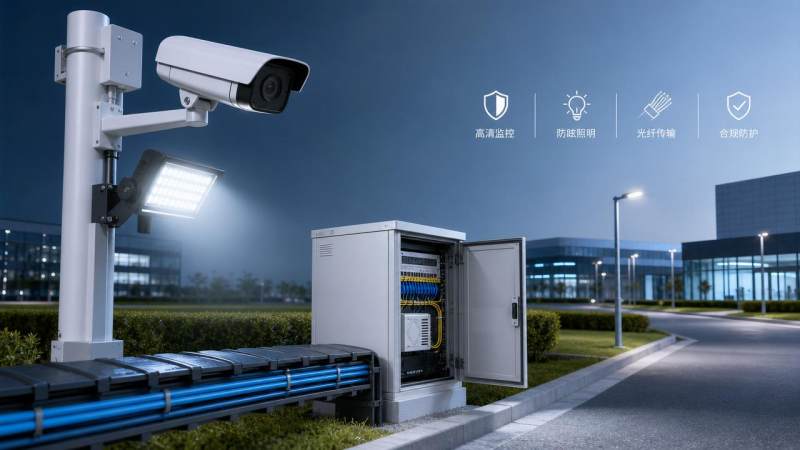
For project managers and engineering leads navigating 2026 infrastructure upgrades, an effective optical infrastructure security strategy is no longer optional. This checklist-driven guide helps you assess compliance, reduce operational blind spots, and align optical environment performance with physical security goals. Backed by GSIM’s global intelligence perspective, it offers a practical starting point for safer, smarter, and standards-ready project delivery.
What does optical infrastructure security really include in modern projects?
In practical terms, optical infrastructure security covers the protection, performance, and governance of systems that depend on light-based sensing, imaging, transmission, and illumination. That includes surveillance optics, perimeter lighting, machine vision, fiber-linked devices, and emerging optical communication layers such as VLC.
For project managers, the challenge is not only preventing damage or tampering. It is also ensuring that cameras see clearly, lighting supports safety without glare, optical links remain stable, and every deployed component aligns with site risk, procurement policy, and compliance expectations.
GSIM approaches optical infrastructure security as a decision framework rather than a product list. Its Strategic Intelligence Center connects global surveillance rules, optical technology trends, and procurement signals, helping teams make choices that are technically sound and operationally defendable.
- Physical protection of optical assets such as cameras, housings, poles, conduits, fiber routes, and control cabinets.
- Environmental performance management, including illumination uniformity, contrast, reflection control, and low-light visibility.
- Cyber-physical governance for connected optical devices, especially where imaging systems integrate with AI analytics, access control, or central monitoring platforms.
- Compliance alignment across surveillance law, public safety procurement, data handling, and installation standards.
Why are project managers revisiting optical infrastructure security in 2026?
The 2026 upgrade cycle is pushing physical security and optical performance into the same budget conversation. Cities, transport hubs, industrial campuses, logistics zones, and mixed-use developments are being asked to deliver higher visibility, faster incident response, and measurable compliance under tighter timelines.
At the same time, project teams face fragmented supplier claims. One vendor talks about lens quality, another focuses on luminaires, and another sells analytics. Without a checklist, optical infrastructure security becomes a patchwork of disconnected decisions that create blind spots at handover.
GSIM’s value is especially relevant here. Its intelligence model helps engineering leads compare policy requirements, technology maturity, and commercial availability before procurement locks in design assumptions that are expensive to reverse.
Typical pressure points in cross-sector projects
- Compressed delivery schedules leave little time for rework once light levels, camera angles, or conduit pathways are installed.
- Procurement teams often compare unit price instead of lifecycle security, maintenance access, and environmental suitability.
- Compliance requirements vary by geography, especially for electronic surveillance, retention practices, and public area monitoring.
- AI-enabled vision systems require optical conditions that many traditional designs fail to support consistently.
Optical infrastructure security checklist: what should be reviewed before procurement?
A useful optical infrastructure security checklist should help you move from concept risk to procurement-ready decisions. The table below organizes the main review points by project phase, allowing engineering and commercial teams to work from the same baseline.
This optical infrastructure security checklist is most effective when it is used early, before technical specifications are frozen. It can also support vendor comparison, because each bidder can be tested against the same performance and governance criteria.
Fast pre-bid review steps
- Document surveillance objectives by zone, not by device count alone.
- Map environmental constraints such as fog, heat, dust, vibration, and reflective surfaces.
- Confirm whether current lighting design supports recognition, monitoring, or only basic visibility.
- Check local and cross-border compliance duties if data or monitoring flows span jurisdictions.
Which technical factors matter most for optical infrastructure security?
Many projects focus too heavily on headline device specifications and miss the environmental factors that determine real-world performance. Optical infrastructure security depends on how the full system behaves under operational stress, not just how one component performs in a lab sheet.
Core technical evaluation points
- Illumination quality: uniformity, color rendering, spill control, and glare management affect both human safety and machine vision reliability.
- Optical clarity: lens cleanliness, anti-reflection treatment, housing integrity, and maintenance access influence image consistency over time.
- Transmission stability: where optical links or fiber are involved, route protection, bend control, connector quality, and redundancy planning are critical.
- Analytics readiness: AI-based monitoring requires stable contrast, predictable scene lighting, and reduced motion blur in target zones.
If your site includes mixed traffic, public access, heavy equipment, or fluctuating ambient light, optical infrastructure security should be measured as a dynamic operating condition. GSIM’s trend reporting is valuable here because it helps teams understand how AI vision and VLC adoption may affect design choices now, not only later.
How should you compare solution paths across common project scenarios?
Different sectors share the same optical infrastructure security question: what combination of visibility, resilience, and control best matches site risk and budget? The comparison below helps frame selection decisions across broad infrastructure environments.
The lesson is simple: optical infrastructure security should be scenario-led. A solution that works on a logistics perimeter may create compliance or comfort problems in a public plaza. Procurement should therefore start with operational objectives, not with a generic equipment shortlist.
What should a procurement guide include before you issue RFQs?
A weak RFQ invites inconsistent bids. A stronger one translates optical infrastructure security needs into measurable decision criteria. This helps procurement, engineering, and security teams score suppliers on total suitability rather than on marketing language.
Bid package essentials
- Define required outcomes by area, such as detection, identification, tracking, worker safety, or public reassurance.
- Request evidence of environmental suitability, including dust, moisture, vibration, temperature, and ingress protection considerations.
- Ask vendors to state maintenance intervals, cleaning requirements, spare parts approach, and field replacement process.
- Require disclosure of integration assumptions with video systems, power control, analytics, and site networks.
- Include compliance declarations relevant to surveillance, public installation, electrical safety, and procurement governance.
GSIM can support this stage by narrowing the question set. Its commercial insights help teams understand where the market is moving, which solution categories are gaining procurement traction, and where overspecification may waste budget without improving security outcomes.
How do cost, lifecycle value, and alternatives affect the final decision?
Price pressure often pushes teams toward cheaper devices or reduced lighting density. But optical infrastructure security failures usually emerge later: poor incident visibility, repeat site visits, premature corrosion, and analytics underperformance. That is why lifecycle value should be part of every approval note.
Common budget trade-offs
- Lower upfront camera cost versus higher recalibration and maintenance demand over time.
- Basic site lighting versus tuned illumination that supports both safety and video usability.
- Single-path transmission versus resilient routing for high-importance monitoring zones.
- Uniform specification everywhere versus risk-based zoning that allocates stronger protection where failure impact is highest.
An effective alternative strategy is phased enhancement. Instead of overspending across the whole site, teams can secure mission-critical zones first, validate optical performance, and expand according to measured operational gaps. This approach works particularly well for large mixed-use or multi-phase projects.
Which standards and compliance questions should not be missed?
Optical infrastructure security does not sit outside compliance. Surveillance legality, electrical safety, optical emissions, data retention, installation quality, and public-area governance all shape what is acceptable. The exact rule set varies by jurisdiction, but a structured compliance review reduces expensive late-stage corrections.
The table below outlines a practical way to organize compliance checks without assuming one universal code base for every geography.
GSIM’s intelligence role is particularly useful when projects span regions or supply chains. Instead of treating compliance as a final paperwork step, teams can use early policy signals to shape specifications, approvals, and supplier screening.
What mistakes weaken optical infrastructure security after installation?
Post-installation weakness usually comes from operational assumptions, not from a single catastrophic defect. Many systems are technically installed but not operationally secured because maintenance, calibration, and environmental drift were underestimated.
- Treating illumination as a background utility instead of part of the security system.
- Ignoring cleaning and alignment needs for lenses, covers, and fixtures in dusty or coastal environments.
- Assuming AI analytics will compensate for poor contrast, backlighting, or glare.
- Failing to update the risk map when site usage changes after occupancy or expansion.
A good project closeout should therefore include acceptance testing under real operating conditions, not only daytime inspections or static commissioning snapshots.
FAQ: practical questions project teams ask about optical infrastructure security
How do I know if my current site lighting is undermining surveillance performance?
Look for uneven brightness, strong backlight, reflective hotspots, deep shadow transitions, and low recognition quality at night. If incident footage repeatedly lacks usable detail, optical infrastructure security should be reviewed as a combined lighting and imaging issue, not as a camera-only problem.
Which projects benefit most from a checklist-based approach?
Projects with multiple contractors, public exposure, complex night operations, or phased delivery benefit the most. In these environments, a shared optical infrastructure security checklist reduces interpretation gaps between design, procurement, installation, and operations teams.
Can limited budgets still support a credible optical infrastructure security plan?
Yes, if the design is risk-prioritized. Focus first on critical zones, define minimum performance thresholds, and avoid buying features that do not match the site’s real threat profile. Lifecycle maintenance cost should be weighed alongside initial purchase price.
How early should compliance review begin?
Ideally before RFQ release. Once equipment counts, mounting positions, and data flows are embedded into tender documents, revising for legal or public safety reasons becomes slower and more expensive.
Why choose us for optical infrastructure security planning and sourcing support?
GSIM brings together physical security assurance, optical environment optimization, and globally informed decision support. That means project managers do not need to navigate lighting performance, surveillance obligations, and technology trends in isolation. Our Strategic Intelligence Center connects these factors so your team can make clearer, faster, and more defensible choices.
If you are preparing a 2026 upgrade, you can consult GSIM on specific items that directly affect delivery quality and procurement confidence.
- Parameter confirmation for lighting, imaging, optical transmission, and environmental suitability.
- Product and solution selection based on scenario risk, operational goals, and integration needs.
- Delivery cycle assessment for phased projects, temporary works, and time-sensitive infrastructure upgrades.
- Custom solution planning for smart construction sites, public safety deployments, and mixed-use developments.
- Certification and compliance direction for surveillance-related procurement and cross-region implementation.
- Sample support, quotation discussion, and commercial insight for better vendor comparison.
When optical infrastructure security is treated as a strategic project layer rather than a late technical add-on, teams reduce rework, improve visibility, and strengthen operational readiness. If you need a clearer checklist, a sharper RFQ baseline, or scenario-specific guidance, GSIM is ready to support the next step.
The VitalSync Intelligence Brief
Receive daily deep-dives into MedTech innovations and regulatory shifts.